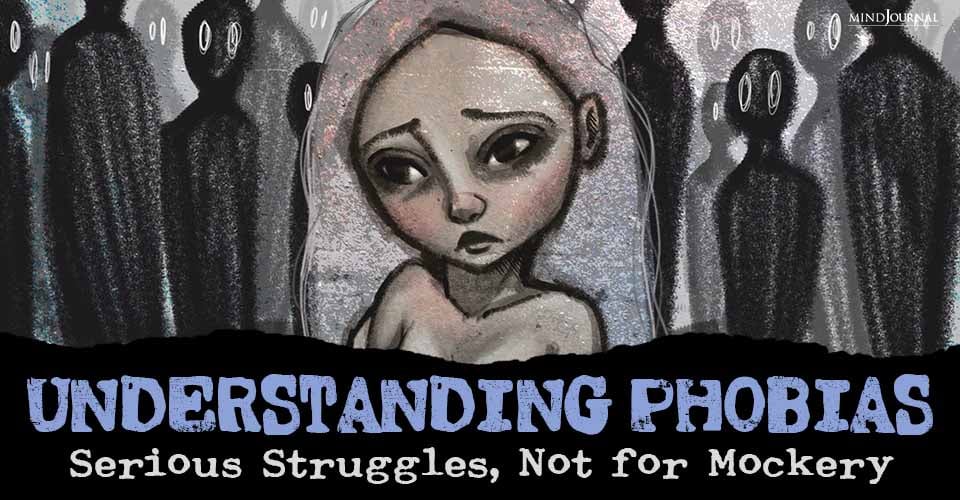
Understanding Phobias: Serious Struggles, Not for Mockery

Author : Dr. Nigel Bairstow

Understanding Phobias Types And Clear Solutions For It

Have you ever felt an intense fear of something others find harmless? Understanding phobias and why they shouldn’t be taken lightly. Let’s explore!

Phobias are real mental health conditions deserving empathy and care.

Key points

  • Phobias are intense, irrational fears that disrupt lives and are serious mental health conditions.
  • Mocking phobias worsens isolation and discourages sufferers from seeking professional help.
  • Phobias are treatable through therapies like CBT and exposure, emphasising empathy and support.

Phobias are often dismissed as quirky or humorous, but for those who experience them, they are anything but trivial. A phobia can be defined as an intense, irrational fear of an object, situation, or activity that poses minimal to no actual danger.

These fears can disrupt daily life, impacting emotional well-being and social interactions (Existential Psychiatry, n.d.). Whether itโ€™s a fear of spiders, heights, or even something as unusual as bananas, phobias are genuine mental health conditions that deserve empathy, not ridicule.

Understanding Phobias

Phobias fall under the subset of anxiety disorders and are categorized into three main types:

  • Specific Phobias: A fear of particular objects or situations, such as snakes (ophidiophobia), spiders (arachnophobia), or bananas (bananaphobia).
  • Social Phobia: Fear of social situations where one may feel judged or embarrassed.
  • Agoraphobia: Fear of situations where escape might be difficult, such as crowded spaces or open areas.

The fear experienced by someone with a phobia goes beyond normal anxiety. For example, some people can feel uneasy around spiders; someone with arachnophobia might experience extreme anxiety and physical symptoms like sweating or shaking and even avoid activities where spiders might be present.

Read More Here: Athazagoraphobia: 8 Signs You Suffer From The Phobia of Being Forgotten 

Sufferersโ€™ Experiences

Phobias can severely impact sufferersโ€™ lives. A recent example is of a Swedish politician who suffered from bananaphobia, a specific phobia where individuals fear bananas. This may seem amusing to outsiders, but to a sufferer, it can make trips to the grocery store or even social gatherings fraught with anxiety.

Mocking phobias worsens their condition

Similarly, arachnophobia can turn a simple outdoor activity into a source of overwhelming dread.

Ridiculing these fears can increase the feeling of isolation and shame, discouraging sufferers from seeking professional help if we prevent open conversations about phobias, further compounding the problem.

Why Phobias Are No Laughing Matter

Phobias are not just โ€œquirksโ€ but serious conditions that often stem from traumatic experiences, genetic predisposition, or brain chemistry. If left untreated, the symptoms can develop into panic attacks, avoidance behaviour, and disrupt our personal and business relationships.

Making fun of someoneโ€™s phobia may appear harmless, but it can definitely increase their feelings of alienation and anxiety and discourage them from sharing their struggles. Empathy and understanding are essential. We need to create a supportive environment for sufferers to trust and seek professional treatment.

Seeking Solutions

Phobias are treatable. Cognitive-behavioral therapy (CBT), exposure therapy, and relaxation techniques are effective ways to manage and overcome phobias. Helping sufferers to seek professional help instead of belittling their fears is a step toward recovery.

Phobias are not to be taken lightly. They highlight how complex human psychology is and why understanding matters. It does not matter if someone is afraid of spiders, bananas, or public speaking; their feelings are important, real, and deserving of our empathy. Letโ€™s treat phobias with kindness and avoid making fun of them.

To find a therapist, please visit the Psychology Today Therapy Directory.

For more insights on psychology and human connection, follow my work on Psychology Today.

Share your thoughts if you are someone with phobia and how to overcome phobias in the comments below!


References

Existential Psychiatry. (n.d.). Phobia therapy in Seattle. Retrieved November 16, 2024, from existentialpsychiatry.com/phobia-therapy-seattle/

American Psychiatric Association. (2022). Diagnostic and Statistical Manual of Mental Disorders (5th ed., text rev.). Arlington, VA: American Psychiatric Publishing.

LeBeau, R. T., Glenn, D., Liao, B., Wittchen, H. U., Beesdo-Baum, K., Ollendick, T., & Craske, M. G. (2010). Specific phobia: A review of DSM-IV specific phobia and preliminary recommendations for DSM-V. Depression and Anxiety, 27(2), 148โ€“167. https://doi.org/10.1002/da.20655

BBC News. (2024, October 23). Understanding phobias: Why some fears are more than just quirks. BBC News. bbc.com/news/articles/c30p1p2jllmo

Written by: Nigel R. Bairstow Ph.D.
Originally appeared on: Psychology Today
mocking phobias

Published On:

Last updated on:

Disclaimer: The informational content on The Minds Journal have been created and reviewed by qualified mental health professionals. They are intended solely for educational and self-awareness purposes and should not be used as a substitute for professional medical advice, diagnosis, or treatment. If you are experiencing emotional distress or have concerns about your mental health, please seek help from a licensed mental health professional or healthcare provider.

Leave a Comment

Today's Horoscope

Weekly Horoscope PART one

Weekly Horoscope 15 March to 21 March 2026

Read your zodiac signโ€™s prediction to understand the energy surrounding you and how to make the most of the days ahead!

Latest Quizzes

Interesting Finger Personality Test: 4 Finger Lines

Finger Personality Test: Join Your Fingers And Reveal A Hidden Personality Secret!

Look closely at your finger lines. Which pattern do you see? This personality test might surprise you!

Latest Quotes

How Men Show Love Through Actions (Male Psychology in Relationships)

How Men Show Love Through Actions (Male Psychology in Relationships)

Male psychology in relationships shows that men express love through presence, protection, and peace more than poetry. Decode his actions so you can see how deeply he actually cares.

Readers Blog

Caption This Image and Selected Wisepicks โ€“ 15 March 2026

Caption This Image and Selected Wisepicks โ€“ 15 March 2026

Ready to unleash your inner wordsmith? โœจ??โ˜บ๏ธ Nowโ€™s your chance to show off your wit, charm, or sheer genius in just one line! Whether itโ€™s laugh-out-loud funny or surprisingly deep, we want to hear it.Submit your funniest, wittiest, or most thought-provoking caption in the comments. Weโ€™ll pick 15+ winners to be featured on our website…

Latest Articles

Understanding Phobias Types And Clear Solutions For It

Have you ever felt an intense fear of something others find harmless? Understanding phobias and why they shouldn’t be taken lightly. Let’s explore!

Phobias are real mental health conditions deserving empathy and care.

Key points

  • Phobias are intense, irrational fears that disrupt lives and are serious mental health conditions.
  • Mocking phobias worsens isolation and discourages sufferers from seeking professional help.
  • Phobias are treatable through therapies like CBT and exposure, emphasising empathy and support.

Phobias are often dismissed as quirky or humorous, but for those who experience them, they are anything but trivial. A phobia can be defined as an intense, irrational fear of an object, situation, or activity that poses minimal to no actual danger.

These fears can disrupt daily life, impacting emotional well-being and social interactions (Existential Psychiatry, n.d.). Whether itโ€™s a fear of spiders, heights, or even something as unusual as bananas, phobias are genuine mental health conditions that deserve empathy, not ridicule.

Understanding Phobias

Phobias fall under the subset of anxiety disorders and are categorized into three main types:

  • Specific Phobias: A fear of particular objects or situations, such as snakes (ophidiophobia), spiders (arachnophobia), or bananas (bananaphobia).
  • Social Phobia: Fear of social situations where one may feel judged or embarrassed.
  • Agoraphobia: Fear of situations where escape might be difficult, such as crowded spaces or open areas.

The fear experienced by someone with a phobia goes beyond normal anxiety. For example, some people can feel uneasy around spiders; someone with arachnophobia might experience extreme anxiety and physical symptoms like sweating or shaking and even avoid activities where spiders might be present.

Read More Here: Athazagoraphobia: 8 Signs You Suffer From The Phobia of Being Forgotten 

Sufferersโ€™ Experiences

Phobias can severely impact sufferersโ€™ lives. A recent example is of a Swedish politician who suffered from bananaphobia, a specific phobia where individuals fear bananas. This may seem amusing to outsiders, but to a sufferer, it can make trips to the grocery store or even social gatherings fraught with anxiety.

Mocking phobias worsens their condition

Similarly, arachnophobia can turn a simple outdoor activity into a source of overwhelming dread.

Ridiculing these fears can increase the feeling of isolation and shame, discouraging sufferers from seeking professional help if we prevent open conversations about phobias, further compounding the problem.

Why Phobias Are No Laughing Matter

Phobias are not just โ€œquirksโ€ but serious conditions that often stem from traumatic experiences, genetic predisposition, or brain chemistry. If left untreated, the symptoms can develop into panic attacks, avoidance behaviour, and disrupt our personal and business relationships.

Making fun of someoneโ€™s phobia may appear harmless, but it can definitely increase their feelings of alienation and anxiety and discourage them from sharing their struggles. Empathy and understanding are essential. We need to create a supportive environment for sufferers to trust and seek professional treatment.

Seeking Solutions

Phobias are treatable. Cognitive-behavioral therapy (CBT), exposure therapy, and relaxation techniques are effective ways to manage and overcome phobias. Helping sufferers to seek professional help instead of belittling their fears is a step toward recovery.

Phobias are not to be taken lightly. They highlight how complex human psychology is and why understanding matters. It does not matter if someone is afraid of spiders, bananas, or public speaking; their feelings are important, real, and deserving of our empathy. Letโ€™s treat phobias with kindness and avoid making fun of them.

To find a therapist, please visit the Psychology Today Therapy Directory.

For more insights on psychology and human connection, follow my work on Psychology Today.

Share your thoughts if you are someone with phobia and how to overcome phobias in the comments below!


References

Existential Psychiatry. (n.d.). Phobia therapy in Seattle. Retrieved November 16, 2024, from existentialpsychiatry.com/phobia-therapy-seattle/

American Psychiatric Association. (2022). Diagnostic and Statistical Manual of Mental Disorders (5th ed., text rev.). Arlington, VA: American Psychiatric Publishing.

LeBeau, R. T., Glenn, D., Liao, B., Wittchen, H. U., Beesdo-Baum, K., Ollendick, T., & Craske, M. G. (2010). Specific phobia: A review of DSM-IV specific phobia and preliminary recommendations for DSM-V. Depression and Anxiety, 27(2), 148โ€“167. https://doi.org/10.1002/da.20655

BBC News. (2024, October 23). Understanding phobias: Why some fears are more than just quirks. BBC News. bbc.com/news/articles/c30p1p2jllmo

Written by: Nigel R. Bairstow Ph.D.
Originally appeared on: Psychology Today
mocking phobias

Published On:

Last updated on:

Dr. Nigel Bairstow

Leave a Comment

    Leave a Comment