6 Not-So-Obvious Types Of Trauma Responses (That Often Go Unnoticed)

Author : Daisy Simon

6 Alarming Types of Trauma Responses That Go Unnoticed

Some trauma response behaviors may feel completely normal, because so familiar, you barely notice them… yet to an outside observer, they might seem confusing, or even odd. This is where types of trauma responses often come into play…

Trauma responses aren’t always loud or obvious, we usually picture visible anxiety, fear of public speaking, panic in crowds, or constant nervousness. While those are real, many examples of trauma responses are far more subtle.

These are learned survival patterns that one develops quietly until it becomes everyday habits, mistaking it for personality traits.

Once you know what to look for, these patterns become easier to spot. Here are the 6 trauma responses to watch for…

Read More Here: The Silent Pain You Didnโ€™t Outgrow: 8 Signs of Humiliation Trauma

Different Types of Trauma Responses: 6 Not-So-Obvious Survival Patterns

1. People-Pleasing: Keeping Others Happy At Your Expense

You often put other peopleโ€™s feelings before your own. You apologize for things that arenโ€™t your fault and say yes when you really want to say no.

This is one of the examples of trauma responses that develops when love or safety felt conditional. Being agreeable reduced conflict, punishment, or emotional withdrawal, and your nervous system learned to prioritize harmony.
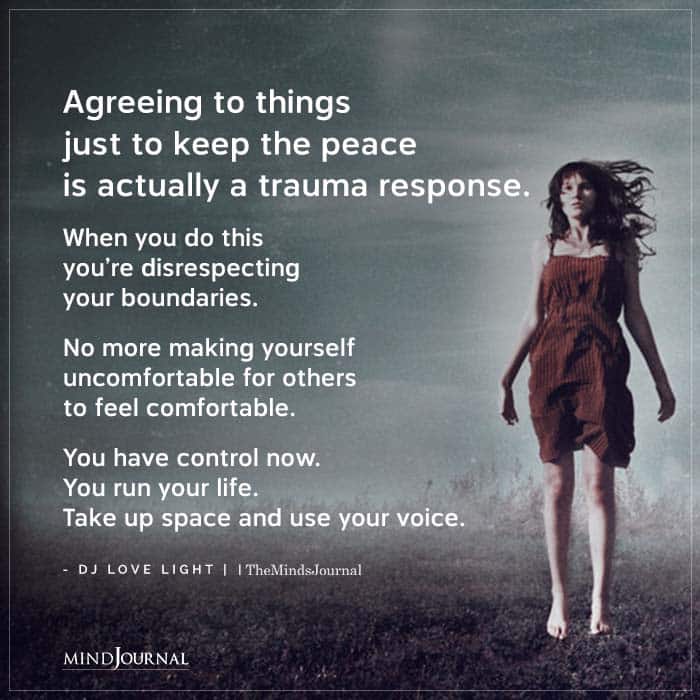
Different Types of Trauma Responses

Even now, you may feel guilty when prioritizing yourself or anxious when someone is upset, even when it isnโ€™t your responsibility.

2. Perfectionism: When Mistakes Felt Dangerous

You set impossibly high standards, not just for growth, but to protect yourself. Every error feels heavy, every accomplishment fleeting.

Perfectionism is one of the most socially rewarded trauma responses. It develops when mistakes were met with criticism, unpredictability, or withdrawal of support. Being flawless once kept you safe.

Even now, resting or celebrating your achievements can feel undeserved. Your inner critic rarely takes a break.

3. Procrastination: You Freeze When Overwhelmed

You care deeply about getting things done, but starting feels impossible. The tasks sit in your mind, heavy and urgent, yet your body resists action.

This isnโ€™t laziness, itโ€™s a trauma response. When pressure, evaluation, or responsibility once led to fear or failure, your nervous system learned to freeze. Avoidance became a form of protection.

You may wait until adrenaline forces action or avoid tasks entirely while carrying guilt and stress.

4. Workaholism: Staying Busy To Avoid Feeling

You stay productive constantly. Downtime feels unsafe because stillness brings discomfort, anxiety, or emotional noise.

Workaholism is one of the 6 trauma responses that often forms when worth was tied to usefulness or achievement. Being busy once meant being seen, valued, or emotionally safe.
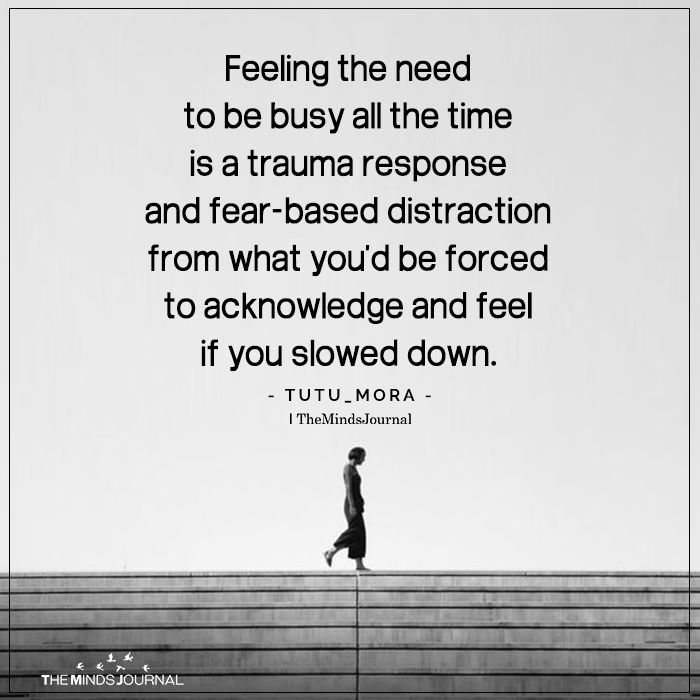
Even now, you may struggle to rest, measure your value by productivity, or feel uneasy when not actively achieving.

5. Hyper-Independence: Doing Everything Alone

You rely on yourself more than anyone else. Asking for help feels risky or unnecessary, even when overwhelmed.

This is one of the different types of trauma responses that develops when support was inconsistent, conditional, or unreliable. You learned that depending on yourself was safer than trusting others.

You may minimize your own needs or feel uncomfortable receiving care, even from loved ones.

6. Over-Explaining Yourself: Protecting Through Words

You justify your feelings, choices, and actions repeatedly. You fear being misunderstood or judged.

This response develops when your emotions were dismissed, questioned, or punished. Explaining became a way to maintain safety and avoid conflict.

Even simple boundaries can trigger anxiety, and conversations often replay in your mind long after they end.

Read More Here: 11 Subtle Signs You Were A Lonely Child (And Still Carry It Today)

Why These Trauma Response Behaviors Matter

These types of trauma responses arenโ€™t flaws. Theyโ€™re intelligent adaptations, ways your body and mind learned to survive when safety and emotional stability were uncertain.

Recognizing these patterns isnโ€™t about labeling yourself. Itโ€™s about understanding, compassion, and seeing your behaviors in context. What once protected you may no longer serve you, and thatโ€™s okay.

Healing begins with awareness, self-compassion, and asking: โ€œWhat was I protecting myself from?โ€

Once you answer that, it becomes possible to slowly reshape these patterns, not through force, but through gentler, safer ways of living.
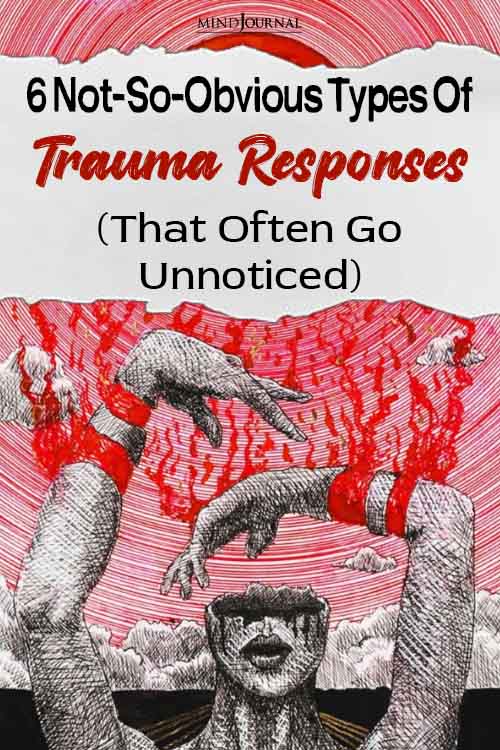

6 trauma responses

Published On:

Last updated on:

Daisy Simon

Iโ€™m Daisy Simon, member of the Editorial Team at Minds Journal, who loves exploring the cultural zeitgeist through cinema, and pop culture. I hold a degree in Sociology and I write on topics like lifestyle, relationships, feminism, mental health, and how they all connect to the world we live in today. My goal is to spark honest conversations that people can relate to and help us better understand the challenges and ideas shaping our generation.

Disclaimer: The informational content on The Minds Journal have been created and reviewed by qualified mental health professionals. They are intended solely for educational and self-awareness purposes and should not be used as a substitute for professional medical advice, diagnosis, or treatment. If you are experiencing emotional distress or have concerns about your mental health, please seek help from a licensed mental health professional or healthcare provider.

Leave a Comment

Today's Horoscope

Your Daily Horoscope For 4 April, 2026: Free Predictions

Daily Horoscope 4 April, 2026: Prediction For Each Zodiac Sign

Look at your daily prediction and see what the stars have in store for your love life and your future!

Latest Quizzes

How Many Circles Do You See? A Simple Test of Thinking Style

How Many Circles Do You See? Your Answer Might Reveal Narcissistic Traits!ย 

Take a closer look at this simple image and discover what your circle count reveals about your thinking style, perception, and attention in this fun and engaging visual test.

Latest Quotes

Real Signs Your Body Is Actually in Good Health: How to Know Youโ€™re Truly Well

Real Signs Your Body Is Actually in Good Health: How to Know Youโ€™re Truly Well

Real signs your body is healthy donโ€™t always show up on lab reports. From good sleep and clear skin to regular digestion and a stable mood, your body is constantly sending quiet signals of wellness.

Readers Blog

Caption This Image and Selected Wisepicks โ€“ 5 April 2026

Caption This Image and Selected Wisepicks โ€“ 5 April 2026

Ready to unleash your inner wordsmith? โœจ??โ˜บ๏ธ Nowโ€™s your chance to show off your wit, charm, or sheer genius in just one line! Whether itโ€™s laugh-out-loud funny or surprisingly deep, we want to hear it.Submit your funniest, wittiest, or most thought-provoking caption in the comments. Weโ€™ll pick 15+ winners to be featured on our website…

Latest Articles

6 Alarming Types of Trauma Responses That Go Unnoticed

Some trauma response behaviors may feel completely normal, because so familiar, you barely notice them… yet to an outside observer, they might seem confusing, or even odd. This is where types of trauma responses often come into play…

Trauma responses aren’t always loud or obvious, we usually picture visible anxiety, fear of public speaking, panic in crowds, or constant nervousness. While those are real, many examples of trauma responses are far more subtle.

These are learned survival patterns that one develops quietly until it becomes everyday habits, mistaking it for personality traits.

Once you know what to look for, these patterns become easier to spot. Here are the 6 trauma responses to watch for…

Read More Here: The Silent Pain You Didnโ€™t Outgrow: 8 Signs of Humiliation Trauma

Different Types of Trauma Responses: 6 Not-So-Obvious Survival Patterns

1. People-Pleasing: Keeping Others Happy At Your Expense

You often put other peopleโ€™s feelings before your own. You apologize for things that arenโ€™t your fault and say yes when you really want to say no.

This is one of the examples of trauma responses that develops when love or safety felt conditional. Being agreeable reduced conflict, punishment, or emotional withdrawal, and your nervous system learned to prioritize harmony.

Different Types of Trauma Responses

Even now, you may feel guilty when prioritizing yourself or anxious when someone is upset, even when it isnโ€™t your responsibility.

2. Perfectionism: When Mistakes Felt Dangerous

You set impossibly high standards, not just for growth, but to protect yourself. Every error feels heavy, every accomplishment fleeting.

Perfectionism is one of the most socially rewarded trauma responses. It develops when mistakes were met with criticism, unpredictability, or withdrawal of support. Being flawless once kept you safe.

Even now, resting or celebrating your achievements can feel undeserved. Your inner critic rarely takes a break.

3. Procrastination: You Freeze When Overwhelmed

You care deeply about getting things done, but starting feels impossible. The tasks sit in your mind, heavy and urgent, yet your body resists action.

This isnโ€™t laziness, itโ€™s a trauma response. When pressure, evaluation, or responsibility once led to fear or failure, your nervous system learned to freeze. Avoidance became a form of protection.

You may wait until adrenaline forces action or avoid tasks entirely while carrying guilt and stress.

4. Workaholism: Staying Busy To Avoid Feeling

You stay productive constantly. Downtime feels unsafe because stillness brings discomfort, anxiety, or emotional noise.

Workaholism is one of the 6 trauma responses that often forms when worth was tied to usefulness or achievement. Being busy once meant being seen, valued, or emotionally safe.

Even now, you may struggle to rest, measure your value by productivity, or feel uneasy when not actively achieving.

5. Hyper-Independence: Doing Everything Alone

You rely on yourself more than anyone else. Asking for help feels risky or unnecessary, even when overwhelmed.

This is one of the different types of trauma responses that develops when support was inconsistent, conditional, or unreliable. You learned that depending on yourself was safer than trusting others.

You may minimize your own needs or feel uncomfortable receiving care, even from loved ones.

6. Over-Explaining Yourself: Protecting Through Words

You justify your feelings, choices, and actions repeatedly. You fear being misunderstood or judged.

This response develops when your emotions were dismissed, questioned, or punished. Explaining became a way to maintain safety and avoid conflict.

Even simple boundaries can trigger anxiety, and conversations often replay in your mind long after they end.

Read More Here: 11 Subtle Signs You Were A Lonely Child (And Still Carry It Today)

Why These Trauma Response Behaviors Matter

These types of trauma responses arenโ€™t flaws. Theyโ€™re intelligent adaptations, ways your body and mind learned to survive when safety and emotional stability were uncertain.

Recognizing these patterns isnโ€™t about labeling yourself. Itโ€™s about understanding, compassion, and seeing your behaviors in context. What once protected you may no longer serve you, and thatโ€™s okay.

Healing begins with awareness, self-compassion, and asking: โ€œWhat was I protecting myself from?โ€

Once you answer that, it becomes possible to slowly reshape these patterns, not through force, but through gentler, safer ways of living.


6 trauma responses

Published On:

Last updated on:

Daisy Simon

Iโ€™m Daisy Simon, member of the Editorial Team at Minds Journal, who loves exploring the cultural zeitgeist through cinema, and pop culture. I hold a degree in Sociology and I write on topics like lifestyle, relationships, feminism, mental health, and how they all connect to the world we live in today. My goal is to spark honest conversations that people can relate to and help us better understand the challenges and ideas shaping our generation.

Leave a Comment

    Leave a Comment