How You Need To Talk To Your Daughter About Beauty

Author : The Good Men Project

What I want my daughter to know about beauty.

daughter About Beauty

If you’re trying to be a good dad (and you’re reading this, so I think you are), you know that your children are sponges.

We soak up everything we hear you say, everything we see you do, and many of the things you thought we didn’t notice.

I still remember the names of two girls my father identified as “pretty” in a fifth-grade class picture.

My dad taught me a lot of things:

How to find the North Star?

How to make a perfect grilled cheese sandwich?

How to drive in a New England winter.?

He taught me to value the diversity of opinion and honesty of expression, to choose good, smart people to be in my life, to believe that I can do and be anything I want.

But from the comment on the class picture 13 years ago?

From that, I learned beauty matters.

Although boys must also navigate the tricky waters of body image and beauty, I will stick to daughters for two reasons.

First, I can’t apply any particular expertise to the father-son relationship (being a daughter and all), and

Second, the consequences for girls when health and beauty get distorted tend to be much more severe (10 times as many women battle eating disorders than men).

No matter how old your daughter is she is receiving messages from every angle that tell her that her primary path to success is being beautiful.

Be it Bratz dolls, princess paraphernalia, Miley Cyrus, Gossip Girl, E!

Red Carpet specials, Miss America pageants, Sarah Palin, or Lindsay Vonn in Sports Illustrated, women are judged and rated based on their looks. Our intellectual, athletic, artistic, or social successes are inevitably predicated on and qualified by our appearance.

Even CBS correspondent Lara Logan, a victim of an assault while covering the situation in Egypt, is discussed as a “Warzone ‘It Girl’ ” and a “gutsy stunner”—rather than simply “reporter.”

So how is a good dad to avoid adding to the barrage of corrupting messages your daughter receives every day?

Start close to home. Think about what she hears from adult women around her.

Do her mother, older sisters, or aunts discuss looking fat in front of her?

Do they pinch themselves, complain about how they look, or crash diet?

Does her grandmother tell her that she needs to watch her figure?

Girls’ and women’s bodies are unfortunately considered open to “constructive criticism” from strangers and loved ones alike.

I was 11 the first time a saleslady volunteered that I was blessed and cursed with a “bubble butt.”

But it’s not just women that your daughter hears. It may be her mother that she emulates (or other adult women in her life), but it’s her father’s compliments that she’s looking for.

Last week, GMP columnist Hugo Schwyzer wrote about how simple compliments like “you look pretty!” reinforce a pattern that teaches girls to seek aesthetic approval:

Five-year-old in princess costumes are cute. But the problem is that the compliments we give as fathers, uncles, and coaches have an impact on the self-esteem of little girls. As they grow up, they realize quickly (certainly by age 8 or 9) that Cinderella costumes won’t cut it anymore.

When the cute costumes don’t work, girls look around to see what women do to get recognition.

And what do they find?

Fake breasts, tiny clothes, sexy poses. The phoniness of these Barbie-filled images might actually be easier to combat than the more insidious forms of beauty worship.

You can talk to your daughter about airbrushing and the difference between magazine pictures and real life. But imagine you’re sitting on the couch watching Wimbledon and your daughter hears you say that Anna Kournikova looks good.

Maybe you mean she looks strong, or her serve is on today, or she’s quick off the line, but what your daughter hears is that the tall blonde woman in the mini-skirt “looks good.”

If what you meant was that she’s a great tennis player, then say that. If what you meant was that she’s hot, well, save it for your buddies.

The conflation of beauty with other positive qualities, or the lack of it with negative ones, is where the real confusion begins.

Make sure the women that you admire out loud, be they politicians, movie stars, musicians, or athletes, are being admired for what they do, not how they look.

The flipside is true as well: Hillary Clinton’s “frumpy” haircut has zero to do with her diplomatic skills, so leave it out of the conversation.

This is how you teach your daughter that judging by the cover may be part of our society, and something she will encounter on a daily basis, but it isn’t part of your family’s values.

My dad will read this article and he will wonder if his comment scarred me (it didn’t) or if I’ve been hanging onto it for years (I haven’t).

Read Here’s To The Fathers, From The Daughters Who Love Them Beyond Measure

The truth is, that comment is easily and readily dwarfed by the tens of thousands of positive, confidence-boosting conversations we’ve had.

In thinking about how dads talk to their daughters, his comment stands out only because it was such an anomaly.

I was at a friend’s house once when she emerged from her room in a new dress and her father, from the couch, shrugged and said, “At least you don’t look fat.” I was blown away, but my friend barely blinked; this was par for course in her home.

That sort of active negativity is easy enough to avoid. What’s more challenging, as parents, is to train yourself away from commenting on beauty at all, even in what may feel like the most positive and innocuous of ways.

The world will tell her every day that for women, beauty is the pot of gold at the end of the rainbow, and it’s your job to counter that by offering better metrics of success.
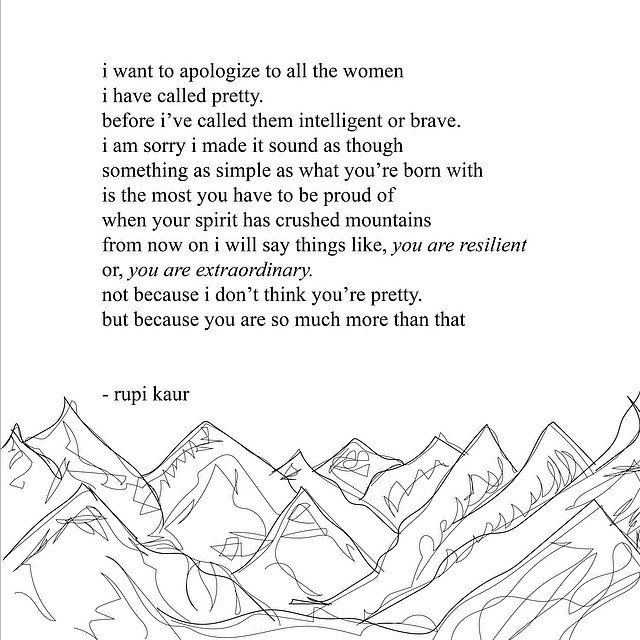
daughter About Beauty

Written by Emily Heist Moss

Originally appeared in The Good Men Project

How You Need To Talk To Your Daughter About Beauty

Published On:

Last updated on:

The Good Men Project

The Good Men Project is the only large scale, open and inclusive conversation about the changing roles of men in the 21st century. Join the conversation at goodmenproject.com

Disclaimer: The informational content on The Minds Journal have been created and reviewed by qualified mental health professionals. They are intended solely for educational and self-awareness purposes and should not be used as a substitute for professional medical advice, diagnosis, or treatment. If you are experiencing emotional distress or have concerns about your mental health, please seek help from a licensed mental health professional or healthcare provider.

Leave a Comment

Today's Horoscope

Weekly Horoscope PART one

Weekly Horoscope 15 March to 21 March 2026

Read your zodiac sign’s prediction to understand the energy surrounding you and how to make the most of the days ahead!

Latest Quizzes

Interesting Finger Personality Test: 4 Finger Lines

Finger Personality Test: Join Your Fingers And Reveal A Hidden Personality Secret!

Look closely at your finger lines. Which pattern do you see? This personality test might surprise you!

Latest Quotes

How Men Show Love Through Actions (Male Psychology in Relationships)

How Men Show Love Through Actions (Male Psychology in Relationships)

Male psychology in relationships shows that men express love through presence, protection, and peace more than poetry. Decode his actions so you can see how deeply he actually cares.

Readers Blog

Caption This Image and Selected Wisepicks – 8 March 2026

Caption This Image and Selected Wisepicks – 8 March 2026

Provide a creative, relevant caption for the picture below and get selected and featured with your name and caption.  Selected Wisepicks We have selected 11 comments as Wisepicks from our Facebook, Facebook Group and Instagram as on 15 March 2026 Lou Angelique Heruela Listen to your inner child,not the angry voices in your mind. Bloom…

Latest Articles

What I want my daughter to know about beauty.

daughter About Beauty

If you’re trying to be a good dad (and you’re reading this, so I think you are), you know that your children are sponges.

We soak up everything we hear you say, everything we see you do, and many of the things you thought we didn’t notice.

I still remember the names of two girls my father identified as “pretty” in a fifth-grade class picture.

My dad taught me a lot of things:

How to find the North Star?

How to make a perfect grilled cheese sandwich?

How to drive in a New England winter.?

He taught me to value the diversity of opinion and honesty of expression, to choose good, smart people to be in my life, to believe that I can do and be anything I want.

But from the comment on the class picture 13 years ago?

From that, I learned beauty matters.

Although boys must also navigate the tricky waters of body image and beauty, I will stick to daughters for two reasons.

First, I can’t apply any particular expertise to the father-son relationship (being a daughter and all), and

Second, the consequences for girls when health and beauty get distorted tend to be much more severe (10 times as many women battle eating disorders than men).

No matter how old your daughter is she is receiving messages from every angle that tell her that her primary path to success is being beautiful.

Be it Bratz dolls, princess paraphernalia, Miley Cyrus, Gossip Girl, E!

Red Carpet specials, Miss America pageants, Sarah Palin, or Lindsay Vonn in Sports Illustrated, women are judged and rated based on their looks. Our intellectual, athletic, artistic, or social successes are inevitably predicated on and qualified by our appearance.

Even CBS correspondent Lara Logan, a victim of an assault while covering the situation in Egypt, is discussed as a “Warzone ‘It Girl’ ” and a “gutsy stunner”—rather than simply “reporter.”

So how is a good dad to avoid adding to the barrage of corrupting messages your daughter receives every day?

Start close to home. Think about what she hears from adult women around her.

Do her mother, older sisters, or aunts discuss looking fat in front of her?

Do they pinch themselves, complain about how they look, or crash diet?

Does her grandmother tell her that she needs to watch her figure?

Girls’ and women’s bodies are unfortunately considered open to “constructive criticism” from strangers and loved ones alike.

I was 11 the first time a saleslady volunteered that I was blessed and cursed with a “bubble butt.”

But it’s not just women that your daughter hears. It may be her mother that she emulates (or other adult women in her life), but it’s her father’s compliments that she’s looking for.

Last week, GMP columnist Hugo Schwyzer wrote about how simple compliments like “you look pretty!” reinforce a pattern that teaches girls to seek aesthetic approval:

Five-year-old in princess costumes are cute. But the problem is that the compliments we give as fathers, uncles, and coaches have an impact on the self-esteem of little girls. As they grow up, they realize quickly (certainly by age 8 or 9) that Cinderella costumes won’t cut it anymore.

When the cute costumes don’t work, girls look around to see what women do to get recognition.

And what do they find?

Fake breasts, tiny clothes, sexy poses. The phoniness of these Barbie-filled images might actually be easier to combat than the more insidious forms of beauty worship.

You can talk to your daughter about airbrushing and the difference between magazine pictures and real life. But imagine you’re sitting on the couch watching Wimbledon and your daughter hears you say that Anna Kournikova looks good.

Maybe you mean she looks strong, or her serve is on today, or she’s quick off the line, but what your daughter hears is that the tall blonde woman in the mini-skirt “looks good.”

If what you meant was that she’s a great tennis player, then say that. If what you meant was that she’s hot, well, save it for your buddies.

The conflation of beauty with other positive qualities, or the lack of it with negative ones, is where the real confusion begins.

Make sure the women that you admire out loud, be they politicians, movie stars, musicians, or athletes, are being admired for what they do, not how they look.

The flipside is true as well: Hillary Clinton’s “frumpy” haircut has zero to do with her diplomatic skills, so leave it out of the conversation.

This is how you teach your daughter that judging by the cover may be part of our society, and something she will encounter on a daily basis, but it isn’t part of your family’s values.

My dad will read this article and he will wonder if his comment scarred me (it didn’t) or if I’ve been hanging onto it for years (I haven’t).

Read Here’s To The Fathers, From The Daughters Who Love Them Beyond Measure

The truth is, that comment is easily and readily dwarfed by the tens of thousands of positive, confidence-boosting conversations we’ve had.

In thinking about how dads talk to their daughters, his comment stands out only because it was such an anomaly.

I was at a friend’s house once when she emerged from her room in a new dress and her father, from the couch, shrugged and said, “At least you don’t look fat.” I was blown away, but my friend barely blinked; this was par for course in her home.

That sort of active negativity is easy enough to avoid. What’s more challenging, as parents, is to train yourself away from commenting on beauty at all, even in what may feel like the most positive and innocuous of ways.

The world will tell her every day that for women, beauty is the pot of gold at the end of the rainbow, and it’s your job to counter that by offering better metrics of success.

daughter About Beauty

Written by Emily Heist Moss

Originally appeared in The Good Men Project

How You Need To Talk To Your Daughter About Beauty

Published On:

Last updated on:

The Good Men Project

The Good Men Project is the only large scale, open and inclusive conversation about the changing roles of men in the 21st century. Join the conversation at goodmenproject.com

Leave a Comment

    Leave a Comment