

There’s a quiet revolution happening – people are no longer running toward connection; they are running toward calm. These days, emotional self defense doesn’t always mean cutting toxic people off or setting fiery boundaries.
Sometimes, it means simply disappearing for a while. Turning off the noise. Being with yourself. In a world that glorifies hustle and overexposure, choosing solitude has become the most underrated power move.
The link between solitude and mental health is undeniable; silence is no longer scary, it’s sacred. Here’s why the benefits of solitude are redefining how we protect our peace, one quiet moment at a time.
Related: The Power of Solitude: Does It Lead To Inner Growth?
5 Signs You’re Using Solitude as Emotional Self Defense (And It’s Working)
1. Solitude is the pause your mind desperately needs.
This is one of the biggest benefits of solitude.
When was the last time you were truly alone? Not scrolling, not performing, and just being? Overstimulation has been normalized so much that silence has started to feel horribly uncomfortable.
However, the reality is that solitude is your nervous system’s favorite sound.
When you take a break from non-stop buzz, something amazing happens. Your thoughts stop competing. Your breathing evens out. You begin to hear your inner voice once more.
One of the psychological effects of solitude on mental health is how it resets your brain, like hitting “refresh” after too many tabs have been open for too long.
Solitude isn’t isolation; it’s restoration. The more you practice it, the more you realize that peace is addictive.
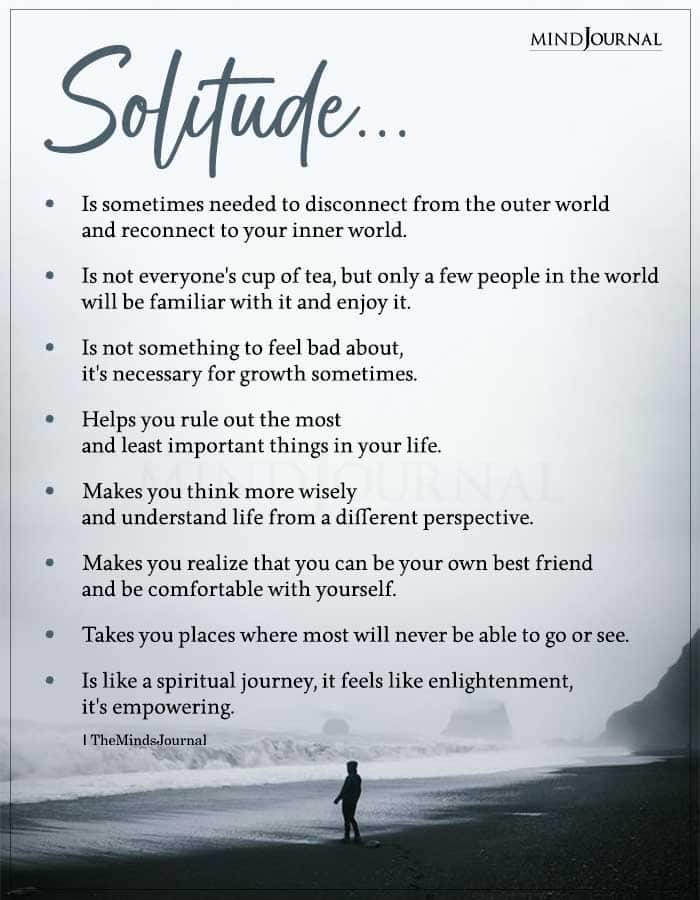
2. Alone time helps you filter the noise and the people.
Let’s be honest – we’re constantly absorbing energy that doesn’t belong to us. Friends vent. Partners complain. Social media screams. Next thing you know, you are emotionally drained and you don’t even know why.
This is where emotional self defense steps in: solitude gives you a filter. This is where you choose what remains and what leaves. The advantages of solitude are that it can allow you to see what really matters.
In that quiet room, you stop over-explaining yourself. You stop seeking validation from others. You begin to understand that silence doesn’t have to be filled, it must be felt. That’s when you start guarding your energy, not wasting it.
3. Solitude helps you reconnect with the real you.
Occasionally, isolation is less about fleeing the world and more about returning to yourself.
When you spend long enough by yourself, you begin to hear that internal voice that’s otherwise drowned out by all the other people’s opinions. You recall what you like. You recall what you desire. You recall you.
The psychological effects of solitude here is strong. It serves to disentangle your sense of self from the individuals you’ve been attempting to appease. You cease being a product of others and begin being a more defined version of yourself.
Alone, self-knowledge gets clearer. You understand that “being alone” isn’t loneliness — it’s authenticity. And in that authenticity, healing happens.
4. Solitude builds emotional muscle.
One of the major benefits of solitude is this right here.
Being alone used to scare people, but now it makes them feel better and stronger. The real effects of solitude on mental health show up when you stop depending on other people to handle your emotions.
You learn how to soothe your anxiety without texting someone. You learn to face your sadness without numbing or distracting it. You learn that the storm always passes, and you didn’t need an umbrella handed to you; you built your own shelter.
That’s emotional self defense at its best: the quiet kind that doesn’t come from confrontation, but from self-regulation. You stop being reactive and start being reflective.
And that shift? That’s freedom..
5. Solitude protects your energy in a world that drains it.
We live in a world where everybody wants a piece of you, be it your time, your attention, your feelings. And solitude is how you reclaim it all. When you move away from all the noise, you realize how overstimulation destroys your peace.
The constant news, the chaos, the expectations – they all demand pieces of your peace. That’s why solitude has become the ultimate emotional self defense.
From a solitude and mental health perspective, it’s like building an invisible armor. You don’t do this to shut people off, but to stop letting the world silence your inner stillness.
Protecting your energy is not selfish, it’s survival.

Silence Is Not Emptiness – It’s Protection
Solitude isn’t about being isolated, rather it’s about being grounded. The benefits of solitude go beyond peace and quiet – it’s about remembering your own power in a world that constantly tells you to give it away.
The psychological effects of solitude reveal one simple truth: time alone is not a luxury anymore; it’s a necessity. Solitude gives you perspective. It gives you strength. It gives you yourself.
Related: The Power Of Alone Time: 9 Surprising Benefits Of Solitude
So, turn down the noise. Log out. Stay in. Don’t mistake your silence for weakness – it’s just you practicing emotional self defense in the loudest world we have ever lived in.
Because sometimes, protecting your peace isn’t about building walls – it’s about closing the door, sitting in the quiet, and realizing you were safe with yourself all along.
Frequently Asked Questions (FAQs)
1. Is solitude a defense mechanism?
Yes, solitude can sometimes act as a defense mechanism – a way to protect yourself from emotional pain, stress, or social exhaustion. When you’ve been hurt or overwhelmed, withdrawing helps you feel safe and regain control. But solitude isn’t always negative – it can also be healing and empowering when chosen intentionally. The key difference lies in why you’re seeking it: avoidance or restoration.
2. What is emotional solitude?
Emotional solitude is when you feel disconnected from others on an emotional level, even if you’re surrounded by people. It’s a state where you keep your deepest thoughts and feelings to yourself, either to protect your heart, avoid judgment, or because you feel misunderstood. While it can offer peace and self-reflection, too much emotional solitude can lead to loneliness or emotional numbness.
3. Why is solitude so powerful?
Solitude is powerful because it gives you space to reconnect with yourself. Away from noise and expectations, you can hear your own thoughts, process emotions, and find clarity. It strengthens self-awareness, boosts creativity, and helps you recharge mentally. In a world that glorifies constant connection, choosing solitude is a quiet act of self-trust and emotional strength.


Leave a Comment