7 Overlooked Signs of Otrovert Personality in Children Revealed By A Psychiatrist

Author : Jane Harper

7 Overlooked Signs of Otrovert Personality in Children

As parents, weโ€™re constantly worried about our child, how they’re behaving, or what they’re thinking… do they love the spotlight, or do they prefer staying in the background? Or maybe they like both… Some children connect deeply with people yet still feel separate from the crowd. Experts describe this rare pattern as the otrovert personality type.

We grow up hearing about the classic introvert vs extrovert person debate and exploring different social personality types. But have you ever heard anyone in these debates mention that โ€œI am an otrovertโ€? Most probably, you havenโ€™t. Thus, weโ€™re here to ease your confusion.

If youโ€™ve ever wondered ‘what is an otrovert personality type’, this guide will walk you through nine revealing signs and how you can support your child with confidence. Letโ€™s discover the otrovert personality traits.

What is an Otrovert Personality? Understanding the Hidden Personality Type

The term was introduced by American psychiatrist Rami Kaminski to describe people who donโ€™t strongly identify with groups, yet can still connect deeply with individuals. Then, explaining it more deeply, he mentions that at birth, babies attach to a few caregivers, not to groups. As toddlers grow, theyโ€™re gradually shaped by culture, school systems, and social expectations. Most children eventually adopt group identities. But an otrovert resists that pull. An “otrovert” is a newly defined personality type, coined in 2023-2025.

Otroverts arenโ€™t simply balanced between introversion and extroversion. Instead, they often feel like social โ€œoutsiders,โ€ even when they are well-liked. Using this perspective to understand social personality types helps explain why some people have a sense of connection and separation simultaneously. They simply lack what Kaminski calls a โ€œcommunal impulse.โ€

How Otroverts Differ From Introverts and Extroverts

The energy between an introvert and an extrovert flows differently. Thatโ€™s it.
Introverts recharge alone. Extroverts recharge around others.

Coming to the concept that is becoming famous these days, โ€œOtrovertsโ€, however, donโ€™t define themselves by a single energy. Their defining trait is independence from group identity. They can enjoy people deeply, but often feel detached from the group as a whole.

Related: What Is an Otrovert? 5 Signs You Belong To This Rare Personality Type

7 Signs Your Child Might Be An Otrovert

1. They Prefer Adult Conversations Over Playground Politics

Have you recently noticed your child having conversations with teachers or family friends instead of playing with classmates?

Otrovert children often seem mature beyond their years. They enjoy meaningful and thoughtful discussions and feel comfortable in adult company because it feels authentic and free from any pressure.

Itโ€™s a selective connection, a common trait among unique social personality types like otroverts.

2. They Ask Deep, Unexpected Questions

โ€œWhy do people follow trends?โ€
โ€œWhy do we care about popularity?โ€
Is this how your child questions you, in place of asking to buy them that supercar toy?

Otrovert kids are naturally curious and inventive. They challenge assumptions and think independently. Hereโ€™s where it becomes interesting, because otroverts often think independently, which means theyโ€™re less afraid of rejection and more willing to question norms.

When comparing introvert vs extrovert person, an otrovert often carries the advantages of both, reflection and communication.

3. Theyโ€™re Well-Liked โ€” But Avoid Social Hierarchies

Hereโ€™s when it becomes a little confusing at the start for the parents to understand, because otrovert children are often popular.

Theyโ€™re witty, kind, and emotionally intelligent. Yet they donโ€™t obsess over fitting in. They feel indifferent toward cliques and social rankings.

In the traditional introvert vs extrovert person conversation, belonging is often central. For otroverts, belonging simply isnโ€™t a driving need.

4. Solitude Feels Restorative, Not Lonely

If your child happily spends time alone reading, building, or creating, thatโ€™s not necessarily a red flag.

Otroverts genuinely thrive in solitude. They donโ€™t isolate out of sadness; they recharge by being independent and alone. Spending alone time is one of the clearest signs when understanding an otrovert.

5. Group Events Feel Draining or Forced

Birthday parties. Team sports. Loud school assemblies. They donโ€™t like to attend these events?

While many kids crave these environments, otroverts often tolerate them rather than enjoy them. The pressure they feel while they attend group events is what they want to ignore.
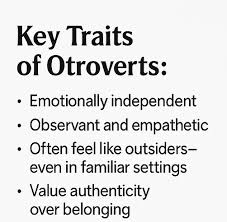
Key Traits of Otrovert Personality

Theyโ€™re not antisocial, they just prefer interactions where they can show up as themselves without performing for a crowd.

6. They Naturally Resist Peer Pressure

They donโ€™t identify themselves in any group, which is why otroverts are less likely to engage in risky behavior just to fit in.

They think critically about consequences and trust their own judgment. They often like to offer their own views and opinions on the plate rather than following a line where everbody else is going.

7. Transitions Feel Disorienting

Otrovert children can struggle with environmental changes because they donโ€™t rely on group belonging for stability.

Changing school, moving homes, even in summer camps. They might feel a little anxious and will think that they donโ€™t belong there at first. As they depend heavily on internal routines.

Related: Power of Positive Parenting: Say These 8 Phrases If You Want Your Adult Kids to Visit You More

Parenting An Otrovert: What Actually Helps

If you recognize your child in these traits, take a breath. Nothing is wrong.

Dr. Kaminski emphasizes that an otrovert is neurotypical, friendly, and often highly capable. The key is support, not correction.


Hereโ€™s how you can help your child flourish:

1. Respect Their Social Limits

Donโ€™t force group involvement just because itโ€™s โ€œnormal.โ€ Observe what genuinely energizes them.

2. Encourage One-on-One Friendships

Deep bonds matter more than wide circles for them. Facilitate meaningful connections with individuals rather than large gatherings.

3. Celebrate Their Independence

In American culture, belonging often equals success. We celebrate team players, influencers, and social butterflies. But an otrovert reminds us that fulfillment doesnโ€™t always come from fitting in. Among all social personality types, otroverts often become innovative thinkers.

4. Create Personal Family Memories

Instead of prioritizing group events, create one-on-one traditions, road trips, bookstore visits, hikes in national parks. These moments feel deeply fulfilling to them.

Final Thoughts: Embracing An Otrovert Child

If youโ€™ve been asking yourself, is your child an introvert or an extrovert, or an otrovert personality type, I hope that if youโ€™re reading till here, you got your answer and the way you can find it.

If your child seems comfortable standing slightly outside the crowd, confident, curious, and quietly independent, you may be raising a personality type that simply values individuality over group identity. Remember this: You donโ€™t have to squeeze your child into a category that doesnโ€™t fit. If your child feels they donโ€™t belong to any, or that they are a mix of the other types, itโ€™s alright.

Personality isnโ€™t a box. Itโ€™s a spectrum.

What traits do you find in your child? Discuss in comments below, is he/she an otrovert?


Frequently Asked Questions(FAQs)

What is an otrovert personality?

An otrovert personality is described as someone who may function socially but internally feels like an outsider in group settings, even when included. They often prefer selective, one-to-one connections over group interactions and may feel slightly detached in crowds.

Can children be introverts?

Yes, children can absolutely be introverts. Introversion isnโ€™t shyness, it simply means a child recharges by spending time alone or in calm settings rather than large, noisy groups. Introverted children often enjoy deep conversations, independent play, creativity, and meaningful one-on-one connections. Itโ€™s a personality trait, not something that needs fixing.

What is the difference between an introvert and an otrovert?

An introvert recharges by spending time alone and often prefers quiet settings and deeper conversations. An otrovert gains energy from being around people individually and not in group activities. Itโ€™s simply a difference in how people restore their energy, neither is better than the other.


Dr. Rami Kaminski

Published On:

Last updated on:

Disclaimer: The informational content on The Minds Journal have been created and reviewed by qualified mental health professionals. They are intended solely for educational and self-awareness purposes and should not be used as a substitute for professional medical advice, diagnosis, or treatment. If you are experiencing emotional distress or have concerns about your mental health, please seek help from a licensed mental health professional or healthcare provider.

Leave a Comment

Today's Horoscope

Your Daily Horoscope For 4 April, 2026: Free Predictions

Daily Horoscope 4 April, 2026: Prediction For Each Zodiac Sign

Look at your daily prediction and see what the stars have in store for your love life and your future!

Latest Quizzes

How Many Circles Do You See? A Simple Test of Thinking Style

How Many Circles Do You See? Your Answer Might Reveal Narcissistic Traits!ย 

Take a closer look at this simple image and discover what your circle count reveals about your thinking style, perception, and attention in this fun and engaging visual test.

Latest Quotes

Real Signs Your Body Is Actually in Good Health: How to Know Youโ€™re Truly Well

Real Signs Your Body Is Actually in Good Health: How to Know Youโ€™re Truly Well

Real signs your body is healthy donโ€™t always show up on lab reports. From good sleep and clear skin to regular digestion and a stable mood, your body is constantly sending quiet signals of wellness.

Readers Blog

Caption This Image and Selected Wisepicks โ€“ 5 April 2026

Caption This Image and Selected Wisepicks โ€“ 5 April 2026

Ready to unleash your inner wordsmith? โœจ??โ˜บ๏ธ Nowโ€™s your chance to show off your wit, charm, or sheer genius in just one line! Whether itโ€™s laugh-out-loud funny or surprisingly deep, we want to hear it.Submit your funniest, wittiest, or most thought-provoking caption in the comments. Weโ€™ll pick 15+ winners to be featured on our website…

Latest Articles

7 Overlooked Signs of Otrovert Personality in Children

As parents, weโ€™re constantly worried about our child, how they’re behaving, or what they’re thinking… do they love the spotlight, or do they prefer staying in the background? Or maybe they like both… Some children connect deeply with people yet still feel separate from the crowd. Experts describe this rare pattern as the otrovert personality type.

We grow up hearing about the classic introvert vs extrovert person debate and exploring different social personality types. But have you ever heard anyone in these debates mention that โ€œI am an otrovertโ€? Most probably, you havenโ€™t. Thus, weโ€™re here to ease your confusion.

If youโ€™ve ever wondered ‘what is an otrovert personality type’, this guide will walk you through nine revealing signs and how you can support your child with confidence. Letโ€™s discover the otrovert personality traits.

What is an Otrovert Personality? Understanding the Hidden Personality Type

The term was introduced by American psychiatrist Rami Kaminski to describe people who donโ€™t strongly identify with groups, yet can still connect deeply with individuals. Then, explaining it more deeply, he mentions that at birth, babies attach to a few caregivers, not to groups. As toddlers grow, theyโ€™re gradually shaped by culture, school systems, and social expectations. Most children eventually adopt group identities. But an otrovert resists that pull. An “otrovert” is a newly defined personality type, coined in 2023-2025.

Otroverts arenโ€™t simply balanced between introversion and extroversion. Instead, they often feel like social โ€œoutsiders,โ€ even when they are well-liked. Using this perspective to understand social personality types helps explain why some people have a sense of connection and separation simultaneously. They simply lack what Kaminski calls a โ€œcommunal impulse.โ€

How Otroverts Differ From Introverts and Extroverts

The energy between an introvert and an extrovert flows differently. Thatโ€™s it.
Introverts recharge alone. Extroverts recharge around others.

Coming to the concept that is becoming famous these days, โ€œOtrovertsโ€, however, donโ€™t define themselves by a single energy. Their defining trait is independence from group identity. They can enjoy people deeply, but often feel detached from the group as a whole.

Related: What Is an Otrovert? 5 Signs You Belong To This Rare Personality Type

7 Signs Your Child Might Be An Otrovert

1. They Prefer Adult Conversations Over Playground Politics

Have you recently noticed your child having conversations with teachers or family friends instead of playing with classmates?

Otrovert children often seem mature beyond their years. They enjoy meaningful and thoughtful discussions and feel comfortable in adult company because it feels authentic and free from any pressure.

Itโ€™s a selective connection, a common trait among unique social personality types like otroverts.

2. They Ask Deep, Unexpected Questions

โ€œWhy do people follow trends?โ€
โ€œWhy do we care about popularity?โ€
Is this how your child questions you, in place of asking to buy them that supercar toy?

Otrovert kids are naturally curious and inventive. They challenge assumptions and think independently. Hereโ€™s where it becomes interesting, because otroverts often think independently, which means theyโ€™re less afraid of rejection and more willing to question norms.

When comparing introvert vs extrovert person, an otrovert often carries the advantages of both, reflection and communication.

3. Theyโ€™re Well-Liked โ€” But Avoid Social Hierarchies

Hereโ€™s when it becomes a little confusing at the start for the parents to understand, because otrovert children are often popular.

Theyโ€™re witty, kind, and emotionally intelligent. Yet they donโ€™t obsess over fitting in. They feel indifferent toward cliques and social rankings.

In the traditional introvert vs extrovert person conversation, belonging is often central. For otroverts, belonging simply isnโ€™t a driving need.

4. Solitude Feels Restorative, Not Lonely

If your child happily spends time alone reading, building, or creating, thatโ€™s not necessarily a red flag.

Otroverts genuinely thrive in solitude. They donโ€™t isolate out of sadness; they recharge by being independent and alone. Spending alone time is one of the clearest signs when understanding an otrovert.

5. Group Events Feel Draining or Forced

Birthday parties. Team sports. Loud school assemblies. They donโ€™t like to attend these events?

While many kids crave these environments, otroverts often tolerate them rather than enjoy them. The pressure they feel while they attend group events is what they want to ignore.

Key Traits of Otrovert Personality

Theyโ€™re not antisocial, they just prefer interactions where they can show up as themselves without performing for a crowd.

6. They Naturally Resist Peer Pressure

They donโ€™t identify themselves in any group, which is why otroverts are less likely to engage in risky behavior just to fit in.

They think critically about consequences and trust their own judgment. They often like to offer their own views and opinions on the plate rather than following a line where everbody else is going.

7. Transitions Feel Disorienting

Otrovert children can struggle with environmental changes because they donโ€™t rely on group belonging for stability.

Changing school, moving homes, even in summer camps. They might feel a little anxious and will think that they donโ€™t belong there at first. As they depend heavily on internal routines.

Related: Power of Positive Parenting: Say These 8 Phrases If You Want Your Adult Kids to Visit You More

Parenting An Otrovert: What Actually Helps

If you recognize your child in these traits, take a breath. Nothing is wrong.

Dr. Kaminski emphasizes that an otrovert is neurotypical, friendly, and often highly capable. The key is support, not correction.


Hereโ€™s how you can help your child flourish:

1. Respect Their Social Limits

Donโ€™t force group involvement just because itโ€™s โ€œnormal.โ€ Observe what genuinely energizes them.

2. Encourage One-on-One Friendships

Deep bonds matter more than wide circles for them. Facilitate meaningful connections with individuals rather than large gatherings.

3. Celebrate Their Independence

In American culture, belonging often equals success. We celebrate team players, influencers, and social butterflies. But an otrovert reminds us that fulfillment doesnโ€™t always come from fitting in. Among all social personality types, otroverts often become innovative thinkers.

4. Create Personal Family Memories

Instead of prioritizing group events, create one-on-one traditions, road trips, bookstore visits, hikes in national parks. These moments feel deeply fulfilling to them.

Final Thoughts: Embracing An Otrovert Child

If youโ€™ve been asking yourself, is your child an introvert or an extrovert, or an otrovert personality type, I hope that if youโ€™re reading till here, you got your answer and the way you can find it.

If your child seems comfortable standing slightly outside the crowd, confident, curious, and quietly independent, you may be raising a personality type that simply values individuality over group identity. Remember this: You donโ€™t have to squeeze your child into a category that doesnโ€™t fit. If your child feels they donโ€™t belong to any, or that they are a mix of the other types, itโ€™s alright.

Personality isnโ€™t a box. Itโ€™s a spectrum.

What traits do you find in your child? Discuss in comments below, is he/she an otrovert?


Frequently Asked Questions(FAQs)

What is an otrovert personality?

An otrovert personality is described as someone who may function socially but internally feels like an outsider in group settings, even when included. They often prefer selective, one-to-one connections over group interactions and may feel slightly detached in crowds.

Can children be introverts?

Yes, children can absolutely be introverts. Introversion isnโ€™t shyness, it simply means a child recharges by spending time alone or in calm settings rather than large, noisy groups. Introverted children often enjoy deep conversations, independent play, creativity, and meaningful one-on-one connections. Itโ€™s a personality trait, not something that needs fixing.

What is the difference between an introvert and an otrovert?

An introvert recharges by spending time alone and often prefers quiet settings and deeper conversations. An otrovert gains energy from being around people individually and not in group activities. Itโ€™s simply a difference in how people restore their energy, neither is better than the other.


Dr. Rami Kaminski

Published On:

Last updated on:

Jane Harper

Leave a Comment

    Leave a Comment