8 Signs Those Annoying Sounds Are Actually Misophonia Triggers

Author : Daisy Simon

8 Signs Those Annoying Sounds Are Actually Misophonia Triggers

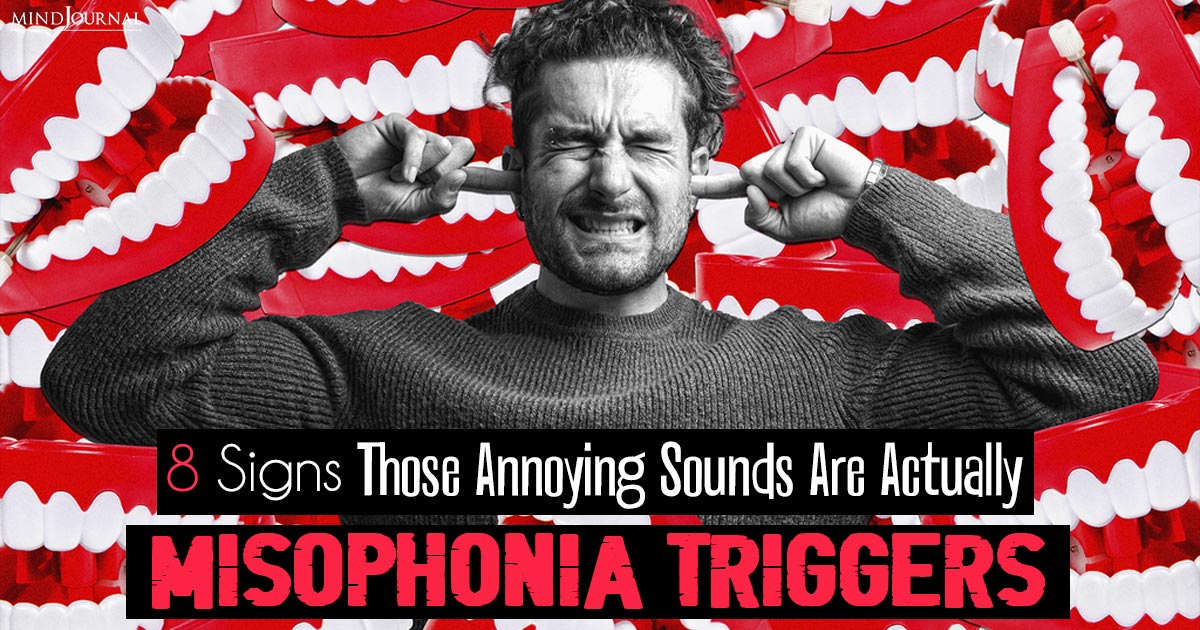
Have you ever heard someone chewing and been repulsed by the sound? Or felt your mood do a complete 180′ when you hear sniffling or tapping? If so, then you might be experiencing misophonia triggers.

People who have it describe the feeling as frustration, rage, or anxiety that’s triggered by specific noises. For some people, the annoyance they feel is so bad that it can interfere with daily life.

So what is misophonia?

Misophonia is a condition where certain seemingly harmless sounds trigger intense emotional or physiological responses in people.

For example, someone may experience rage if they hear their coworker chew with their mouth open. Or extreme annoyance if they hear a pin drop across the room.

Misophonia Triggers
Misophonia Triggers

7 Common Misophonia Triggers

These noises are plenty annoying on their own, but now imagine hearing them and feeling uncontrollable negative emotions every time. Here are seven common triggers for individuals with misophonia symptoms:

  1. Chewing: The sound of someone smacking their lips could send someone into a rage if they suffer from misophonia. Repetitive chewing, lip smacking or slurping can bring out intense negative feelings in those affected by the condition.
  2. Breathing: Even the sound of someone breathing, whether it’s heavy breathing, nasal breathing or sighing can provoke feelings of discomfort or agitation in individuals with misophonia.
  3. Sniffling: We all pretty much hate hearing someone sniffle once or twice when they’ve got a cold, but imagine how bad it is for those with misophonia if every breath was accompanied by an irritating sniffle sound.
  4. Tapping: Almost everyone has had to sit next to a person who taps on their desk all day and knows how frustrating it can be. Now imagine how unbearable this is for folks who have misophonia and react negatively to repetitive tapping noises.
  5. Whispering: Whispering isn’t typically thought of as something that would irritate people since it’s usually used in situations where silence is necessary – but even whispering has its misophoniacs fuming at times.
  6. Typing: The sound of typing on a keyboard is a unique one because it’s not only annoying to hear, but also annoying to have to make. For individuals with misophonia who react negatively to trigger noises, they’re doubly affected by this particular sound.
  7. Certain letters and sounds: Misophonia doesn’t just stop at everyday sounds like chewing or breathing – many people also suffer from hearing certain letters or sounds that are present in daily conversations.
Misophonia Is A Mental Disorder In Which Trivial Sounds

8 Warning Signs of Misophonia

If you think you might have misophonia symptoms, these eight signs may help you identify if your negative reactions towards these noises cross the line:

  1. Intense Emotional Reaction: Strong feelings such as anger, disgust or anxiety when exposed to trigger sounds are common for people with misophonia.
  2. Physical Sensations: It is also possible for increased heart rate, tense muscles and even the fight-or-flight response to manifest when misophonia is present.
  3. Avoidance Behavior: If a person goes out of their way to avoid situations or environments where trigger sounds can be heard, they might have this condition.
  4. Interference with Daily Activities: Eating meals with family and working in shared spaces can become distressing and impair functioning due to this disruption.
  5. Negative Impact on Relationships: Misophonia can strain relationships because individuals may become irritable or withdraw from social interactions completely in an attempt to avoid trigger sounds.
  6. Hypervigilance: Constantly anticipating and reacting strongly to specific noises is a common behavior in individuals with this condition.
  7. Difficulty Concentrating: When it’s a struggle to focus on tasks due to specific sounds, productivity levels tend to drop and frustration sets in.
  8. Isolation : Minimizing exposure by isolating oneself can only add fuel to the fire as feelings of loneliness and isolation start consuming them

How To Deal With Misophonia?

Misophonia Is A Mental Disorder In Which Trivial Sounds

If you’re wondering how to deal with misophonia triggers, check these methods below:

  1. Talk to Someone: Opening up to a friend, family member, or professional in mental health can help get much-needed support and validation. Support groups and online forums give you a sense of community with people who understand what you’re going through.
  2. Cognitive-Behavioral Therapy (CBT): Training your thoughts to be more positive can work wonders. Exposure therapy gradually desensitizes you while challenging negative thoughts about trigger sounds.

All in all, signs of misophonia is not easy to deal with. It can have a huge impact on day-to-day life for those affected by it.

However, once triggers are identified and coping mechanisms are put in place, individuals will be better equipped to manage their symptoms.

Life is still full of possibilities even if there are some annoying sounds standing in the way sometimes!

Signs Those Annoying Sounds Are Actually Misophonia Triggers pin

Published On:

Last updated on:

Daisy Simon

I’m Daisy Simon, member of the Editorial Team at Minds Journal, who loves exploring the cultural zeitgeist through cinema, and pop culture. I hold a degree in Sociology and I write on topics like lifestyle, relationships, feminism, mental health, and how they all connect to the world we live in today. My goal is to spark honest conversations that people can relate to and help us better understand the challenges and ideas shaping our generation.

Disclaimer: The informational content on The Minds Journal have been created and reviewed by qualified mental health professionals. They are intended solely for educational and self-awareness purposes and should not be used as a substitute for professional medical advice, diagnosis, or treatment. If you are experiencing emotional distress or have concerns about your mental health, please seek help from a licensed mental health professional or healthcare provider.

Leave a Comment

Today's Horoscope

Daily Horoscope 3 April 2026: Prediction for Zodiac Signs

Daily Horoscope 3 April, 2026: Prediction For Each Zodiac Sign

You may find yourself noticing patterns, emotions, or even small wins you overlooked before.

Latest Quizzes

What Kind Of Karma Do You Have? 3 Markings Reveal Truths

3 Types of Karma Exist — Which One Were You Born With? Look for These Palm Signs

Spot an M, Y, or X on your palm? This hidden sign reveals your karma type!

Latest Quotes

Real Signs Your Body Is Actually in Good Health: How to Know You’re Truly Well

Real Signs Your Body Is Actually in Good Health: How to Know You’re Truly Well

Real signs your body is healthy don’t always show up on lab reports. From good sleep and clear skin to regular digestion and a stable mood, your body is constantly sending quiet signals of wellness.

Readers Blog

Caption This Image and Selected Wisepicks – 29 March 2026

Caption This Image and Selected Wisepicks – 29 March 2026

Ready to unleash your inner wordsmith? ✨??☺️ Now’s your chance to show off your wit, charm, or sheer genius in just one line! Whether it’s laugh-out-loud funny or surprisingly deep, we want to hear it.Submit your funniest, wittiest, or most thought-provoking caption in the comments. We’ll pick 15+ winners to be featured on our website…

Latest Articles

8 Signs Those Annoying Sounds Are Actually Misophonia Triggers

Have you ever heard someone chewing and been repulsed by the sound? Or felt your mood do a complete 180′ when you hear sniffling or tapping? If so, then you might be experiencing misophonia triggers.

People who have it describe the feeling as frustration, rage, or anxiety that’s triggered by specific noises. For some people, the annoyance they feel is so bad that it can interfere with daily life.

So what is misophonia?

Misophonia is a condition where certain seemingly harmless sounds trigger intense emotional or physiological responses in people.

For example, someone may experience rage if they hear their coworker chew with their mouth open. Or extreme annoyance if they hear a pin drop across the room.

Misophonia Triggers
Misophonia Triggers

7 Common Misophonia Triggers

These noises are plenty annoying on their own, but now imagine hearing them and feeling uncontrollable negative emotions every time. Here are seven common triggers for individuals with misophonia symptoms:

  1. Chewing: The sound of someone smacking their lips could send someone into a rage if they suffer from misophonia. Repetitive chewing, lip smacking or slurping can bring out intense negative feelings in those affected by the condition.
  2. Breathing: Even the sound of someone breathing, whether it’s heavy breathing, nasal breathing or sighing can provoke feelings of discomfort or agitation in individuals with misophonia.
  3. Sniffling: We all pretty much hate hearing someone sniffle once or twice when they’ve got a cold, but imagine how bad it is for those with misophonia if every breath was accompanied by an irritating sniffle sound.
  4. Tapping: Almost everyone has had to sit next to a person who taps on their desk all day and knows how frustrating it can be. Now imagine how unbearable this is for folks who have misophonia and react negatively to repetitive tapping noises.
  5. Whispering: Whispering isn’t typically thought of as something that would irritate people since it’s usually used in situations where silence is necessary – but even whispering has its misophoniacs fuming at times.
  6. Typing: The sound of typing on a keyboard is a unique one because it’s not only annoying to hear, but also annoying to have to make. For individuals with misophonia who react negatively to trigger noises, they’re doubly affected by this particular sound.
  7. Certain letters and sounds: Misophonia doesn’t just stop at everyday sounds like chewing or breathing – many people also suffer from hearing certain letters or sounds that are present in daily conversations.
Misophonia Is A Mental Disorder In Which Trivial Sounds

8 Warning Signs of Misophonia

If you think you might have misophonia symptoms, these eight signs may help you identify if your negative reactions towards these noises cross the line:

  1. Intense Emotional Reaction: Strong feelings such as anger, disgust or anxiety when exposed to trigger sounds are common for people with misophonia.
  2. Physical Sensations: It is also possible for increased heart rate, tense muscles and even the fight-or-flight response to manifest when misophonia is present.
  3. Avoidance Behavior: If a person goes out of their way to avoid situations or environments where trigger sounds can be heard, they might have this condition.
  4. Interference with Daily Activities: Eating meals with family and working in shared spaces can become distressing and impair functioning due to this disruption.
  5. Negative Impact on Relationships: Misophonia can strain relationships because individuals may become irritable or withdraw from social interactions completely in an attempt to avoid trigger sounds.
  6. Hypervigilance: Constantly anticipating and reacting strongly to specific noises is a common behavior in individuals with this condition.
  7. Difficulty Concentrating: When it’s a struggle to focus on tasks due to specific sounds, productivity levels tend to drop and frustration sets in.
  8. Isolation : Minimizing exposure by isolating oneself can only add fuel to the fire as feelings of loneliness and isolation start consuming them

How To Deal With Misophonia?

Misophonia Is A Mental Disorder In Which Trivial Sounds

If you’re wondering how to deal with misophonia triggers, check these methods below:

  1. Talk to Someone: Opening up to a friend, family member, or professional in mental health can help get much-needed support and validation. Support groups and online forums give you a sense of community with people who understand what you’re going through.
  2. Cognitive-Behavioral Therapy (CBT): Training your thoughts to be more positive can work wonders. Exposure therapy gradually desensitizes you while challenging negative thoughts about trigger sounds.

All in all, signs of misophonia is not easy to deal with. It can have a huge impact on day-to-day life for those affected by it.

However, once triggers are identified and coping mechanisms are put in place, individuals will be better equipped to manage their symptoms.

Life is still full of possibilities even if there are some annoying sounds standing in the way sometimes!

Signs Those Annoying Sounds Are Actually Misophonia Triggers pin

Published On:

Last updated on:

Daisy Simon

I’m Daisy Simon, member of the Editorial Team at Minds Journal, who loves exploring the cultural zeitgeist through cinema, and pop culture. I hold a degree in Sociology and I write on topics like lifestyle, relationships, feminism, mental health, and how they all connect to the world we live in today. My goal is to spark honest conversations that people can relate to and help us better understand the challenges and ideas shaping our generation.

Leave a Comment

    Leave a Comment