6 Signs of Emotional Attachment That Feel Like Love but Aren’t

Author : Alexandra Hall

6 Signs of Emotional Attachment That Feel Like Love but Aren’t

Sometimes the hardest truth to accept is that what you are calling love is actually attachment wearing a convincing disguise. The signs of emotional attachment don’t show up quietly – they are loud, obsessive, and emotionally exhausting.

You feel pulled toward someone, not connected to them. And that’s where people get stuck misunderstanding the difference between attachment and connection.

One feels like urgency and fear; the other feels like ease and safety.

Learning to spot emotional dependency in relationships, the subtle signs of emotional dependency, and the real signs of emotional connection can completely change how you see your relationships, and yourself.

Related: 7 Hidden Red Flags of Codependency You Need to Know Right Now!

6 Signs of Emotional Attachment That Don’t Mean Intimacy

1. Your mood depends on how they treat you.

One of the clearest signs of emotional dependency is when someone else controls your emotional weather. If they are warm, you are happy. If they are cold or distant, your entire day collapses.

This isn’t connection, it’s attachment fueled by insecurity.

When you are emotionally attached to someone, it makes you outsource your emotional regulation to another person, which is why emotional dependency in relationships feels so intense and unstable.

When you are emotionally connected to someone instead of attached, someone can have an off day without it sending you into panic mode. You don’t feel abandoned every time they are a bit quiet.

When your self-worth rises and falls based on their attention, it’s a strong sign of attachment rather than intimacy. This is the difference between attachment and connection: emotional independence.

Signs of emotional attachment and emotional connections

2. You crave reassurance more than understanding.

If you constantly need validation from your partner, like text responses, compliments, reminders they care, then that’s one of the most overlooked signs of emotional attachment.

You are not actually craving closeness, you are craving relief from anxiety. This is how emotional dependency in relationships sneaks in quietly and becomes normal.

Emotional connection doesn’t need constant reassurance to survive. You trust how the person feels about you because their actions are consistent. When attachment is present, reassurance never lasts. You feel better for a moment, then the doubt comes back.

That endless loop is one of the clearest answers to what are signs of emotional attachment. Connection brings calm. Attachment keeps you chasing certainty that never fully arrives.

3. You ignore red flags just to stay close.

Attachment has a way of blinding you. You notice the red flags, but you downplay them because losing the person feels worse than losing yourself.

This is one of the most damaging signs of emotional dependency because it teaches you to tolerate behavior that hurts you.

When you are emotionally connected, boundaries feel natural, not threatening. You don’t have to silence your instincts to maintain closeness.

The difference between attachment and connection becomes obvious here: attachment says “don’t rock the boat,” while connection says “we can talk about this.”

If you are constantly compromising your values, needs, or comfort just to keep someone around, you are likely dealing with emotional attachment, not emotional connection.

4. You feel empty or lost without them.

Your sense of identity shrinks when they are not around. You feel bored, restless, or oddly hollow without their presence. Emotional attachment often fills a void rather than building a bond.

Healthy emotional connection adds to your life; it doesn’t replace it. You still feel like yourself when you are alone.

Emotional dependency in relationships makes solitude feel unbearable, because the attachment isn’t about love, it’s about avoidance.

When someone becomes your only source of comfort, excitement, or purpose, that’s attachment tightening its grip. A genuine connection and love allows space without emotional collapse.

Related: Codependency or Love? 8 Signs Of Enmeshment In Romantic Relationships

5. The relationship feels intense but not safe.

Intensity is one of the most misleading signs of emotional attachment. Big emotions, dramatic highs and lows, and constant tension can feel passionate, but they are not the same as connection.

Emotional attachment thrives on unpredictability, which keeps you hooked. But emotional connection feels different. It’s steady. You feel emotionally safe, not constantly bracing for impact.

One of the clearest signs of emotional connection is mental and emotional peace. You don’t feel like you are auditioning for love or fighting to stay relevant.

When a relationship feels exciting but never secure, that’s a key marker in the difference between attachment and connection.
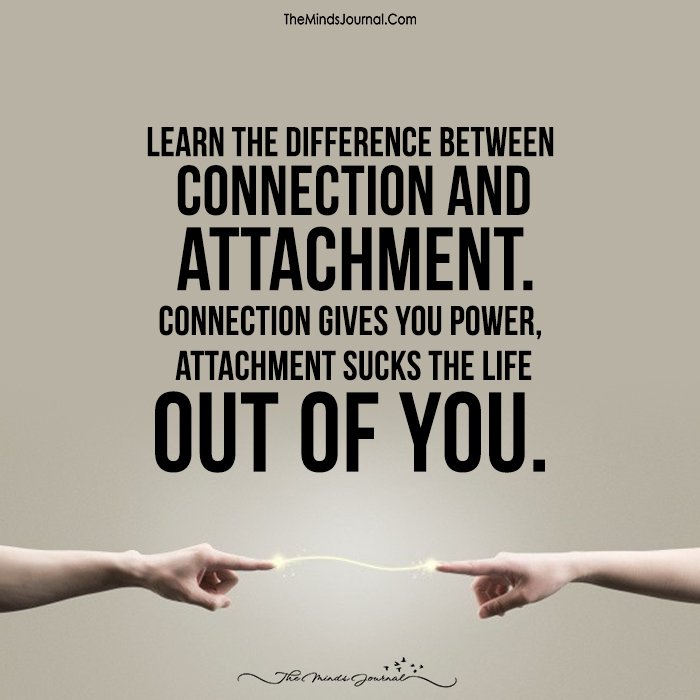
Signs of emotional attachment and emotional connection

6. You are more afraid of losing them than being unhappy.

This is the quietest but most telling sign. If staying feels painful, yet leaving feels impossible and heartbreaking, chances are you are emotionally attached.

In emotional attachment, fear becomes the glue, and this is where emotional dependency slowly turns into emotional paralysis.

On the other hand, emotional connection doesn’t trap you. You stay because you want to, not because you are terrified of being alone. When attachment is present, the idea of losing the person feels like losing your footing in the world.

Emotional dependency means choosing familiarity over fulfillment. Connection however, encourages growth, even if that growth eventually leads you away from the relationship.

Attachment vs. Connection: Why the Difference Matters

Understanding the difference between attachment and connection isn’t about judging yourself, rather it’s about freeing yourself.

Remember that attachment is rooted in fear, insecurity, and unmet emotional needs. Connection is rooted in mutual respect, safety, and emotional presence.

If you have been wondering what are signs of emotional attachment or questioning whether what you feel is love, awareness is the first step.

Learning to recognize the signs of emotional dependency helps you shift toward healthier relationships that are built on emotional connection – not anxiety, not obsession, and not fear of loss.

Because real connection doesn’t drain you. It grounds you.

Related: Codependency Recovery: How Self Love Is The Key To Healing

Do you see signs of emotional connection or signs of emotional dependency in your relationship? Let us know your thoughts in the comments down below!


Frequently Asked Questions (FAQs)

1. What is unhealthy attachment?

Unhealthy attachment happens when a relationship feels necessary for emotional survival instead of shared growth. You may feel anxious without constant contact, ignore your own needs, or stay despite feeling unhappy. Love starts to feel heavy, not supportive. Rather than safety, there’s fear of loss, overthinking, and emotional dependence. It keeps you stuck, chasing reassurance instead of experiencing calm, balance, trust, and genuine connection with another person long term consistently.

2. What are signs of toxic attachment?

Toxic attachment shows up when a relationship feels consuming rather than supportive. You feel anxious when they pull away, ignore red flags, and rely on them for validation. Boundaries feel threatening, not healthy. There’s constant overthinking, fear of abandonment, and difficulty being alone. Instead of growth, the connection creates emotional dependency, control issues, and repeated cycles of highs and lows that leave you drained, insecure, and stuck over time slowly.

3. What are the 5 core symptoms of codependency?

The five core symptoms of codependency include excessive people-pleasing, difficulty setting boundaries, and tying self-worth to others’ approval. There’s often a strong fear of abandonment, a tendency to over-function or “fix” others, and emotional suppression to keep the peace. Relationships feel unbalanced, with constant self-sacrifice and anxiety replacing mutual care, autonomy, and healthy emotional independence over time.


difference between attachment and connection

Published On:

Last updated on:

Alexandra Hall

I’m Alexandra Hall, a journalism grad who’s endlessly curious about the inner workings of the human heart and mind. I write about relationships, psychology, spirituality, mental health, and books, weaving insight with empathy. If it’s raw, real, and thought-provoking, it’s probably on my radar.

Disclaimer: The informational content on The Minds Journal have been created and reviewed by qualified mental health professionals. They are intended solely for educational and self-awareness purposes and should not be used as a substitute for professional medical advice, diagnosis, or treatment. If you are experiencing emotional distress or have concerns about your mental health, please seek help from a licensed mental health professional or healthcare provider.

Leave a Comment

Today's Horoscope

Your Daily Horoscope For 4 April, 2026: Free Predictions

Daily Horoscope 4 April, 2026: Prediction For Each Zodiac Sign

Look at your daily prediction and see what the stars have in store for your love life and your future!

Latest Quizzes

How Many Circles Do You See? A Simple Test of Thinking Style

How Many Circles Do You See? Your Answer Might Reveal Narcissistic Traits! 

Take a closer look at this simple image and discover what your circle count reveals about your thinking style, perception, and attention in this fun and engaging visual test.

Latest Quotes

Real Signs Your Body Is Actually in Good Health: How to Know You’re Truly Well

Real Signs Your Body Is Actually in Good Health: How to Know You’re Truly Well

Real signs your body is healthy don’t always show up on lab reports. From good sleep and clear skin to regular digestion and a stable mood, your body is constantly sending quiet signals of wellness.

Readers Blog

Caption This Image and Selected Wisepicks – 29 March 2026

Caption This Image and Selected Wisepicks – 29 March 2026

Ready to unleash your inner wordsmith? ✨??☺️ Now’s your chance to show off your wit, charm, or sheer genius in just one line! Whether it’s laugh-out-loud funny or surprisingly deep, we want to hear it.Submit your funniest, wittiest, or most thought-provoking caption in the comments. We’ll pick 15+ winners to be featured on our website…

Latest Articles

6 Signs of Emotional Attachment That Feel Like Love but Aren’t

Sometimes the hardest truth to accept is that what you are calling love is actually attachment wearing a convincing disguise. The signs of emotional attachment don’t show up quietly – they are loud, obsessive, and emotionally exhausting.

You feel pulled toward someone, not connected to them. And that’s where people get stuck misunderstanding the difference between attachment and connection.

One feels like urgency and fear; the other feels like ease and safety.

Learning to spot emotional dependency in relationships, the subtle signs of emotional dependency, and the real signs of emotional connection can completely change how you see your relationships, and yourself.

Related: 7 Hidden Red Flags of Codependency You Need to Know Right Now!

6 Signs of Emotional Attachment That Don’t Mean Intimacy

1. Your mood depends on how they treat you.

One of the clearest signs of emotional dependency is when someone else controls your emotional weather. If they are warm, you are happy. If they are cold or distant, your entire day collapses.

This isn’t connection, it’s attachment fueled by insecurity.

When you are emotionally attached to someone, it makes you outsource your emotional regulation to another person, which is why emotional dependency in relationships feels so intense and unstable.

When you are emotionally connected to someone instead of attached, someone can have an off day without it sending you into panic mode. You don’t feel abandoned every time they are a bit quiet.

When your self-worth rises and falls based on their attention, it’s a strong sign of attachment rather than intimacy. This is the difference between attachment and connection: emotional independence.

Signs of emotional attachment and emotional connections

2. You crave reassurance more than understanding.

If you constantly need validation from your partner, like text responses, compliments, reminders they care, then that’s one of the most overlooked signs of emotional attachment.

You are not actually craving closeness, you are craving relief from anxiety. This is how emotional dependency in relationships sneaks in quietly and becomes normal.

Emotional connection doesn’t need constant reassurance to survive. You trust how the person feels about you because their actions are consistent. When attachment is present, reassurance never lasts. You feel better for a moment, then the doubt comes back.

That endless loop is one of the clearest answers to what are signs of emotional attachment. Connection brings calm. Attachment keeps you chasing certainty that never fully arrives.

3. You ignore red flags just to stay close.

Attachment has a way of blinding you. You notice the red flags, but you downplay them because losing the person feels worse than losing yourself.

This is one of the most damaging signs of emotional dependency because it teaches you to tolerate behavior that hurts you.

When you are emotionally connected, boundaries feel natural, not threatening. You don’t have to silence your instincts to maintain closeness.

The difference between attachment and connection becomes obvious here: attachment says “don’t rock the boat,” while connection says “we can talk about this.”

If you are constantly compromising your values, needs, or comfort just to keep someone around, you are likely dealing with emotional attachment, not emotional connection.

4. You feel empty or lost without them.

Your sense of identity shrinks when they are not around. You feel bored, restless, or oddly hollow without their presence. Emotional attachment often fills a void rather than building a bond.

Healthy emotional connection adds to your life; it doesn’t replace it. You still feel like yourself when you are alone.

Emotional dependency in relationships makes solitude feel unbearable, because the attachment isn’t about love, it’s about avoidance.

When someone becomes your only source of comfort, excitement, or purpose, that’s attachment tightening its grip. A genuine connection and love allows space without emotional collapse.

Related: Codependency or Love? 8 Signs Of Enmeshment In Romantic Relationships

5. The relationship feels intense but not safe.

Intensity is one of the most misleading signs of emotional attachment. Big emotions, dramatic highs and lows, and constant tension can feel passionate, but they are not the same as connection.

Emotional attachment thrives on unpredictability, which keeps you hooked. But emotional connection feels different. It’s steady. You feel emotionally safe, not constantly bracing for impact.

One of the clearest signs of emotional connection is mental and emotional peace. You don’t feel like you are auditioning for love or fighting to stay relevant.

When a relationship feels exciting but never secure, that’s a key marker in the difference between attachment and connection.

Signs of emotional attachment and emotional connection

6. You are more afraid of losing them than being unhappy.

This is the quietest but most telling sign. If staying feels painful, yet leaving feels impossible and heartbreaking, chances are you are emotionally attached.

In emotional attachment, fear becomes the glue, and this is where emotional dependency slowly turns into emotional paralysis.

On the other hand, emotional connection doesn’t trap you. You stay because you want to, not because you are terrified of being alone. When attachment is present, the idea of losing the person feels like losing your footing in the world.

Emotional dependency means choosing familiarity over fulfillment. Connection however, encourages growth, even if that growth eventually leads you away from the relationship.

Attachment vs. Connection: Why the Difference Matters

Understanding the difference between attachment and connection isn’t about judging yourself, rather it’s about freeing yourself.

Remember that attachment is rooted in fear, insecurity, and unmet emotional needs. Connection is rooted in mutual respect, safety, and emotional presence.

If you have been wondering what are signs of emotional attachment or questioning whether what you feel is love, awareness is the first step.

Learning to recognize the signs of emotional dependency helps you shift toward healthier relationships that are built on emotional connection – not anxiety, not obsession, and not fear of loss.

Because real connection doesn’t drain you. It grounds you.

Related: Codependency Recovery: How Self Love Is The Key To Healing

Do you see signs of emotional connection or signs of emotional dependency in your relationship? Let us know your thoughts in the comments down below!


Frequently Asked Questions (FAQs)

1. What is unhealthy attachment?

Unhealthy attachment happens when a relationship feels necessary for emotional survival instead of shared growth. You may feel anxious without constant contact, ignore your own needs, or stay despite feeling unhappy. Love starts to feel heavy, not supportive. Rather than safety, there’s fear of loss, overthinking, and emotional dependence. It keeps you stuck, chasing reassurance instead of experiencing calm, balance, trust, and genuine connection with another person long term consistently.

2. What are signs of toxic attachment?

Toxic attachment shows up when a relationship feels consuming rather than supportive. You feel anxious when they pull away, ignore red flags, and rely on them for validation. Boundaries feel threatening, not healthy. There’s constant overthinking, fear of abandonment, and difficulty being alone. Instead of growth, the connection creates emotional dependency, control issues, and repeated cycles of highs and lows that leave you drained, insecure, and stuck over time slowly.

3. What are the 5 core symptoms of codependency?

The five core symptoms of codependency include excessive people-pleasing, difficulty setting boundaries, and tying self-worth to others’ approval. There’s often a strong fear of abandonment, a tendency to over-function or “fix” others, and emotional suppression to keep the peace. Relationships feel unbalanced, with constant self-sacrifice and anxiety replacing mutual care, autonomy, and healthy emotional independence over time.


difference between attachment and connection

Published On:

Last updated on:

Alexandra Hall

I’m Alexandra Hall, a journalism grad who’s endlessly curious about the inner workings of the human heart and mind. I write about relationships, psychology, spirituality, mental health, and books, weaving insight with empathy. If it’s raw, real, and thought-provoking, it’s probably on my radar.

Leave a Comment

    Leave a Comment