7 Signs of Deep Emotional Pain You Might Not Realize You’re Carrying

Author : Alexandra Hall

7 Signs of Deep Emotional Pain You Mistake for Strength

The signs of deep emotional pain don’t always show up in ways that are easy to spot. Most of the time, they blend into everyday life, into how we relate to people, the habits we fall into, and the quiet ways we protect ourselves without really noticing.

When people talk about emotional pain, they often picture tears, breakdowns, or moments where everything falls apart. But for a lot of people, it isn’t like that at all.

It’s quieter. It looks like being “fine,” keeping busy, or just carrying on, even when something underneath doesn’t feel quite right.

Many of the signs of emotional suffering we carry show up as habits: pushing people away, staying guarded, doubting ourselves, or assuming love isn’t meant for us.

So, today we are going to talk about some of the most common, and misunderstood ways deep emotional pain shows up in everyday life.

Related: How To Deal With Despair: 5 Steps To Deal With Lingering Emotional Pain

7 Signs of Deep Emotional Pain You Hide Behind Being “Fine”

1. Not trusting anyone and pushing people away.

One of the major signs of deep emotional pain is difficulty trusting others. This doesn’t always look like hostility; sometimes it looks like emotional distance, sarcasm, or keeping conversations surface-level.

You may still want connection, but somehow it feels safer to keep a bit of distance.

When emotional pain hasn’t really been worked through, vulnerability and intimacy can start to feel risky.

Trust becomes something you give out carefully, not because you don’t care, but because experience has taught you that getting attached can sometimes end in disappointment or hurt.

Over time, pushing people away can turn into a form of self-protection. It’s one of those signs that’s easy to misunderstand.

From the outside, it might look like you are cold or detached, when in reality you are just protecting something tender that never had the chance to heal.
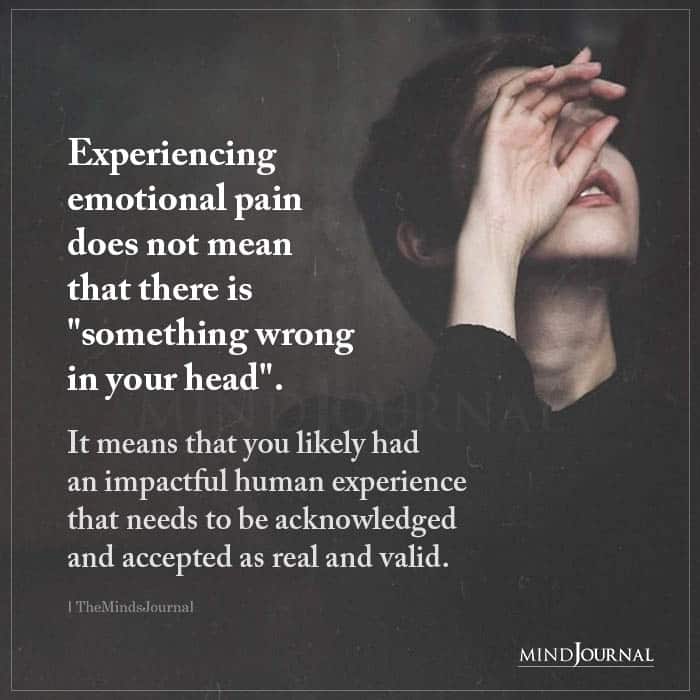
Signs of deep emotional pain

2. Feeling responsible for other people and their feelings.

Another subtle sign from the image is emotional over-responsibility. You know, feeling like it’s your job to manage everyone else’s emotions? If someone is upset, you feel at fault. If someone is uncomfortable, you feel the need to fix it.

This sort of behavior pattern often develops early, especially in environments where emotional safety was unpredictable. You learned that staying attuned to others was a way to stay safe.

Over time, this becomes emotionally and mentally exhausting, even though it’s often praised as being “caring” or “empathetic.”

Constantly carrying others’ emotional weight leaves very little room for your own needs, and deep emotional pain thrives in that silence.

3. Struggling to set healthy boundaries.

A lack of boundaries is one of the most misunderstood signs of deep emotional pain. It’s not about weakness, it’s about survival. When saying no has never felt safe, setting limits can start to feel like a real risk to connection.

Without clear boundaries, relationships can become draining or confusing. You might give too much, tolerate more than you should, or stay quiet just to keep the peace.

Over time, resentment creeps in, and more often than not, it gets turned inward.

This pattern is closely tied to early signs of emotional pain, especially in environments where boundaries weren’t respected or even shown.

When emotional pain goes unrecognized, the body learns to adapt instead of protect itself.

4. Feeling alone, disconnected, or emotionally numb often.

Emotional numbness is one of the hardest signs of emotional suffering to recognize, mostly because it doesn’t always feel like pain.

It often feels like nothing at all. Like you are disconnected from yourself, and from other people, even when you are not actually alone.

Numbness is often the nervous system’s way of coping when feelings feel too intense to deal with. Instead of feeling everything, your system dials things down. You feel less, or sometimes nothing at all.

This can show up as boredom, emptiness, or a sense that life is happening somewhere just out of reach. It’s a quiet but powerful sign of emotional pain, and it’s easy to brush off, until it starts to affect your relationships, motivation, and sense of self.

Related: Navigating Pain: 5 Strategies for Dealing with Emotional Debris

5. Always keeping people at a distance.

Keeping people at arm’s length can be a gentle form of self-protection when emotional pain hasn’t had space to heal. You might be warm, friendly, even easy to be around, yet true closeness still feels a little too exposed, or somehow unsafe.

This distance often develops after experiences of loss, betrayal, or emotional neglect. Letting people get close once hurt too much, so now distance feels safer than connection.

This behavior is closely linked to fear of love and intimacy. When closeness feels threatening, emotional pain disguises itself as independence. It’s one of those signs of emotional pain that looks functional on the outside, but lonely on the inside.

6. Thinking that real love won’t happen to you.

Believing that love is for other people, but not for you, is one of the most heartbreaking signs of emotional suffering. It’s not pessimism; it’s learned expectation.

Somewhere along the way, you internalized the idea that connection doesn’t last or isn’t safe. This belief often fuels a deep fear of love and intimacy. You may want closeness but expect abandonment, rejection, or disappointment.

So you brace yourself in advance by not hoping too much. Remember, that this isn’t a character flaw. It’s a story emotional pain tells to protect you from future hurt, even though it also keeps you from genuine connections sometimes.

Signs of deep emotional pain

7. Battling a harsh and critical inner voice.

A loud, unforgiving critical inner voice is one of the most common signs of deep emotional pain. It constantly questions your worth, minimizes your achievements, and reminds you of your perceived failures.

This voice didn’t come from nowhere. You feel like this because you have grown up in environments where love felt conditional or criticism was constant. Over time, that external voice becomes internal.

This is one of the most damaging signs of emotional pain, because it turns suffering inward. The critical inner voice keeps emotional pain alive by replaying it – again and again – long after the original wounds occurred.

Why Do These Signs Matter?

Each of these behaviours once helped you survive something emotionally difficult. But survival strategies and coping mechanisms aren’t always meant to last forever.

Recognizing these signs of deep emotional pain isn’t about self-diagnosis or blame. It’s about awareness. When emotional pain stays unnamed, it stays in control.

Naming the signs of emotional suffering is often the first step toward change, and toward learning that protection doesn’t have to come at the cost of connection.

Bottomline

If you recognized yourself in more than one of these signs, you are not broken, you are simply human. Emotional pain doesn’t mean something is wrong with you. It means something happened to you.

Related: How To Fully Release Difficult Emotions That Hold You Back

And healing doesn’t start with fixing yourself. It starts with understanding why you learned to protect yourself the way you did, and gently exploring what safety might look like now.

That’s where real change begins.


Frequently Asked Questions (FAQs)

1. What does emotional pain do to a person?

Emotional pain can quietly reshape a person. It makes you more guarded, more tired, and sometimes unsure of yourself in ways you weren’t before. Little things can feel heavier, and trust doesn’t come as easily. You might pull back, overthink, or replay moments trying to make sense of what hurt you. At the same time, pain can sharpen awareness, like it teaches you what you can’t ignore anymore and what you truly need to protect.

2. What happens when you suppress your emotions for too long?

When you suppress your emotions for too long, they don’t disappear, they build pressure. Over time, this can show up as irritability, numbness, anxiety, or sudden emotional outbursts that feel out of proportion. You may feel disconnected from yourself or exhausted without knowing why. Suppressed feelings often surface through the body or behavior, forcing attention later in ways that are harder to control or understand.

3. How can you tell if someone is suffering emotionally?

You can often tell someone is suffering emotionally by subtle shifts rather than dramatic signs. They may seem withdrawn, unusually quiet, or easily overwhelmed by small things. Laughter might feel forced, and they may avoid talking about themselves. Changes in sleep, energy, or patience are common. Sometimes the clearest sign is inconsistency – they show up for others, but rarely let anyone show up for them.

signs of emotional pain

Published On:

Last updated on:

Alexandra Hall

I’m Alexandra Hall, a journalism grad who’s endlessly curious about the inner workings of the human heart and mind. I write about relationships, psychology, spirituality, mental health, and books, weaving insight with empathy. If it’s raw, real, and thought-provoking, it’s probably on my radar.

Disclaimer: The informational content on The Minds Journal have been created and reviewed by qualified mental health professionals. They are intended solely for educational and self-awareness purposes and should not be used as a substitute for professional medical advice, diagnosis, or treatment. If you are experiencing emotional distress or have concerns about your mental health, please seek help from a licensed mental health professional or healthcare provider.

Leave a Comment

Today's Horoscope

Weekly Horoscope PART one

Weekly Horoscope 15 March to 21 March 2026

Read your zodiac sign’s prediction to understand the energy surrounding you and how to make the most of the days ahead!

Latest Quizzes

Interesting Finger Personality Test: 4 Finger Lines

Finger Personality Test: Join Your Fingers And Reveal A Hidden Personality Secret!

Look closely at your finger lines. Which pattern do you see? This personality test might surprise you!

Latest Quotes

How Men Show Love Through Actions (Male Psychology in Relationships)

How Men Show Love Through Actions (Male Psychology in Relationships)

Male psychology in relationships shows that men express love through presence, protection, and peace more than poetry. Decode his actions so you can see how deeply he actually cares.

Readers Blog

Caption This Image and Selected Wisepicks – 15 March 2026

Caption This Image and Selected Wisepicks – 15 March 2026

Ready to unleash your inner wordsmith? ✨??☺️ Now’s your chance to show off your wit, charm, or sheer genius in just one line! Whether it’s laugh-out-loud funny or surprisingly deep, we want to hear it.Submit your funniest, wittiest, or most thought-provoking caption in the comments. We’ll pick 15+ winners to be featured on our website…

Latest Articles

7 Signs of Deep Emotional Pain You Mistake for Strength

The signs of deep emotional pain don’t always show up in ways that are easy to spot. Most of the time, they blend into everyday life, into how we relate to people, the habits we fall into, and the quiet ways we protect ourselves without really noticing.

When people talk about emotional pain, they often picture tears, breakdowns, or moments where everything falls apart. But for a lot of people, it isn’t like that at all.

It’s quieter. It looks like being “fine,” keeping busy, or just carrying on, even when something underneath doesn’t feel quite right.

Many of the signs of emotional suffering we carry show up as habits: pushing people away, staying guarded, doubting ourselves, or assuming love isn’t meant for us.

So, today we are going to talk about some of the most common, and misunderstood ways deep emotional pain shows up in everyday life.

Related: How To Deal With Despair: 5 Steps To Deal With Lingering Emotional Pain

7 Signs of Deep Emotional Pain You Hide Behind Being “Fine”

1. Not trusting anyone and pushing people away.

One of the major signs of deep emotional pain is difficulty trusting others. This doesn’t always look like hostility; sometimes it looks like emotional distance, sarcasm, or keeping conversations surface-level.

You may still want connection, but somehow it feels safer to keep a bit of distance.

When emotional pain hasn’t really been worked through, vulnerability and intimacy can start to feel risky.

Trust becomes something you give out carefully, not because you don’t care, but because experience has taught you that getting attached can sometimes end in disappointment or hurt.

Over time, pushing people away can turn into a form of self-protection. It’s one of those signs that’s easy to misunderstand.

From the outside, it might look like you are cold or detached, when in reality you are just protecting something tender that never had the chance to heal.

Signs of deep emotional pain

2. Feeling responsible for other people and their feelings.

Another subtle sign from the image is emotional over-responsibility. You know, feeling like it’s your job to manage everyone else’s emotions? If someone is upset, you feel at fault. If someone is uncomfortable, you feel the need to fix it.

This sort of behavior pattern often develops early, especially in environments where emotional safety was unpredictable. You learned that staying attuned to others was a way to stay safe.

Over time, this becomes emotionally and mentally exhausting, even though it’s often praised as being “caring” or “empathetic.”

Constantly carrying others’ emotional weight leaves very little room for your own needs, and deep emotional pain thrives in that silence.

3. Struggling to set healthy boundaries.

A lack of boundaries is one of the most misunderstood signs of deep emotional pain. It’s not about weakness, it’s about survival. When saying no has never felt safe, setting limits can start to feel like a real risk to connection.

Without clear boundaries, relationships can become draining or confusing. You might give too much, tolerate more than you should, or stay quiet just to keep the peace.

Over time, resentment creeps in, and more often than not, it gets turned inward.

This pattern is closely tied to early signs of emotional pain, especially in environments where boundaries weren’t respected or even shown.

When emotional pain goes unrecognized, the body learns to adapt instead of protect itself.

4. Feeling alone, disconnected, or emotionally numb often.

Emotional numbness is one of the hardest signs of emotional suffering to recognize, mostly because it doesn’t always feel like pain.

It often feels like nothing at all. Like you are disconnected from yourself, and from other people, even when you are not actually alone.

Numbness is often the nervous system’s way of coping when feelings feel too intense to deal with. Instead of feeling everything, your system dials things down. You feel less, or sometimes nothing at all.

This can show up as boredom, emptiness, or a sense that life is happening somewhere just out of reach. It’s a quiet but powerful sign of emotional pain, and it’s easy to brush off, until it starts to affect your relationships, motivation, and sense of self.

Related: Navigating Pain: 5 Strategies for Dealing with Emotional Debris

5. Always keeping people at a distance.

Keeping people at arm’s length can be a gentle form of self-protection when emotional pain hasn’t had space to heal. You might be warm, friendly, even easy to be around, yet true closeness still feels a little too exposed, or somehow unsafe.

This distance often develops after experiences of loss, betrayal, or emotional neglect. Letting people get close once hurt too much, so now distance feels safer than connection.

This behavior is closely linked to fear of love and intimacy. When closeness feels threatening, emotional pain disguises itself as independence. It’s one of those signs of emotional pain that looks functional on the outside, but lonely on the inside.

6. Thinking that real love won’t happen to you.

Believing that love is for other people, but not for you, is one of the most heartbreaking signs of emotional suffering. It’s not pessimism; it’s learned expectation.

Somewhere along the way, you internalized the idea that connection doesn’t last or isn’t safe. This belief often fuels a deep fear of love and intimacy. You may want closeness but expect abandonment, rejection, or disappointment.

So you brace yourself in advance by not hoping too much. Remember, that this isn’t a character flaw. It’s a story emotional pain tells to protect you from future hurt, even though it also keeps you from genuine connections sometimes.

Signs of deep emotional pain

7. Battling a harsh and critical inner voice.

A loud, unforgiving critical inner voice is one of the most common signs of deep emotional pain. It constantly questions your worth, minimizes your achievements, and reminds you of your perceived failures.

This voice didn’t come from nowhere. You feel like this because you have grown up in environments where love felt conditional or criticism was constant. Over time, that external voice becomes internal.

This is one of the most damaging signs of emotional pain, because it turns suffering inward. The critical inner voice keeps emotional pain alive by replaying it – again and again – long after the original wounds occurred.

Why Do These Signs Matter?

Each of these behaviours once helped you survive something emotionally difficult. But survival strategies and coping mechanisms aren’t always meant to last forever.

Recognizing these signs of deep emotional pain isn’t about self-diagnosis or blame. It’s about awareness. When emotional pain stays unnamed, it stays in control.

Naming the signs of emotional suffering is often the first step toward change, and toward learning that protection doesn’t have to come at the cost of connection.

Bottomline

If you recognized yourself in more than one of these signs, you are not broken, you are simply human. Emotional pain doesn’t mean something is wrong with you. It means something happened to you.

Related: How To Fully Release Difficult Emotions That Hold You Back

And healing doesn’t start with fixing yourself. It starts with understanding why you learned to protect yourself the way you did, and gently exploring what safety might look like now.

That’s where real change begins.


Frequently Asked Questions (FAQs)

1. What does emotional pain do to a person?

Emotional pain can quietly reshape a person. It makes you more guarded, more tired, and sometimes unsure of yourself in ways you weren’t before. Little things can feel heavier, and trust doesn’t come as easily. You might pull back, overthink, or replay moments trying to make sense of what hurt you. At the same time, pain can sharpen awareness, like it teaches you what you can’t ignore anymore and what you truly need to protect.

2. What happens when you suppress your emotions for too long?

When you suppress your emotions for too long, they don’t disappear, they build pressure. Over time, this can show up as irritability, numbness, anxiety, or sudden emotional outbursts that feel out of proportion. You may feel disconnected from yourself or exhausted without knowing why. Suppressed feelings often surface through the body or behavior, forcing attention later in ways that are harder to control or understand.

3. How can you tell if someone is suffering emotionally?

You can often tell someone is suffering emotionally by subtle shifts rather than dramatic signs. They may seem withdrawn, unusually quiet, or easily overwhelmed by small things. Laughter might feel forced, and they may avoid talking about themselves. Changes in sleep, energy, or patience are common. Sometimes the clearest sign is inconsistency – they show up for others, but rarely let anyone show up for them.

signs of emotional pain

Published On:

Last updated on:

Alexandra Hall

I’m Alexandra Hall, a journalism grad who’s endlessly curious about the inner workings of the human heart and mind. I write about relationships, psychology, spirituality, mental health, and books, weaving insight with empathy. If it’s raw, real, and thought-provoking, it’s probably on my radar.

Leave a Comment

    Leave a Comment