

A child’s room isn’t just four walls and a ceiling. It’s a universe. Children’s wall art transforms ordinary spaces into extraordinary realms where imagination runs wild, and dreams take physical form. Parents recognize this now more than ever, understanding that environment shapes development, creativity, and emotional well-being in ways that extend far beyond simple aesthetics.
The market responds with countless options, from DIY solutions to professional services. Working with a skilled mural artist brings technical expertise and creative vision that elevates projects beyond what template designs offer. These professionals understand color psychology, scale, and how children perceive space differently from adults. The investment pays dividends in daily joy and developmental support that generic decorations simply cannot match.
Why Choose Wall Murals for Kids
Kids’ room murals offer benefits that extend beyond visual appeal into developmental territory. Stimulating imagination happens naturally when children wake to scenes of enchanted forests or distant galaxies. Cognitive development receives support through visual engagement with educational elements woven into designs. Emotional security builds when familiar, beloved imagery surrounds children during vulnerable sleep hours and quiet moments.
Practical advantages matter too. Cost comparison favors murals over constantly replaced posters, bedding sets, and decorative items that children outgrow or tire of within months. Covering imperfect walls becomes effortless. Creating themed spaces without cluttering surfaces with objects allows for cleaner, more organized rooms. Many mural materials clean more easily than textured wallpapers that trap dust and resist wiping.
The aesthetic impact arrives wholly and instantly. Room transformation happens in ways that incremental decorating never achieves. Personalization that reflects individual interests shows children that their preferences matter and deserve recognition. Thoughtful designs grow with children through clever theme selection that spans developmental stages. Magic and immersion emerge when walls cease being boundaries and become portals to other worlds.
Age-Appropriate Mural Considerations
Nursery murals require different thinking than designs for older children. Infants need soft, calming palettes that promote rest rather than stimulation. Simple shapes and patterns work better than complex scenes. High-contrast elements support visual development during those crucial early months when babies learn to focus and track movement. Nature themes featuring gentle animals, clouds, stars, and moons create soothing environments. Abstract patterns in pastel tones add interest without overstimulation. Material safety becomes paramount—non-toxic formulations and low VOC paints protect developing respiratory systems.
Toddlers demand different approaches entirely. Bright, engaging colors match their energy levels and short attention spans. Cartoon murals featuring favorite characters provide comfort and joy. Farm animals and zoo scenes teach vocabulary and animal recognition. Transportation themes with cars, trains, and planes fuel obsessions common at this age. Educational components, such as counting elements or integrating the alphabet, turn walls into learning tools. Durability matters because toddlers touch everything, test boundaries, and occasionally decide walls need their artistic contributions too.

Early elementary years bring expanded interests and developing personalities. Adventure murals for kids featuring space exploration, dinosaur worlds, or superhero scenes match their growing sense of possibility and adventure. Hobby reflection becomes important as children discover what they love. Sports murals celebrate athletic interests. Fantasy wall art brings beloved books and imaginative play to life. Sophistication increases without sacrificing playfulness. These designs support reading development and encourage curiosity about the world beyond immediate experience.
Tweens present unique challenges. They’ve outgrown “babyish” aesthetics but aren’t quite ready for adult sophistication. Colorful wall designs using geometric patterns or abstract elements work well. Music, art, and sports themes reflect deepening interests without feeling childish. Inspirational quotes motivate during challenging developmental years. The goal is to create spaces they won’t immediately want changed, while respecting their emerging independence and awareness of peer opinions.
Teenagers require mature approaches to children’s room decor that barely resemble what worked years ago. Urban and street art styles appeal to their developing aesthetic sensibilities. Minimalist designs create calm study environments. Photography-based murals let them showcase travel dreams or artistic interests. Music and pop culture references feel authentic without being trendy enough to embarrass them six months later. Respecting autonomy becomes crucial—forced designs breed resentment, not appreciation.
Read More: 7 Incredible Benefits of Art Therapy for Children You Should Know!
Popular Themes and Room Applications
Nature and animal themes dominate playroom murals and bedrooms alike. Forest scenes with woodland creatures create peaceful, grounding environments. Ocean murals featuring marine life spark curiosity about ecosystems and conservation. Safari and jungle designs bring exotic animals into daily view, teaching about distant habitats and biodiversity. Farm scenes with domestic animals provide comfort and familiarity, connecting children with aan gricultural heritage that many urban families have lost.
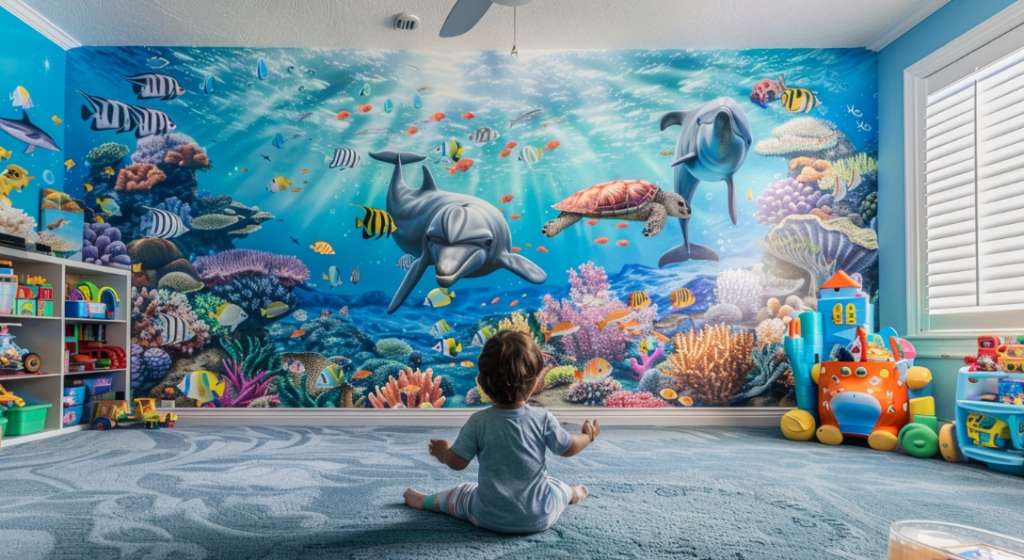
Whimsical wall murals inspired by fairy tales and fantasy never lose their appeal. Castles and kingdoms transport children into storybook worlds. Space and cosmos designs featuring planets, stars, and rockets fuel scientific curiosity and wonder about the universe. Dinosaurs remain perpetually popular, whether rendered realistically or as friendly cartoon companions. Superhero and adventure themes celebrate courage, justice, and possibility.
Educational murals serve dual purposes—decoration and learning. World maps with animals teach geography while sparking travel dreams. Alphabet and number designs support literacy and numeracy development. Science-focused murals depicting solar systems, human anatomy, or natural history turn bedrooms into extensions of classroom learning. The best educational designs integrate seamlessly with entertaining elements so children absorb information without feeling lectured.
Bedroom murals for children require different considerations than those for playrooms. The wall behind the bed typically serves as the focal point, though some designers prefer the wall opposite the door for maximum impact. Ceiling murals work beautifully for spaces where children spend time lying down, gazing upward before sleep or upon waking. Calming elements matter more in sleeping spaces than in play areas. Colors should promote rest rather than excitement. Nighttime visibility becomes a consideration—murals should remain pleasant in dim light rather than creating shadows that frighten.
Playrooms often tolerate, and even benefit from, more energetic fun wall art for kids. Durability takes priority given the rough treatment these spaces endure. Stimulating and energetic designs match the room’s purpose. Interactive elements, such as chalkboard sections or magnetic areas, expand play possibilities. Washable materials prove essential when juice spills and muddy hands leave marks.
Shared rooms present compromise challenges. Age gaps complicate theme selection when siblings have different interests and maturity levels. Individual space definitions, whether through separate accent walls or modular designs, help both children feel represented. Finding shared themes everyone enjoys requires negotiation and creativity. Fair representation prevents resentment and ensures that both children develop positive associations with their space.
Design and Planning Process
Involving children in decisions teaches valuable lessons while ensuring satisfaction with final results. Age-appropriate participation varies—toddlers might choose between two color options, while teenagers potentially deserve complete creative control within budget constraints. Managing expectations requires honest conversations about costs, longevity, and practical limitations. Balancing wants against needs teaches compromise and realistic thinking.

Space assessment determines what’s actually possible. Wall dimensions, ceiling height, and architectural features all constrain design options. Lighting analysis reveals how natural and artificial light affect color appearance throughout the day. Furniture placement considerations ensure essential design elements remain visible rather than hidden behind dressers or toy chests.
Color psychology influences mood and behavior more than most parents realize. Blue promotes calm and focus, making it ideal for study areas. Yellow generates happiness and energy but can overstimulate in large doses. Green provides balance and a sense of connection to nature. Purple sparks creativity. Age-appropriate palettes shift from pastels for babies to bright primaries for toddlers, and then to sophisticated combinations for teens.
Scale and proportion determine whether designs enhance or overwhelm spaces. Elements must suit room dimensions while considering children’s perspectives—what looks proportional to adults might seem enormous from a child’s lower vantage point. Furniture balance ensures the mural complements rather than competes with existing pieces.
Read More: Color Psychology: How Colors Influence Your Choices and Feelings
Materials, Methods, and Practical Considerations
Kids’ wall painting options range from removable peel-and-stick wallpaper to traditional wallpaper to hand-painted custom artwork. Peel-and-stick varieties offer renter-friendly, damage-free removal when families move or children’s tastes change. Traditional wallpaper provides durability and professional appearance at the cost of permanence. Hand-painted murals by skilled artists create unique, one-of-a-kind results but represent a significant investment.
Wall decals offer flexibility and repositioning. Budget-friendly options exist for families to test ideas before committing to larger installations. Animal murals for kids frequently use decal applications, allowing parents to create entire scenes by layering individual elements. This modular approach permits updates and changes as interests evolve.
Safety considerations govern the selection of materials for kid-friendly wall designs. Non-toxic paints and low or zero-VOC formulations protect developing respiratory systems. Certifications assure that products meet safety standards. Off-gassing periods matter—rooms should air out before children occupy newly decorated spaces.
Durability requirements exceed those for adult spaces. Washability becomes essential given the inevitable fingerprints, spills, and creative marks. Scuff protection matters where furniture might bump walls. Moisture handling is necessary in rooms where humidifiers run or where spills occur frequently. Expected lifespan calculations help parents evaluate whether premium materials justify higher costs.
Professional installation versus DIY execution depends on project complexity, budget constraints, and parental skill levels. Simple peel-and-stick kids’ room decorations suit confident DIYers. Complex hand-painted designs requiring artistic ability and technical expertise justify professional fees. Hybrid approaches split design development from installation execution, balancing cost against quality.


Leave a Comment