
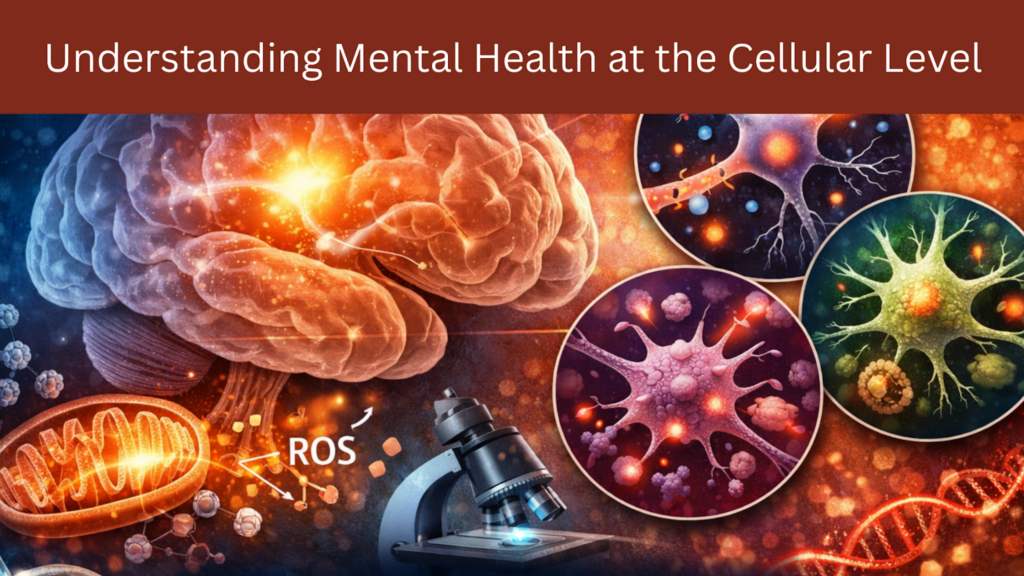
Mental health is often discussed in terms of thoughts, feelings, and behavior. However, recent advances in cellular and molecular neuroscience have demonstrated the link between mental health and underlying biological processes within brain cells. Looking at these behaviors at the cellular level adds a layer of insight that can help explain why symptoms appear, how patients respond differently to treatments, and where new therapies might be targeted.
The Brain as a Cellular System
The human brain is a complex ecosystem of specialized cell types that continuously interact with one another. These include:
Neurons
Neurons are cells that transmit electrical signals and release neurotransmitters across synapses. Learning, memory, and mood regulation depend on the health and connectivity of these neurons.
Astrocytes
Astrocytes provide metabolic support to neurons, regulating neurotransmitter levels and modulating the chemical environment around synapses.
Microglia
These immune cells in the human brain prune synapses during development and mount inflammatory responses when triggered.
Normal mental functioning depends on the balance and communication between these cells. Small molecular shifts in signaling, energy production, inflammation, or oxidative balance can scale up to measurable changes in network activity and behavior.
Cellular Stress and Brain Function
Cells experience different kinds of stress, including metabolic, inflammatory, and oxidative. The brain consumes a lot of oxygen and has a high concentration of polyunsaturated lipids, which are prone to peroxidation. It also contains many long-lived cells, such as neurons that accumulate damage over time.
When mitochondria (responsible for producing energy in cells) don’t function well, neurons suffer energy deficits, leading to excess reactive oxygen species (ROS) that can cause oxidative stress.
Chronic psychosocial stressors such as PTSD and some medical conditions can shift cellular homeostasis toward persistent stress states, which can impair synaptic plasticity, alter neurotransmitter systems, and make neural circuits less resilient.
Read More: 6 Signs You Are Suffering From Chronic Stress
Oxidative Stress and Reactive Oxygen Species (ROS)
Reactive oxygen species are normal by-products of metabolism. ROS at low levels participate in signaling, and at high levels, they damage lipids, proteins, and DNA, leading to oxidative stress. People with certain conditions often exhibit higher levels of cellular damage due to oxidative stress.
Cellular Mechanisms Involved in Mental Health Disorders
Mitochondrial Dysfunction
The brain cannot produce enough energy when mitochondria do not function properly, reducing neuronal function and synaptic plasticity.
Neuroinflammation
Brain immune cells are more active than normal in people with conditions such as depression, bipolar disorder, and schizophrenia. This ongoing inflammation can interfere with the brain’s chemical messengers and disrupt normal communication between neurons.
Read More: Managing Bipolar Disorder: 2 Psychology Backed Methods For Effective Treatment
Oxidative Damage
Higher oxidative stress levels are reported in patients suffering from mental health problems. This stress can damage the cell’s essential components, including membranes, mitochondria, proteins, and DNA.
Synaptic Dysfunction
Neurons connect and communicate with each other at synapses. Changes in the number of synapses, receptor composition, or plasticity mechanisms (LTP/LTD) are linked to cognitive and emotional symptoms.
Research Tools Used to Study Mental Health at the Cellular Level
Researchers rely on established laboratory methods and tools to understand the cellular processes linked to mental health problems.
Cellular Models
Scientists use lab-grown brain cells, including primary neuronal cultures, neurons derived from patient stem cells (iPSCs), and three-dimensional organoid models to study the link between mental health and cells in a controlled environment.
Biochemical Assays
They rely on assays such as ELISA and Western blotting, using a reactive oxygen species assay kit to measure:
- Oxidative stress
- Antioxidant activity
- Lipid damage
- DNA damage in cells or tissues
These tools help researchers quantify cellular health and stress levels, which are studied to identify disrupted biological pathways, and evaluate how stress or treatments affect cellular function in mental health research.
Molecular Profiling
Techniques such as transcriptomics and proteomics are used to study changes in gene and protein activity, thereby helping identify biological pathways altered in patient samples.
Imaging Techniques
Microscopy, PET, and MRI are used to link molecular and cellular changes to brain structure and function in living systems, showing how small-scale changes affect larger brain networks.
Behavioral and Physiological Measures
These tests assess memory, emotion, and stress responses, and help connect cellular changes to observable behavior.
Final Words
Understanding mental health at the cellular level does not replace psychological, social, or clinical perspectives. It adds a biological context that helps explain how changes inside brain cells can influence mood, cognition, and behavior.


Leave a Comment