

How to overcome perfectionism isn’t about lowering your standards – it’s about finally breathing again. Because perfectionism looks polished on the outside, but underneath it’s exhaustion, overthinking, and never feeling good enough.
When it slips into maladaptive perfectionism, you start confusing your worth with your work, chasing approval instead of peace.
If you have ever wondered how to stop being a perfectionist, it’s time to unlearn the pressure to be flawless and remember: progress is still perfection.
Perfectionism is a double-edged sword. Perfectionist strivings can compel us to set high standards for ourselves and endeavor to do our best.
On the other hand, when the standards we set are unrealistic or impossibly high, and we become overwhelmed by perfectionist concerns, we can spiral into anxiety, low self-esteem, and self-doubt.
Perfectionism is the rejection of anything less than ideal, of all things flawed and imperfect. It’s a tendency to strive for excellence and flawlessness.
Related: 8 Signs You Are A Toxic Perfectionist And How To Deal
We are bombarded with notions of perfectionism on a daily basis, both at work and at leisure — as well as on social media, where images of apparently perfect vacations, events, careers, homes, outfits, weddings, and meals abound.
A 27-year longitudinal study of American, Canadian, and British youth, published in 2019, indicated that perfectionism is on the rise.
But while perfectionism has long been linked to low self-esteem, recent studies have also explored a more complex, nuanced, and somewhat more positive aspect of the trait.
It is critical that we understand both sides of perfectionism, how the negative impacts of perfectionism manifest and play out, and how to break free of the trap of perfectionist concerns.
Perfectionist Strivings and Perfectionist Concerns
Perfectionist strivings are the high standards we place on ourselves. These standards help keep us motivated, focused, and on track. Perfectionist strivings compel us to do our best and support our productivity.
Research has indicated a positive correlation between productivity and high self-esteem.
Perfectionist concerns are negative thoughts, self-limiting beliefs, and negative projections about our ability to perform and deliver on high standards.
The list of perfectionist concerns is long and includes fear of failure, negative judgments of others, fears of inadequacy, and negative outcomes related to our inability to live up to our high expectations.
A July 2025 meta-analysis of perfectionism and performance established that “perfectionism leads to diminishing returns on performance.”
Maladaptive Perfectionism
When perfectionist concerns become overwhelming, maladaptive perfectionism comes into play, with a range of impacts.
Maladaptive perfectionism can lead to procrastination, which leaves individuals struggling, paralyzed with inaction, and facing low self-esteem. It can lower productivity, resulting in missed deadlines and low job and/or academic performance.
A study released in May 2025 reported a strong link between maladaptive perfectionism and lack of goal attainment.
Maladaptive perfectionism can also trigger imposter syndrome, an often overwhelming fear of being exposed as a fraud, not good enough, an inadequate imposter in a role underserved — even in the face of evidence to the contrary.
Feelings of inadequacy can lead to low self-worth, self-doubt, and low self-esteem. Maladaptive perfectionism is linked to social anxiety, depression, and high levels of stress and burnout.
We worry. We postpone. We fret and ruminate. We overwork, exhaust ourselves, and spend inordinate amounts of time on tasks of little or no importance.
We harbor deep fears of failure, negative judgment of others, and catastrophic future outcomes. We are harsh on ourselves and others, all in the pursuit of perfection.
Related: Maladaptive Perfectionism: When High Standards Turn Into Self-Sabotage
Beyond perfection
The reality is that we are born into and live out our lives in a beautiful, but imperfect world.
We are born into family systems that — often without knowing it — pass along their fears of failure, of what it takes to feel valued in the outside world, and what we need to prove to others and accomplish to remain safe, included, and loved.
It is critical that we acknowledge our perfectionist strivings while managing our perfectionist concerns and problematic thoughts, choices, and behaviors around what we strive to accomplish.
We need to understand that we are at once both perfect and a work in progress. We need to recognize when perfectionism is negatively impacting our lives.
We need to become aware of the negative impacts of perfectionism, and bring in self-compassion and strategies to help us manage and move beyond perfectionism to arrive at a place where good enough is enough.

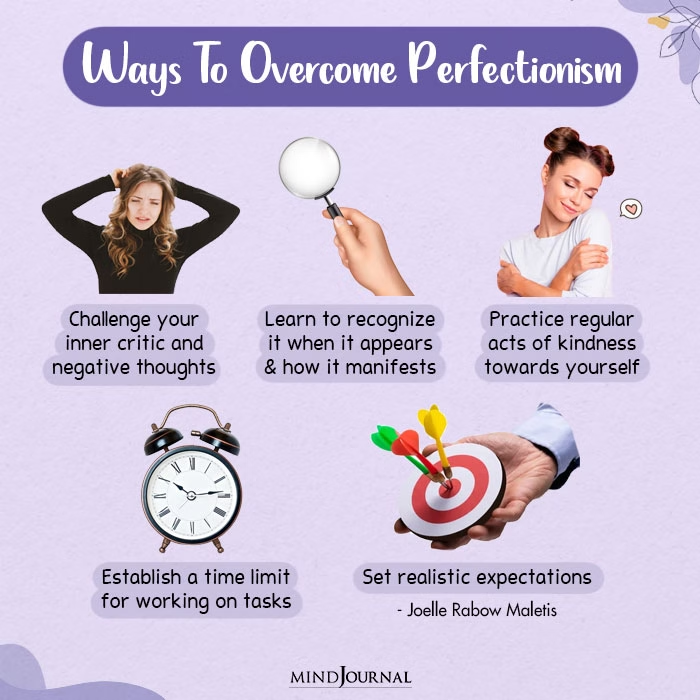
7 Steps to Break Out of the Perfectionist Trap
- Take stock of the perfectionistic thoughts, behaviors, fears, and habits at play in your work, home, and social life, and your relationships with family members, friends, and colleagues.
- Acknowledge when fears or worries of inadequacy have compelled you to procrastinate or spend more than a reasonable time and effort completing a task.
- Identify areas of your life in which you struggle with fears of being harshly judged or of falling short of perfectionist standards.
- Bring in self-compassion as you explore the roots of your negative thoughts and self-limiting beliefs about your skills, abilities, and attributes.
- Challenge and reframe long-standing negative thoughts and self-limiting core beliefs that lead to self-doubt, low self-esteem, and feelings of inadequacy, and replace them with more accurate, adaptive, and positive ones.
- Set healthy goals and boundaries around your time, energies, and expectations as you shift your focus from perfection to the ‘good enough’ goal of doing your best.
- Seek the help of a mental health professional if you are overwhelmed and struggling to overcome perfectionistic thoughts and behaviors.
Written by Monica Vermani C. Psych.
Originally Appeared on Psychology Today


Leave a Comment