8 Tricks to Turn Negative Emotions into Positive Action

Author : Margaret Ellison

How to Manage Negative Emotions? 8 Tricks That Actually Work

Letโ€™s clear something up right away: negative emotions are not your enemies. Itโ€™s true they interrupt your day, hijack your mood, and tend to surface at the worst possible moment. But when you stop fighting them and learn how to manage negative emotions, even the most uncomfortable feelings can become powerful tools for growth, clarity, and change.

Every emotion, especially the ones you label as โ€œnegativeโ€, carries a silent message for your personal development and growth. So, is your emotion the problem? No! Itโ€™s not knowing how to work with it. When you suppress your emotions, they find other exits in the form of irritability, burnout, self-sabotage, or quiet resentment.

In this article, weโ€™ll break down 8 common unpleasant emotions we all experience and find out an interesting way on how to deal with negative emotions in a healthy way. Not by suppressing them. Not by pretending to stay positive. Simply by understanding what theyโ€™re trying to tell you and using that insight to move forward.

1. Anger: The Boundary Enforcer

Your anger is one of the most honest emotions. Often, it gets labelled as โ€œbadโ€, but itโ€™s actually your wake-up call to understand what triggers you. It shows up when something feels wrong, a boundary has been crossed, or when your sense of fairness takes a hit. 

Ask: What boundary has been crossed here? 
So, when you feel disrespected, dismissed, or taken advantage of, pay attention to your internal alarm system; itโ€™s guiding you back to your boundaries. 

Do: Use your anger as fuel for assertive action. Instead of communicating aggressively, pause before responding. You can journal your emotions or go for a hard workout to release the excess charge. Then communicate calmly and with clarity. This way, anger doesnโ€™t destroy you but helps you stand up for yourself without burning bridges. 

Related: 7 Timeless Japanese Philosophies to Live a Happier, More Meaningful Life

2. Sadness: The Signal to Slow Down

Todayโ€™s world is so obsessed with speed and constant positivity; sadness feels unnecessary. Weโ€™re taught to โ€œmove onโ€, โ€œstay strongโ€, and distract ourselves. But sadness is a necessary pause to process change, loss, and endings that matter. 

Ask: What unmet expectation or loss am I experiencing? 
Sadness often points to loss. It can be the loss of a person, a dream that didnโ€™t work out, a relationship, or even your expectations. Itโ€™s a signal for you to grieve and make peace with yourself. 

Do: The best way of coping with negative emotions like sadness is to feel it thoroughly. When you feel happy, donโ€™t you enjoy every bit of it? Thatโ€™s exactly what you need to do with sadness. Rather than avoiding it, allow yourself to sit with sadness long enough to understand what itโ€™s trying to tell you, or share it with a trusted friend. When you acknowledge sadness, it deepens empathy and strengthens your emotional intelligence. 

3. Fear: The Guardian of What Matters

Fear appears when something matters. When thereโ€™s something to lose or when the outcome isnโ€™t guaranteed. It shows up before big conversations, new opportunities, difficult decisions, and meaningful changes. And, in all these moments, fear isnโ€™t saying, โ€œDonโ€™t do this.โ€ More often, itโ€™s saying โ€œThis matters. So move carefully, but move.โ€

Ask: What am I afraid of losing or failing at? How can I prepare myself for the potential threat? 
If you see it this way, fear isnโ€™t an obstacle; itโ€™s a companion for your personal development and growth. It gradually makes you a more determined individual, showing how deeply you want to protect your dreams and values. 

Do: The moment you name your fear, it stops swirling in your head. Put it into words and write down the worst-case scenario. Next, break the scary thing into small, manageable steps and take the first step today. Every step you take forward, no matter how small, weakens fearโ€™s hold on you. 

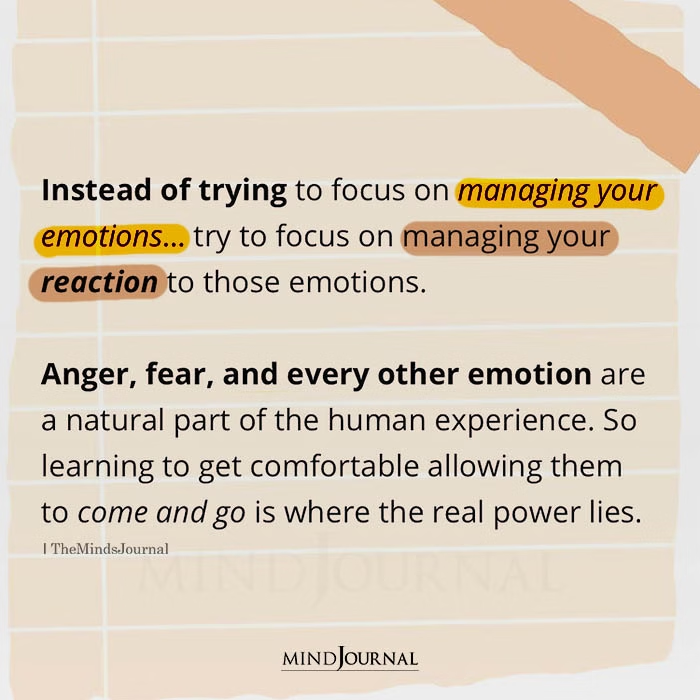
Managing your reaction is good for your personal development and growth.

4. Guilt: The Moral Compass

Yes, guilt is uncomfortable, but it doesnโ€™t exist to shame you or trap you in regret. Itโ€™s your internal feedback system and a reminder of your responsibility. So when you understand how to deal with negative emotions in a healthy way, guilt becomes a signal of your conscience and not a verdict of who you are. 

Ask: Did I violate my own values or someone elseโ€™s trust?
Healthy guilt arises when youโ€™ve crossed a line you actually care about. The crucial thing to note is: Guilt says โ€œI did something wrong,โ€ not โ€œI am wrong.โ€ Understanding this can make guilt your guide and not your burden. 

Do: If damage control is possible, take responsibility and make amends. You can apologise sincerely, without excuses. And if repair isnโ€™t possible, remember the lesson and commit to doing better next time. This sharpens your integrity and deepens your self-awareness. 

5. Anxiety: The Overactive Planner

Anxiety often gets a bad rap for being a flaw or weakness, but itโ€™s your brain doing what itโ€™s exactly designed to do: protect you! It shows up when your safety, your goals, your relationships, or your sense of self matter. Itโ€™s your mind highlighting what it wants you to notice. 

Ask: What am I trying to control that I actually canโ€™t?
Your anxiety feeds on โ€œwhat ifsโ€ and worst-case scenarios. When left unchecked, it convinces you that the future is uncontrollable, but in reality, itโ€™s all about redirecting your focus. 

Do: Let go of things you canโ€™t control and focus on things you can influence: your effort, your habits, and your responses. This way, your anxiety motivates planning and proactive action rather than panic. You can also practice grounding techniques, take deep breaths, or write down your worries to get them out of your head. 
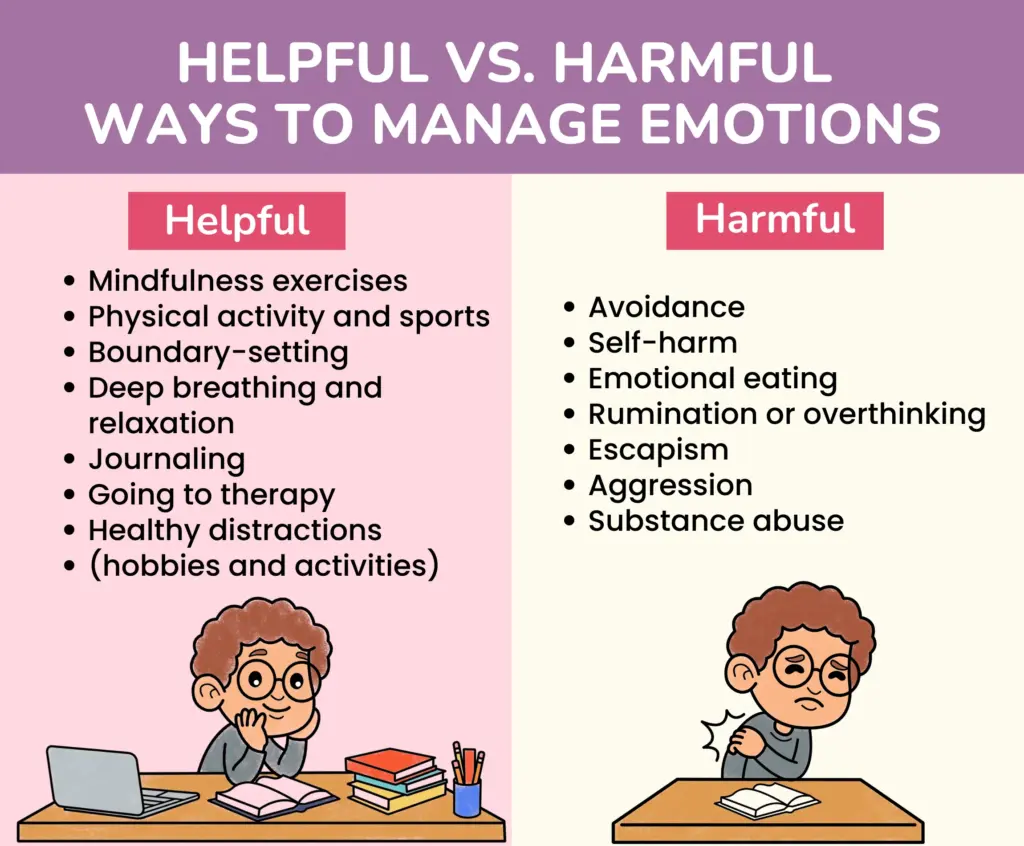
How to manage negative emotions in ways that benefit you?

6. Jealousy And Envy: The Desire Detectors

Since childhood, weโ€™ve been taught that feeling jealous is something to be ashamed of. So when it shows up, we either judge ourselves for having it or project it outward in unhealthy ways. Itโ€™s important to understand that your envy is rooted in desire and shows you a future you secretly want but may not have admitted yet, making it a powerful signal for personal development and growth.

Ask: What is my hidden insecurity or desire here? 
Jealousy isnโ€™t always about the other person; rather, itโ€™s about your unmet needs or unspoken desires. Therefore, when jealousy shows up, itโ€™s your signal to look inward, not outward. 

Do: The best way of coping with negative emotions like envy is to use it as a mirror and not as a weapon. Instead of resenting someone, study them and inculcate the skills, habits, and choices that led them there. With this approach, you stop comparing and start creating. 

7. Frustration: The Call to Rethink

Frustration is nothing but blocked momentum. Sometimes you put in all the effort and show up consistently, yet progress feels slow, stuck, and non-existent. So it shows up as irritation, but itโ€™s actually feedback. When you listen closely, frustration encourages smarter effort, redirecting you to find a more effective path forward. 

Ask: What obstacle keeps showing up and why?
Your frustration is a strong signal for you to realign your strategies and let go of patterns that hold you back. Itโ€™s asking you to pause, reflect, and use your pent-up energy effectively. 

Do: Firstly, stop blaming yourself. Reassess your path, seek help, and break the problem into smaller parts. Your frustration becomes progress when you innovate and adapt instead of quitting. 

8. Shame: The One That Needs Compassion Most

Ever wondered why shame cuts so deeply? It targets your identity and wraps your mistake around your sense of self. It makes you believe that you are the wrong choice and somehow unworthy. When you learn how to manage negative emotions like shame, you become a more self-introspective person and start separating who you are from what youโ€™ve done.

Ask: Whose standards am I judging myself by?
Shame is often born from internalised expectations of family, society, or past experiences. So ask whose voice youโ€™re hearing, and this will help you separate truth from inherited judgment. 

Do: The simple way for coping with negative emotions, such as shame, is to embrace compassion for yourself. Share what you feel with someone you feel safe with and replace harsh inner criticism with kindness. When you practice self-forgiveness alongside accountability, shame loses its power. 

Related: 7 Ways on How to Overcome Perfectionism and Finally Feel Good Enough

The Big Shift: From Reaction to Intention

Itโ€™s important you understand that your negative emotions arenโ€™t some problems to be fixed or flaws to be eliminated. Every emotion you feel is a messenger knocking on your door, asking you to choose a deliberate action instead of default behaviour. 

And when you master how to manage negative emotions, something powerful happens. Your emotions no longer control you, but they guide you towards your personal development and growth. So grasp this skill and work with your inner world. Thatโ€™s real emotional strength! 


Frequently Asked Questions (FAQs)

How to manage negative emotions?

Coping with negative emotions starts with noticing them without judgment. Pause before reacting, identify what the emotion is trying to tell you, and focus on whatโ€™s within your control. Express the feeling safely through writing, movement, or conversation and choose a response that aligns with your values rather than your impulse.

How do I stop feeling so negative?

Feeling negative doesnโ€™t mean something is wrong with you. Start by pausing instead of fighting the feeling. Name what youโ€™re experiencing, release it through movement or writing, and shift attention to one small action you can control. Consistent rest, boundaries, and self-compassion gradually reduce emotional heaviness and guide you towards personal development and growth.

What are three helpful ways of coping with emotions?

Three helpful ways of coping with negative emotions are: noticing and naming what you feel without judgment, expressing emotions through healthy outlets like talking, writing, or movement, and taking intentional action by focusing on what you can control rather than reacting impulsively. Learning how to deal with negative emotions in a healthy way can guide you towards growth, clarity, and change.


personal development and growth

Published On:

Last updated on:

Disclaimer: The informational content on The Minds Journal have been created and reviewed by qualified mental health professionals. They are intended solely for educational and self-awareness purposes and should not be used as a substitute for professional medical advice, diagnosis, or treatment. If you are experiencing emotional distress or have concerns about your mental health, please seek help from a licensed mental health professional or healthcare provider.

Leave a Comment

Today's Horoscope

Daily Horoscope 3 April 2026: Prediction for Zodiac Signs

Daily Horoscope 3 April, 2026: Prediction For Each Zodiac Sign

You may find yourself noticing patterns, emotions, or even small wins you overlooked before.

Latest Quizzes

What Kind Of Karma Do You Have? 3 Markings Reveal Truths

3 Types of Karma Exist โ€” Which One Were You Born With? Look for These Palm Signs

Spot an M, Y, or X on your palm? This hidden sign reveals your karma type!

Latest Quotes

Real Signs Your Body Is Actually in Good Health: How to Know Youโ€™re Truly Well

Real Signs Your Body Is Actually in Good Health: How to Know Youโ€™re Truly Well

Real signs your body is healthy donโ€™t always show up on lab reports. From good sleep and clear skin to regular digestion and a stable mood, your body is constantly sending quiet signals of wellness.

Readers Blog

Caption This Image and Selected Wisepicks โ€“ 29 March 2026

Caption This Image and Selected Wisepicks โ€“ 29 March 2026

Ready to unleash your inner wordsmith? โœจ??โ˜บ๏ธ Nowโ€™s your chance to show off your wit, charm, or sheer genius in just one line! Whether itโ€™s laugh-out-loud funny or surprisingly deep, we want to hear it.Submit your funniest, wittiest, or most thought-provoking caption in the comments. Weโ€™ll pick 15+ winners to be featured on our website…

Latest Articles

How to Manage Negative Emotions? 8 Tricks That Actually Work

Letโ€™s clear something up right away: negative emotions are not your enemies. Itโ€™s true they interrupt your day, hijack your mood, and tend to surface at the worst possible moment. But when you stop fighting them and learn how to manage negative emotions, even the most uncomfortable feelings can become powerful tools for growth, clarity, and change.

Every emotion, especially the ones you label as โ€œnegativeโ€, carries a silent message for your personal development and growth. So, is your emotion the problem? No! Itโ€™s not knowing how to work with it. When you suppress your emotions, they find other exits in the form of irritability, burnout, self-sabotage, or quiet resentment.

In this article, weโ€™ll break down 8 common unpleasant emotions we all experience and find out an interesting way on how to deal with negative emotions in a healthy way. Not by suppressing them. Not by pretending to stay positive. Simply by understanding what theyโ€™re trying to tell you and using that insight to move forward.

1. Anger: The Boundary Enforcer

Your anger is one of the most honest emotions. Often, it gets labelled as โ€œbadโ€, but itโ€™s actually your wake-up call to understand what triggers you. It shows up when something feels wrong, a boundary has been crossed, or when your sense of fairness takes a hit. 

Ask: What boundary has been crossed here? 
So, when you feel disrespected, dismissed, or taken advantage of, pay attention to your internal alarm system; itโ€™s guiding you back to your boundaries. 

Do: Use your anger as fuel for assertive action. Instead of communicating aggressively, pause before responding. You can journal your emotions or go for a hard workout to release the excess charge. Then communicate calmly and with clarity. This way, anger doesnโ€™t destroy you but helps you stand up for yourself without burning bridges. 

Related: 7 Timeless Japanese Philosophies to Live a Happier, More Meaningful Life

2. Sadness: The Signal to Slow Down

Todayโ€™s world is so obsessed with speed and constant positivity; sadness feels unnecessary. Weโ€™re taught to โ€œmove onโ€, โ€œstay strongโ€, and distract ourselves. But sadness is a necessary pause to process change, loss, and endings that matter. 

Ask: What unmet expectation or loss am I experiencing? 
Sadness often points to loss. It can be the loss of a person, a dream that didnโ€™t work out, a relationship, or even your expectations. Itโ€™s a signal for you to grieve and make peace with yourself. 

Do: The best way of coping with negative emotions like sadness is to feel it thoroughly. When you feel happy, donโ€™t you enjoy every bit of it? Thatโ€™s exactly what you need to do with sadness. Rather than avoiding it, allow yourself to sit with sadness long enough to understand what itโ€™s trying to tell you, or share it with a trusted friend. When you acknowledge sadness, it deepens empathy and strengthens your emotional intelligence. 

3. Fear: The Guardian of What Matters

Fear appears when something matters. When thereโ€™s something to lose or when the outcome isnโ€™t guaranteed. It shows up before big conversations, new opportunities, difficult decisions, and meaningful changes. And, in all these moments, fear isnโ€™t saying, โ€œDonโ€™t do this.โ€ More often, itโ€™s saying โ€œThis matters. So move carefully, but move.โ€

Ask: What am I afraid of losing or failing at? How can I prepare myself for the potential threat? 
If you see it this way, fear isnโ€™t an obstacle; itโ€™s a companion for your personal development and growth. It gradually makes you a more determined individual, showing how deeply you want to protect your dreams and values. 

Do: The moment you name your fear, it stops swirling in your head. Put it into words and write down the worst-case scenario. Next, break the scary thing into small, manageable steps and take the first step today. Every step you take forward, no matter how small, weakens fearโ€™s hold on you. 

Managing your reaction is good for your personal development and growth.

4. Guilt: The Moral Compass

Yes, guilt is uncomfortable, but it doesnโ€™t exist to shame you or trap you in regret. Itโ€™s your internal feedback system and a reminder of your responsibility. So when you understand how to deal with negative emotions in a healthy way, guilt becomes a signal of your conscience and not a verdict of who you are. 

Ask: Did I violate my own values or someone elseโ€™s trust?
Healthy guilt arises when youโ€™ve crossed a line you actually care about. The crucial thing to note is: Guilt says โ€œI did something wrong,โ€ not โ€œI am wrong.โ€ Understanding this can make guilt your guide and not your burden. 

Do: If damage control is possible, take responsibility and make amends. You can apologise sincerely, without excuses. And if repair isnโ€™t possible, remember the lesson and commit to doing better next time. This sharpens your integrity and deepens your self-awareness. 

5. Anxiety: The Overactive Planner

Anxiety often gets a bad rap for being a flaw or weakness, but itโ€™s your brain doing what itโ€™s exactly designed to do: protect you! It shows up when your safety, your goals, your relationships, or your sense of self matter. Itโ€™s your mind highlighting what it wants you to notice. 

Ask: What am I trying to control that I actually canโ€™t?
Your anxiety feeds on โ€œwhat ifsโ€ and worst-case scenarios. When left unchecked, it convinces you that the future is uncontrollable, but in reality, itโ€™s all about redirecting your focus. 

Do: Let go of things you canโ€™t control and focus on things you can influence: your effort, your habits, and your responses. This way, your anxiety motivates planning and proactive action rather than panic. You can also practice grounding techniques, take deep breaths, or write down your worries to get them out of your head. 

How to manage negative emotions in ways that benefit you?

6. Jealousy And Envy: The Desire Detectors

Since childhood, weโ€™ve been taught that feeling jealous is something to be ashamed of. So when it shows up, we either judge ourselves for having it or project it outward in unhealthy ways. Itโ€™s important to understand that your envy is rooted in desire and shows you a future you secretly want but may not have admitted yet, making it a powerful signal for personal development and growth.

Ask: What is my hidden insecurity or desire here? 
Jealousy isnโ€™t always about the other person; rather, itโ€™s about your unmet needs or unspoken desires. Therefore, when jealousy shows up, itโ€™s your signal to look inward, not outward. 

Do: The best way of coping with negative emotions like envy is to use it as a mirror and not as a weapon. Instead of resenting someone, study them and inculcate the skills, habits, and choices that led them there. With this approach, you stop comparing and start creating. 

7. Frustration: The Call to Rethink

Frustration is nothing but blocked momentum. Sometimes you put in all the effort and show up consistently, yet progress feels slow, stuck, and non-existent. So it shows up as irritation, but itโ€™s actually feedback. When you listen closely, frustration encourages smarter effort, redirecting you to find a more effective path forward. 

Ask: What obstacle keeps showing up and why?
Your frustration is a strong signal for you to realign your strategies and let go of patterns that hold you back. Itโ€™s asking you to pause, reflect, and use your pent-up energy effectively. 

Do: Firstly, stop blaming yourself. Reassess your path, seek help, and break the problem into smaller parts. Your frustration becomes progress when you innovate and adapt instead of quitting. 

8. Shame: The One That Needs Compassion Most

Ever wondered why shame cuts so deeply? It targets your identity and wraps your mistake around your sense of self. It makes you believe that you are the wrong choice and somehow unworthy. When you learn how to manage negative emotions like shame, you become a more self-introspective person and start separating who you are from what youโ€™ve done.

Ask: Whose standards am I judging myself by?
Shame is often born from internalised expectations of family, society, or past experiences. So ask whose voice youโ€™re hearing, and this will help you separate truth from inherited judgment. 

Do: The simple way for coping with negative emotions, such as shame, is to embrace compassion for yourself. Share what you feel with someone you feel safe with and replace harsh inner criticism with kindness. When you practice self-forgiveness alongside accountability, shame loses its power. 

Related: 7 Ways on How to Overcome Perfectionism and Finally Feel Good Enough

The Big Shift: From Reaction to Intention

Itโ€™s important you understand that your negative emotions arenโ€™t some problems to be fixed or flaws to be eliminated. Every emotion you feel is a messenger knocking on your door, asking you to choose a deliberate action instead of default behaviour. 

And when you master how to manage negative emotions, something powerful happens. Your emotions no longer control you, but they guide you towards your personal development and growth. So grasp this skill and work with your inner world. Thatโ€™s real emotional strength! 


Frequently Asked Questions (FAQs)

How to manage negative emotions?

Coping with negative emotions starts with noticing them without judgment. Pause before reacting, identify what the emotion is trying to tell you, and focus on whatโ€™s within your control. Express the feeling safely through writing, movement, or conversation and choose a response that aligns with your values rather than your impulse.

How do I stop feeling so negative?

Feeling negative doesnโ€™t mean something is wrong with you. Start by pausing instead of fighting the feeling. Name what youโ€™re experiencing, release it through movement or writing, and shift attention to one small action you can control. Consistent rest, boundaries, and self-compassion gradually reduce emotional heaviness and guide you towards personal development and growth.

What are three helpful ways of coping with emotions?

Three helpful ways of coping with negative emotions are: noticing and naming what you feel without judgment, expressing emotions through healthy outlets like talking, writing, or movement, and taking intentional action by focusing on what you can control rather than reacting impulsively. Learning how to deal with negative emotions in a healthy way can guide you towards growth, clarity, and change.


personal development and growth

Published On:

Last updated on:

Margaret Ellison

Leave a Comment

    Leave a Comment