Midlife Unfiltered: How To Decode Perimenopause Symptoms

Author : Melanie McNally

How To Decode Perimenopause Symptoms? 4 Important Points

Feeling foggy, moody, or off-balance, but not sure why? These could be common perimenopause symptoms that sneak up in your 30s or 40s. Learn insights from Dr. Melanie McNally, who shares whatโ€™s really going on, and how to cope with the changes.

What the โ€œWe Do Not Care Clubโ€ gets right.

Key points

  • Perimenopause can unmask years of ignored emotional and physical signals.
  • Hormonal shifts disrupt emotional resilience, intensifying burnout risks.
  • Medical gaslighting leaves many women confused about their symptoms.
  • Midlife hormonal changes can empower women to redefine personal boundaries.

How To Decode Perimenopause Symptoms

Some women enter perimenopause or menopause with only a passing awareness that something is changing. Others know immediately. They notice joint aches that seem to rotate through the body for no apparent reason or are startled awake by a wave of heat at 2:00 a.m., heart pounding and sheets soaked.

I know these symptoms intimately and how the joint inflammation can even impact mood, as I canโ€™t currently exercise the way I want and enjoy. For many, it doesnโ€™t feel like a gentle transitionโ€”it feels like a reckoning. And for those already carrying the invisible load of caregiving, leadership, and emotional labor, this hormonal upheaval often tips the balance.

Scrolling social media recently, I found myself nodding along to post after post in the now viral โ€œWe Do Not Care Club,โ€ created by Melani Sanders. Despite what the name suggests, the club isnโ€™t about apathy. Itโ€™s about refusal. Refusal to keep smoothing our edges to make others comfortable.

Refusal to ignore the bodyโ€™s signals. Refusal to perform a version of strength that denies exhaustion, irritability, or tears. In short, itโ€™s a revolt against over-functioning, brought to us with humor and shared exhaustion. And the comments tell a deeper story: This isnโ€™t just about symptoms. Itโ€™s about what gets unmasked when the body stops cooperating with old coping strategies.

Read More Here: Menopause And Depression: Everything You Need To Know

What Happens When the Mask Cracks

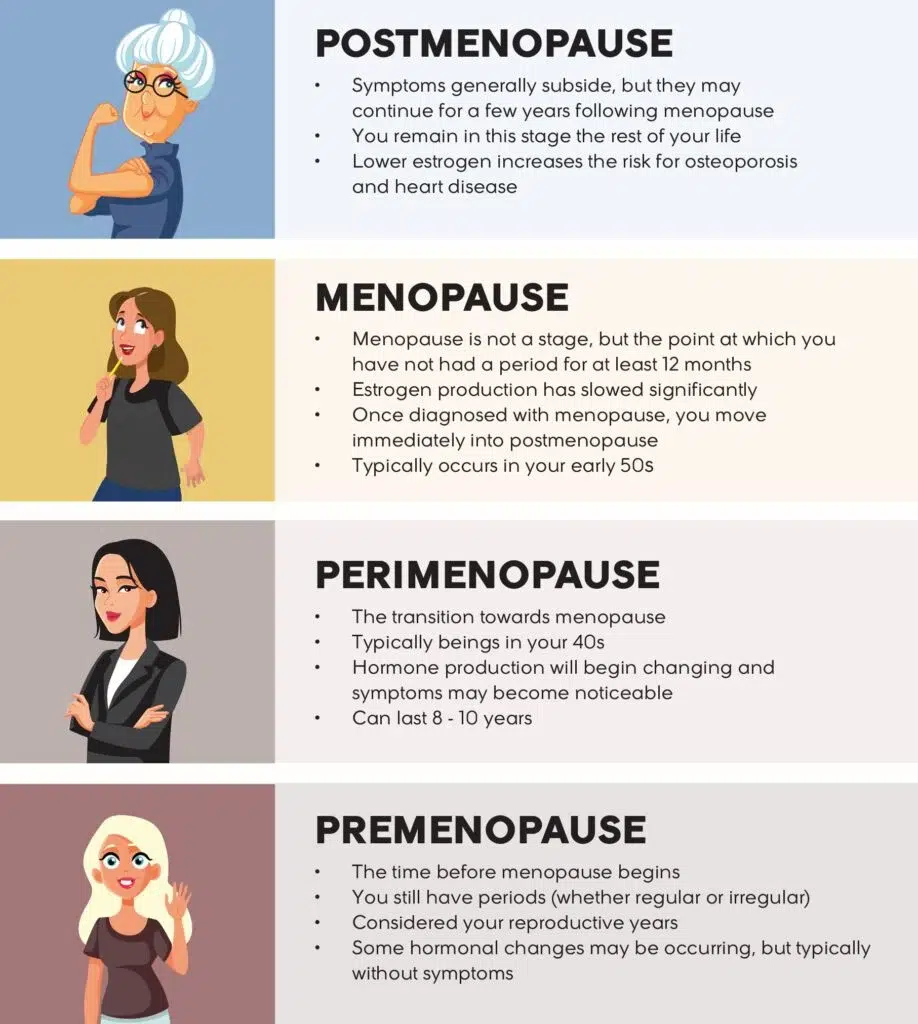
The average age of menopause in the U.S. is 51, but the physical, cognitive, and emotional shifts of perimenopause often begin years earlier. Estrogen and progesterone fluctuate wildly, disrupting everything from sleep cycles to memory to mood regulation (Nelson, 2008). But for many high-achieving women, the physical discomfort and sudden breakdown of emotional endurance collide and create a new version of themselves.

Where they once tolerated small irritations, they now feel a wave of fury. Where they once powered through fatigue, they now hit a wall. Where they once anticipated othersโ€™ needs seamlessly, they now forget the birthday, miss the meeting, or cancel dinner plans without guilt or apology.

From a psychological perspective,ย midlifeย often marks a shift in emotional tolerance. The same patterns that once felt sustainable, like over-functioning, people-pleasing, andย perfectionisticย striving, begin to fray. And for many women, that shift isnโ€™t purely psychological. A 2017 brain imaging study found that perimenopausal and menopausal women show early neurobiological changes that reflectย endocrineย aging more than chronological age (Mosconi et al., 2017).

These shifts affect areas of the brain involved in memory, regulation, and emotional processing. This means the changes many women feel in their ability to push through, tolerate, or suppress may be biological. The facade thins and whatโ€™s underneath begins to speak with more urgency, and for the first time in years, many women start to hear it.

But hereโ€™s the question that lingers: Why does it take a full neuroendocrine upheaval for women to begin living on their own terms?

The Cost of Performing Ok-ness

Many of the women I work with in coaching arrive at this stage with a profound sense of disorientation. Theyโ€™ve been competent for so long and relied upon for so much that they havenโ€™t had space to ask themselves what they actually want. They know how to meet deadlines, juggle logistics, and carry the emotional weight of their families, but they often feel unsure of how to care for themselves outside of small windowsโ€”sleep, hydration, movement, the occasional quiet bath. And when their body begins to send louder signals like numbness, pain, nausea, migraines, and panic, they often feel betrayed by it.

Thatโ€™s exactly how it felt for me. When the swollen joints started, I didnโ€™t think โ€œperimenopause,โ€ I thought I was doing something wrong. I brought swollen fingers and aching joints to a doctorโ€™s office, only to be told to change how I type and sit at my desk.

When I went to my gynecologist and mentioned how the inflammation rotates around my joints and creates such intense aching that it wakes me up at night, I was told that it couldnโ€™t be menopause and was more likely osteoarthritis. Each answer chipped away at my trust in my own bodyโ€™s signals.

It wasnโ€™t until I connected with other womenโ€”my sisters, clients, peers, and friends sharing late-night textsโ€”that I realized how common this kind of medical gaslighting was. The symptoms were real. The confusion was real. And the silence around it made everything feel lonelier than it needed to be. (And letโ€™s be honest, getting my extremely low estrogen levels back felt like a scientific โ€œI told you soโ€ to my doctors.)

But the body, as always, is honest. It doesnโ€™t lie. When hormones shift, it stops colluding with over-functioning. It refuses to keep pretending everything is fine. And instead of seeing this stage as a breakdown, we might begin to see it as a portal: one that forces us to reevaluate what parts of our identity were built on social survival, and what parts we want to carry forward.

Psychologist Mary Pipher, in her work with midlife women, refers to this stage as a developmental passage and one that calls women into a deeper kind of integrity (Pipher, 2019). But many navigate it without a roadmap. Thereโ€™s no formal curriculum for how to manage years of self-abandonment and thereโ€™s no performance review for letting go of roles that no longer fit.

We Shouldn’t Have to Burn Out to Wake Up

The social scripts women inherit around caregiving and competence donโ€™t disappear in midlife; they just stop being sustainable. By the time a woman is dealing with perimenopause, she may also be managing a teenagerโ€™s emotional rollercoaster, navigating workplace pressure, or caring for aging parents.

And while some of this work is visible, much of it isnโ€™tโ€”particularly the anticipatory kind. Research on emotional labor continues to show that women take on a disproportionate share of the emotional management in both their households and their workplaces (Hochschild & Machung, 2012). The result is what psychologists call โ€œcognitive load,โ€ a constant mental tab-keeping that increases stress and depletes executive functioning over time.

In that context, perimenopause arrives as a physical change and a breaking point. The body, fed up with suppression, begins to scream. And what emerges is a kind of unapologetic truth-telling that many women didnโ€™t know they needed. They stop explaining themselves. They stop softening every no. They begin to ask harder questions, like: What parts of my life were built on someone elseโ€™s version of success? And what would it look like to stop managing everyone elseโ€™s comfort?

These are the questions that shape the second half of life and create a turning point for many.

Making Space for Whatโ€™s Real

perimenopause symptoms

The โ€œWe Do Not Care Clubโ€ resonates because it names something thatโ€™s been hidden in plain sight: midlife liberation often begins with letting go of the exhausting effort to be digestible. But it shouldnโ€™t have to take a full hormonal shift to get there. We can build a different relationship with our bodies and our boundaries earlier in life.

That begins by normalizing what women already feel. The exhaustion, the irritability, the hyper-sensitivity, the brain fog, the rage. These are physiological realities layered on top of decades of emotional labor. And when women stop performing ok-ness, they begin to re-enter their own lives with honesty.

I remember the first time I posted publicly about my symptoms and how many women I heard from who were experiencing the same. The medical system doesnโ€™t speak clearly about this chapter, and then weโ€™re left with influencers whoโ€™ve commercialized menopause and are more concerned with selling us a supplement than they are with research and data.

As a psychologist, I believe this transition deserves more than jokes and hashtags. It deserves research-backed support, trauma-informed care, and compassionate community. But until those systems are fully in place, thereโ€™s something undeniably healing about a woman naming what hurts, laughing about it online with thousands of others, and decidingโ€”for perhaps the first time in her lifeโ€”to stop shrinking for anyone.

Read More Here: Migraine And Menopause: Things You Need to Know

If youโ€™re ready to stop white-knuckling your way through the day and start leading from a place of clarity and grounded self-trust, download Chaos to Clarity: The Confident Leaderโ€™s Playbook. Itโ€™s a practical guide to help you lead yourself firstโ€”without losing everything youโ€™ve built along the way. (and here’s the link: https://itlist.co/i/3600/chaos-to-clarity-the-confident-leaders-playbook)


References

Hochschild, A. R., & Machung, A. (2012). The Second Shift: Working Families and the Revolution at Home. Penguin Books.

Mosconi L, Berti V, Quinn C, McHugh P, Petrongolo G, Varsavsky I, Osorio RS, Pupi A, Vallabhajosula S, Isaacson RS, de Leon MJ, Brinton RD. Sex differences in Alzheimer risk: Brain imaging of endocrine vs chronologic aging. Neurology. 2017 Sep 26;89(13):1382-1390. doi: 10.1212/WNL.0000000000004425. Epub 2017 Aug 30. PMID: 28855400; PMCID: PMC5652968.

Nelson, H. D. (2008). Menopause. The Lancet, 371(9614), 760โ€“770. https://doi.org/10.1016/S0140-6736(08)60346-3

Pipher, M. (2019). Women Rowing North: Navigating Lifeโ€™s Currents and Flourishing as We Age. Bloomsbury Publishing.

Written by Melanie McNally, Psy.D., Clinical Psychologist
Originally appeared on Psychology Today

Published On:

Last updated on:

Melanie McNally

I help people tune out the noise of the world so they can tune into who they’re meant to be. I’m a clinical psychologist, brain coach, speaker, and author who wants to help YOU maximize your potential so you get the most out of life.My books, The Emotionally Intelligent Teen: Skills to Help You Deal with What You Feel, Build Stronger Relationships, and Boost Self-Confidence, and Helping Your Unmotivated Teen: A Parent’s Guide to Unlock Your Child’s Potential give teens and parents the tools they need to fully reach their potential.

Disclaimer: The informational content on The Minds Journal have been created and reviewed by qualified mental health professionals. They are intended solely for educational and self-awareness purposes and should not be used as a substitute for professional medical advice, diagnosis, or treatment. If you are experiencing emotional distress or have concerns about your mental health, please seek help from a licensed mental health professional or healthcare provider.

Leave a Comment

Today's Horoscope

Weekly Horoscope PART one

Weekly Horoscope 15 March to 21 March 2026

Read your zodiac signโ€™s prediction to understand the energy surrounding you and how to make the most of the days ahead!

Latest Quizzes

Interesting Finger Personality Test: 4 Finger Lines

Finger Personality Test: Join Your Fingers And Reveal A Hidden Personality Secret!

Look closely at your finger lines. Which pattern do you see? This personality test might surprise you!

Latest Quotes

How Men Show Love Through Actions (Male Psychology in Relationships)

How Men Show Love Through Actions (Male Psychology in Relationships)

Male psychology in relationships shows that men express love through presence, protection, and peace more than poetry. Decode his actions so you can see how deeply he actually cares.

Readers Blog

Caption This Image and Selected Wisepicks โ€“ 8 March 2026

Caption This Image and Selected Wisepicks โ€“ 8 March 2026

Provide a creative, relevant caption for the picture below and get selected and featured with your name and caption.  Selected Wisepicks We have selected 11 comments as Wisepicks from our Facebook, Facebook Group and Instagram as on 15 March 2026 Lou Angelique Heruela Listen to your inner child,not the angry voices in your mind. Bloom…

Latest Articles

How To Decode Perimenopause Symptoms? 4 Important Points

Feeling foggy, moody, or off-balance, but not sure why? These could be common perimenopause symptoms that sneak up in your 30s or 40s. Learn insights from Dr. Melanie McNally, who shares whatโ€™s really going on, and how to cope with the changes.

What the โ€œWe Do Not Care Clubโ€ gets right.

Key points

  • Perimenopause can unmask years of ignored emotional and physical signals.
  • Hormonal shifts disrupt emotional resilience, intensifying burnout risks.
  • Medical gaslighting leaves many women confused about their symptoms.
  • Midlife hormonal changes can empower women to redefine personal boundaries.

How To Decode Perimenopause Symptoms

Some women enter perimenopause or menopause with only a passing awareness that something is changing. Others know immediately. They notice joint aches that seem to rotate through the body for no apparent reason or are startled awake by a wave of heat at 2:00 a.m., heart pounding and sheets soaked.

I know these symptoms intimately and how the joint inflammation can even impact mood, as I canโ€™t currently exercise the way I want and enjoy. For many, it doesnโ€™t feel like a gentle transitionโ€”it feels like a reckoning. And for those already carrying the invisible load of caregiving, leadership, and emotional labor, this hormonal upheaval often tips the balance.

Scrolling social media recently, I found myself nodding along to post after post in the now viral โ€œWe Do Not Care Club,โ€ created by Melani Sanders. Despite what the name suggests, the club isnโ€™t about apathy. Itโ€™s about refusal. Refusal to keep smoothing our edges to make others comfortable.

Refusal to ignore the bodyโ€™s signals. Refusal to perform a version of strength that denies exhaustion, irritability, or tears. In short, itโ€™s a revolt against over-functioning, brought to us with humor and shared exhaustion. And the comments tell a deeper story: This isnโ€™t just about symptoms. Itโ€™s about what gets unmasked when the body stops cooperating with old coping strategies.

Read More Here: Menopause And Depression: Everything You Need To Know

What Happens When the Mask Cracks

The average age of menopause in the U.S. is 51, but the physical, cognitive, and emotional shifts of perimenopause often begin years earlier. Estrogen and progesterone fluctuate wildly, disrupting everything from sleep cycles to memory to mood regulation (Nelson, 2008). But for many high-achieving women, the physical discomfort and sudden breakdown of emotional endurance collide and create a new version of themselves.

Where they once tolerated small irritations, they now feel a wave of fury. Where they once powered through fatigue, they now hit a wall. Where they once anticipated othersโ€™ needs seamlessly, they now forget the birthday, miss the meeting, or cancel dinner plans without guilt or apology.

From a psychological perspective,ย midlifeย often marks a shift in emotional tolerance. The same patterns that once felt sustainable, like over-functioning, people-pleasing, andย perfectionisticย striving, begin to fray. And for many women, that shift isnโ€™t purely psychological. A 2017 brain imaging study found that perimenopausal and menopausal women show early neurobiological changes that reflectย endocrineย aging more than chronological age (Mosconi et al., 2017).

These shifts affect areas of the brain involved in memory, regulation, and emotional processing. This means the changes many women feel in their ability to push through, tolerate, or suppress may be biological. The facade thins and whatโ€™s underneath begins to speak with more urgency, and for the first time in years, many women start to hear it.

But hereโ€™s the question that lingers: Why does it take a full neuroendocrine upheaval for women to begin living on their own terms?

The Cost of Performing Ok-ness

Many of the women I work with in coaching arrive at this stage with a profound sense of disorientation. Theyโ€™ve been competent for so long and relied upon for so much that they havenโ€™t had space to ask themselves what they actually want. They know how to meet deadlines, juggle logistics, and carry the emotional weight of their families, but they often feel unsure of how to care for themselves outside of small windowsโ€”sleep, hydration, movement, the occasional quiet bath. And when their body begins to send louder signals like numbness, pain, nausea, migraines, and panic, they often feel betrayed by it.

Thatโ€™s exactly how it felt for me. When the swollen joints started, I didnโ€™t think โ€œperimenopause,โ€ I thought I was doing something wrong. I brought swollen fingers and aching joints to a doctorโ€™s office, only to be told to change how I type and sit at my desk.

When I went to my gynecologist and mentioned how the inflammation rotates around my joints and creates such intense aching that it wakes me up at night, I was told that it couldnโ€™t be menopause and was more likely osteoarthritis. Each answer chipped away at my trust in my own bodyโ€™s signals.

It wasnโ€™t until I connected with other womenโ€”my sisters, clients, peers, and friends sharing late-night textsโ€”that I realized how common this kind of medical gaslighting was. The symptoms were real. The confusion was real. And the silence around it made everything feel lonelier than it needed to be. (And letโ€™s be honest, getting my extremely low estrogen levels back felt like a scientific โ€œI told you soโ€ to my doctors.)

But the body, as always, is honest. It doesnโ€™t lie. When hormones shift, it stops colluding with over-functioning. It refuses to keep pretending everything is fine. And instead of seeing this stage as a breakdown, we might begin to see it as a portal: one that forces us to reevaluate what parts of our identity were built on social survival, and what parts we want to carry forward.

Psychologist Mary Pipher, in her work with midlife women, refers to this stage as a developmental passage and one that calls women into a deeper kind of integrity (Pipher, 2019). But many navigate it without a roadmap. Thereโ€™s no formal curriculum for how to manage years of self-abandonment and thereโ€™s no performance review for letting go of roles that no longer fit.

We Shouldn’t Have to Burn Out to Wake Up

The social scripts women inherit around caregiving and competence donโ€™t disappear in midlife; they just stop being sustainable. By the time a woman is dealing with perimenopause, she may also be managing a teenagerโ€™s emotional rollercoaster, navigating workplace pressure, or caring for aging parents.

And while some of this work is visible, much of it isnโ€™tโ€”particularly the anticipatory kind. Research on emotional labor continues to show that women take on a disproportionate share of the emotional management in both their households and their workplaces (Hochschild & Machung, 2012). The result is what psychologists call โ€œcognitive load,โ€ a constant mental tab-keeping that increases stress and depletes executive functioning over time.

In that context, perimenopause arrives as a physical change and a breaking point. The body, fed up with suppression, begins to scream. And what emerges is a kind of unapologetic truth-telling that many women didnโ€™t know they needed. They stop explaining themselves. They stop softening every no. They begin to ask harder questions, like: What parts of my life were built on someone elseโ€™s version of success? And what would it look like to stop managing everyone elseโ€™s comfort?

These are the questions that shape the second half of life and create a turning point for many.

Making Space for Whatโ€™s Real

perimenopause symptoms

The โ€œWe Do Not Care Clubโ€ resonates because it names something thatโ€™s been hidden in plain sight: midlife liberation often begins with letting go of the exhausting effort to be digestible. But it shouldnโ€™t have to take a full hormonal shift to get there. We can build a different relationship with our bodies and our boundaries earlier in life.

That begins by normalizing what women already feel. The exhaustion, the irritability, the hyper-sensitivity, the brain fog, the rage. These are physiological realities layered on top of decades of emotional labor. And when women stop performing ok-ness, they begin to re-enter their own lives with honesty.

I remember the first time I posted publicly about my symptoms and how many women I heard from who were experiencing the same. The medical system doesnโ€™t speak clearly about this chapter, and then weโ€™re left with influencers whoโ€™ve commercialized menopause and are more concerned with selling us a supplement than they are with research and data.

As a psychologist, I believe this transition deserves more than jokes and hashtags. It deserves research-backed support, trauma-informed care, and compassionate community. But until those systems are fully in place, thereโ€™s something undeniably healing about a woman naming what hurts, laughing about it online with thousands of others, and decidingโ€”for perhaps the first time in her lifeโ€”to stop shrinking for anyone.

Read More Here: Migraine And Menopause: Things You Need to Know

If youโ€™re ready to stop white-knuckling your way through the day and start leading from a place of clarity and grounded self-trust, download Chaos to Clarity: The Confident Leaderโ€™s Playbook. Itโ€™s a practical guide to help you lead yourself firstโ€”without losing everything youโ€™ve built along the way. (and here’s the link: https://itlist.co/i/3600/chaos-to-clarity-the-confident-leaders-playbook)


References

Hochschild, A. R., & Machung, A. (2012). The Second Shift: Working Families and the Revolution at Home. Penguin Books.

Mosconi L, Berti V, Quinn C, McHugh P, Petrongolo G, Varsavsky I, Osorio RS, Pupi A, Vallabhajosula S, Isaacson RS, de Leon MJ, Brinton RD. Sex differences in Alzheimer risk: Brain imaging of endocrine vs chronologic aging. Neurology. 2017 Sep 26;89(13):1382-1390. doi: 10.1212/WNL.0000000000004425. Epub 2017 Aug 30. PMID: 28855400; PMCID: PMC5652968.

Nelson, H. D. (2008). Menopause. The Lancet, 371(9614), 760โ€“770. https://doi.org/10.1016/S0140-6736(08)60346-3

Pipher, M. (2019). Women Rowing North: Navigating Lifeโ€™s Currents and Flourishing as We Age. Bloomsbury Publishing.

Written by Melanie McNally, Psy.D., Clinical Psychologist
Originally appeared on Psychology Today

Published On:

Last updated on:

Melanie McNally

I help people tune out the noise of the world so they can tune into who they’re meant to be. I’m a clinical psychologist, brain coach, speaker, and author who wants to help YOU maximize your potential so you get the most out of life.My books, The Emotionally Intelligent Teen: Skills to Help You Deal with What You Feel, Build Stronger Relationships, and Boost Self-Confidence, and Helping Your Unmotivated Teen: A Parent’s Guide to Unlock Your Child’s Potential give teens and parents the tools they need to fully reach their potential.

Leave a Comment

    Leave a Comment