

Being unavailable sounds like a strange goal in a world that expects you to answer every text, pick up every call, and say yes to every request.
Yet the power of being unavailable is something many of us only discover after we are completely exhausted. Somewhere along the way, being constantly reachable became a sign of being kind, responsible, or caring.
But what happens when everyone has access to you all the time?
Maybe you are trying to stop being available to everyone.
Maybe you are wondering how to set healthy boundaries in a relationship or how to set boundaries with toxic family members.
Maybe you are simply tired of people-pleasing and are finally learning to say no without feeling guilty.
Whatever brought you here, being unavailable isn’t about shutting people out. It’s about protecting the parts of yourself that deserve your attention too.
Related: 8 Signs You’re Not Cold, You’re Just Protecting Your Peace
Being Available To Everyone Comes At A Cost
For years, I thought being dependable meant always being there.
If someone needed help, I helped. If someone wanted to talk, I made time. If a message came through, I felt obligated to answer right away. It seemed harmless at first. In fact, it felt like the right thing to do.
Then one day I realized something uncomfortable. I knew exactly what everyone else needed from me, but I had no idea what I needed from myself.
When you are constantly available, your own priorities slowly get pushed to the side. Not all at once, just little by little.
You postpone your plans, ignore your needs, and convince yourself you will get to them later.
The problem is that later rarely comes.

You Don’t Need To Earn Your Worth Through Availability
A lot of people struggle with this because they secretly believe being needed makes them valuable.
I know I did.
There’s something comforting about being the person everyone relies on. It feels good to be appreciated. It feels good to be wanted.
But there’s a difference between being valued and being used as everyone’s emergency contact for life.
Your worth doesn’t increase every time you sacrifice your peace for someone else’s convenience. You don’t become a better friend, partner, sibling, or coworker simply because you are available twenty-four hours a day.
Sometimes the healthiest thing you can do is step back and remember that your needs matter too. Sometimes, the best thing you can do is to stop being available to everyone, and learning to say no.
8 Signs You Are Too Available For Everyone
- You answer messages immediately, even when you are busy doing something important.
- You feel guilty every time you say no, even when you have a perfectly valid reason.
- People regularly expect last-minute favors because they assume you will agree.
- You cancel plans with yourself much more often than you cancel plans with others.
- You spend more time solving other people’s problems than working on your own goals.
- You overexplain your boundaries because a simple “no” feels uncomfortable.
- You feel responsible for everyone’s emotions and reactions.
- You can’t remember the last time you put yourself first without feeling selfish afterward.
If several of these sound familiar, there’s a good chance you have been giving people unlimited access to your time and energy.
What Changes When You Stop Being Available To Everyone
At first, not much. Then everything. The funny thing about boundaries is that they rarely change your life overnight. The changes show up slowly.
This is how to stop people pleasing:
- You stop feeling resentful toward people who genuinely haven’t done anything wrong.
- You have more energy because you are no longer saying yes to things you never wanted to do.
- You become clearer about what actually matters to you.
- Your relationships feel healthier because they’re based on honesty instead of obligation.
- You start learning how to set healthy boundaries in a relationship without feeling like you are pushing people away.
- You get better at recognizing when certain family dynamics aren’t healthy and understanding how to set boundaries with toxic family members.
- You realize that most people respect your boundaries far more than you expected.
- You finally have space to hear your own thoughts again.
That last one is bigger than it sounds.
When you are constantly available, life becomes one long reaction to everyone else’s needs. Boundaries and learning to say no give you room to figure out what you actually want.
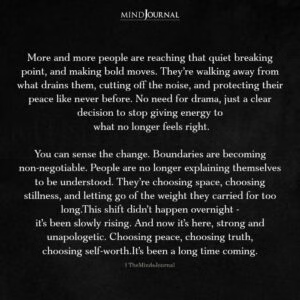
The Power Of Being Unavailable
The power of being unavailable has nothing to do with playing hard to get.
It’s not about ignoring people or pretending to be busy. It’s about understanding that your attention is valuable.
Not everyone needs immediate access to you. Not every text requires an instant response. Not every request deserves a yes.
One of the biggest lessons I have learned is that healthy people don’t expect unlimited access to your time. The people who truly care about you want you to rest.
They want you to have hobbies, goals, quiet moments, and a life outside of serving everyone else.
Taking some space and time for yourself isn’t selfish, but constantly abandoning yourself is.
And once you understand that, everything starts to shift. Learning to say no becomes easier. How to stop people pleasing becomes clearer. You stop being available to everyone and start becoming available to yourself.
That’s where real peace begins.
Related: How To Protect Your Peace: 7 Things You Must Stop Romanticizing
Takeaway
The art of being unavailable isn’t about shutting people out. It’s about creating room for yourself in a world that constantly asks for more.
Whether you are trying to stop being available to everyone, learning how to stop people pleasing, figuring out how to set healthy boundaries in a relationship, or discovering how to set boundaries with toxic family members, the goal is the same.
Protect your energy. Protect your time. The power of being unavailable isn’t about becoming distant from others. It’s about finally staying connected to yourself.
Frequently Asked Questions (FAQs)
1. What happens when you become unavailable?
Sometimes, being unavailable is the kindest thing you can do for yourself. It means choosing silence over noise, rest over constant engagement, and presence over performance. When you are not always reachable, you give yourself room to think, feel, and simply exist without explanation. The art of being unavailable isn’t about shutting people out, it’s about remembering that your time and energy are finite, and not every moment needs to belong to someone else.
2. What is an example of setting boundaries?
An example of setting boundaries is choosing not to reply to work messages after office hours. Instead of feeling obligated to be constantly available, you communicate that your evenings are reserved for personal time and rest. It’s a simple way of protecting your energy and preventing burnout. Boundaries aren’t about pushing people away, they are about letting others know what you need to stay healthy, present, and respectful of your own limits.
3. What are the signs you are too available for people?
One sign you are too available for people is when you constantly put their needs ahead of your own, even when it leaves you exhausted or overwhelmed. You may feel guilty for saying no, respond to messages immediately regardless of your schedule, or frequently rearrange your plans to accommodate others. Over time, this can lead to resentment, burnout, and a sense that your time is no longer your own. When being available starts costing your peace, it may be time to reassess your boundaries.


Leave a Comment