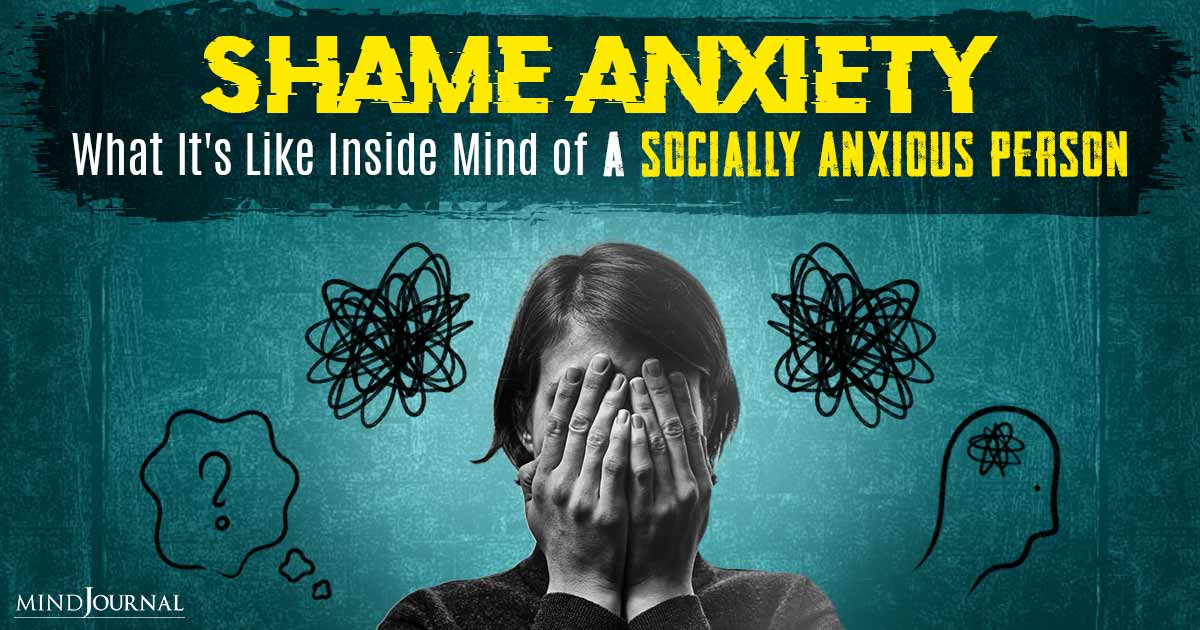
Shame Anxiety: What It’s Like Inside Mind Of A Socially Anxious Person

Author : Mary C. Lamia Ph.D.

Ever wondered what it feels like to navigate the world with shame anxiety? Let’s take a peek into the mind of someone who deals with this.

Anxiety and shame sometimes go hand in hand, which is why the term, shame anxiety. Feelings of shame and anxiety can occur at the same time, and navigating through this can be particularly challenging. So now the questions are, what is shame anxiety, and how to deal with shame anxiety?

Anxiety is a term that has been used generically and nonspecifically in our culture, and thus it can lead to confusion.

The term may refer to positive or negative emotional states and has many connotations, including nervousness, apprehension, agitation, excitement, anticipation, tension, and worry.

Anxiety disorders are generally categorized based on symptoms and behavioral expressions, such as psychological disorganization, irritability, nonspecific fears, sleep difficulties, panicky feelings, or an inability to concentrate.

Yet any given state of anxiety can be best understood by distinguishing it in terms of the emotions that are involved in the experience.

So, what is shame anxiety?

Shame is an emotion that is prominent in states of anxiety and often goes undetected as it hides in the shadow of the experience.

Related: The 5 Ingredients of Shame

Shame that is experienced as anxiety is commonly felt as a fear that exposure is imminent and humiliation will soon follow.

Anxiety, while shame-fear based, requires thought for its existence. These thoughts involve the anticipated future, which doesn’t look good when it is being motivated by fear of shame.

For instance, people often recount feeling anxious that a significant other will leave, betray, or abandon them.

Others express anxiety about the exposure of deeper parts of the self that will result in a relationship rupture—that someone important to them, including their therapist, will recognize they are flawed, fraudulent, or not as they portray themselves to be.

Anxiety about an upcoming presentation, a performance, a first date, or even a long-term project, for example, is actually experienced as anticipatory shame.

Rarely in the literature has shame been associated with anxiety, regardless of the frequency with which people express anxiety within the context of their fear of experiencing shame.

Yet shame is prominent in anxiety about fearing disgrace or defeat, to be looked at with contempt for dishonoring oneself, and it is the dominant feeling that is present when people assume they are looked upon with scorn. [2]

How To Deal With Shame Anxiety?

Defensive responses that follow the activation of shame anxiety may appear as phobias, agitation, or avoidance behaviors.

As a result, shame-based anxiety may be misdiagnosed as an anxiety disorder or treated with anxiety-relieving medications or other treatments that make sufferers worse because they feel shame for having anxiety that cannot be controlled.

shame anxiety

When the emotion of shame co-assembles with fear, the thoughts associated with it often have to do with a “fear of failure.” Nevertheless, this blending of emotions also has a powerful upside as a source of motivation for many people.

[3] The motivational function of shame can lead people to work harder in the interest of maintaining their self-esteem, even in the face of the negative feelings created by the emotion that can result in avoidance or withdrawal behaviors that are considered symptoms of anxiety, such as inaction, inhibition, writer’s block, or stage fright.

Related: The Biggest Cause Of Anxiety

Rather than focus on shame anxiety as an impediment to one’s success, or as an obstacle in their lives, people benefit greatly when they can identify what they feel and recognize when it can be a positive motivating force.

This post was excerpted in part from my co-authored book, The Upside of Shame: Therapeutic Interventions Using the Positive Aspects of a “Negative” Emotion.

References:

[1] Wurmser, L. (1981). The mask of shame. Baltimore, MD: Johns Hopkins University Press.

[2] Wurmser, L. (2015). Primary shame, mortal wound, and tragic circularity: Some new reflections on shame and shame conflicts. International Journal of Psychoanalysis, 96, 1615-1634.

[3] Lamia, M. (2017). What motivates getting things done: Procrastination, emotions, and success. Lanham, MD: Rowman and Littlefield.

Written By Mary C. Lamia Ph.D. 
Originally Published On Psychology Today 
What Role Does Shame Play In Anxiety pin
shame anxiety

Published On:

Last updated on:

Mary C. Lamia Ph.D.

Mary Lamia, Ph.D., is a clinical psychologist and psychoanalyst who works with adults, couples, adolescents, and preteens in her Marin County private practice. She is a professor at the Wright Institute in Berkeley, California. Extending psychological knowledge to the public has been her endeavor for many years. Lamia’s opinion has been sought in hundreds of television, radio, and print media interviews and discussions, and for nearly a decade she hosted a weekly call-in talk show, KidTalk with Dr. Mary, on Radio Disney stations. Her books include: Emotions! Making Sense of Your Feelings; Understanding Myself: A Kid’s Guide to Intense Emotions and Strong Feelings; The White Knight Syndrome: Rescuing Yourself From Your Need to Rescue Others; What Motivates Getting Things Done: Procrastination, Emotions, and Sucess; and The Upside of Shame: Therapeutic Interventions Using the Positive Aspects of a “Negative” Emotion.

Disclaimer: The informational content on The Minds Journal have been created and reviewed by qualified mental health professionals. They are intended solely for educational and self-awareness purposes and should not be used as a substitute for professional medical advice, diagnosis, or treatment. If you are experiencing emotional distress or have concerns about your mental health, please seek help from a licensed mental health professional or healthcare provider.

Leave a Comment

Today's Horoscope

Weekly Horoscope PART one

Weekly Horoscope 15 March to 21 March 2026

Read your zodiac sign’s prediction to understand the energy surrounding you and how to make the most of the days ahead!

Latest Quizzes

Interesting Finger Personality Test: 4 Finger Lines

Finger Personality Test: Join Your Fingers And Reveal A Hidden Personality Secret!

Look closely at your finger lines. Which pattern do you see? This personality test might surprise you!

Latest Quotes

How Men Show Love Through Actions (Male Psychology in Relationships)

How Men Show Love Through Actions (Male Psychology in Relationships)

Male psychology in relationships shows that men express love through presence, protection, and peace more than poetry. Decode his actions so you can see how deeply he actually cares.

Readers Blog

Caption This Image and Selected Wisepicks – 8 March 2026

Caption This Image and Selected Wisepicks – 8 March 2026

Provide a creative, relevant caption for the picture below and get selected and featured with your name and caption.  Selected Wisepicks We have selected 11 comments as Wisepicks from our Facebook, Facebook Group and Instagram as on 15 March 2026 Lou Angelique Heruela Listen to your inner child,not the angry voices in your mind. Bloom…

Latest Articles

Ever wondered what it feels like to navigate the world with shame anxiety? Let’s take a peek into the mind of someone who deals with this.

Anxiety and shame sometimes go hand in hand, which is why the term, shame anxiety. Feelings of shame and anxiety can occur at the same time, and navigating through this can be particularly challenging. So now the questions are, what is shame anxiety, and how to deal with shame anxiety?

Anxiety is a term that has been used generically and nonspecifically in our culture, and thus it can lead to confusion.

The term may refer to positive or negative emotional states and has many connotations, including nervousness, apprehension, agitation, excitement, anticipation, tension, and worry.

Anxiety disorders are generally categorized based on symptoms and behavioral expressions, such as psychological disorganization, irritability, nonspecific fears, sleep difficulties, panicky feelings, or an inability to concentrate.

Yet any given state of anxiety can be best understood by distinguishing it in terms of the emotions that are involved in the experience.

So, what is shame anxiety?

Shame is an emotion that is prominent in states of anxiety and often goes undetected as it hides in the shadow of the experience.

Related: The 5 Ingredients of Shame

Shame that is experienced as anxiety is commonly felt as a fear that exposure is imminent and humiliation will soon follow.

Anxiety, while shame-fear based, requires thought for its existence. These thoughts involve the anticipated future, which doesn’t look good when it is being motivated by fear of shame.

For instance, people often recount feeling anxious that a significant other will leave, betray, or abandon them.

Others express anxiety about the exposure of deeper parts of the self that will result in a relationship rupture—that someone important to them, including their therapist, will recognize they are flawed, fraudulent, or not as they portray themselves to be.

Anxiety about an upcoming presentation, a performance, a first date, or even a long-term project, for example, is actually experienced as anticipatory shame.

Rarely in the literature has shame been associated with anxiety, regardless of the frequency with which people express anxiety within the context of their fear of experiencing shame.

Yet shame is prominent in anxiety about fearing disgrace or defeat, to be looked at with contempt for dishonoring oneself, and it is the dominant feeling that is present when people assume they are looked upon with scorn. [2]

How To Deal With Shame Anxiety?

Defensive responses that follow the activation of shame anxiety may appear as phobias, agitation, or avoidance behaviors.

As a result, shame-based anxiety may be misdiagnosed as an anxiety disorder or treated with anxiety-relieving medications or other treatments that make sufferers worse because they feel shame for having anxiety that cannot be controlled.

shame anxiety

When the emotion of shame co-assembles with fear, the thoughts associated with it often have to do with a “fear of failure.” Nevertheless, this blending of emotions also has a powerful upside as a source of motivation for many people.

[3] The motivational function of shame can lead people to work harder in the interest of maintaining their self-esteem, even in the face of the negative feelings created by the emotion that can result in avoidance or withdrawal behaviors that are considered symptoms of anxiety, such as inaction, inhibition, writer’s block, or stage fright.

Related: The Biggest Cause Of Anxiety

Rather than focus on shame anxiety as an impediment to one’s success, or as an obstacle in their lives, people benefit greatly when they can identify what they feel and recognize when it can be a positive motivating force.

This post was excerpted in part from my co-authored book, The Upside of Shame: Therapeutic Interventions Using the Positive Aspects of a “Negative” Emotion.

References:

[1] Wurmser, L. (1981). The mask of shame. Baltimore, MD: Johns Hopkins University Press.

[2] Wurmser, L. (2015). Primary shame, mortal wound, and tragic circularity: Some new reflections on shame and shame conflicts. International Journal of Psychoanalysis, 96, 1615-1634.

[3] Lamia, M. (2017). What motivates getting things done: Procrastination, emotions, and success. Lanham, MD: Rowman and Littlefield.

Written By Mary C. Lamia Ph.D. 
Originally Published On Psychology Today 
What Role Does Shame Play In Anxiety pin
shame anxiety

Published On:

Last updated on:

Mary C. Lamia Ph.D.

Mary Lamia, Ph.D., is a clinical psychologist and psychoanalyst who works with adults, couples, adolescents, and preteens in her Marin County private practice. She is a professor at the Wright Institute in Berkeley, California. Extending psychological knowledge to the public has been her endeavor for many years. Lamia’s opinion has been sought in hundreds of television, radio, and print media interviews and discussions, and for nearly a decade she hosted a weekly call-in talk show, KidTalk with Dr. Mary, on Radio Disney stations. Her books include: Emotions! Making Sense of Your Feelings; Understanding Myself: A Kid’s Guide to Intense Emotions and Strong Feelings; The White Knight Syndrome: Rescuing Yourself From Your Need to Rescue Others; What Motivates Getting Things Done: Procrastination, Emotions, and Sucess; and The Upside of Shame: Therapeutic Interventions Using the Positive Aspects of a “Negative” Emotion.

Leave a Comment

    Leave a Comment