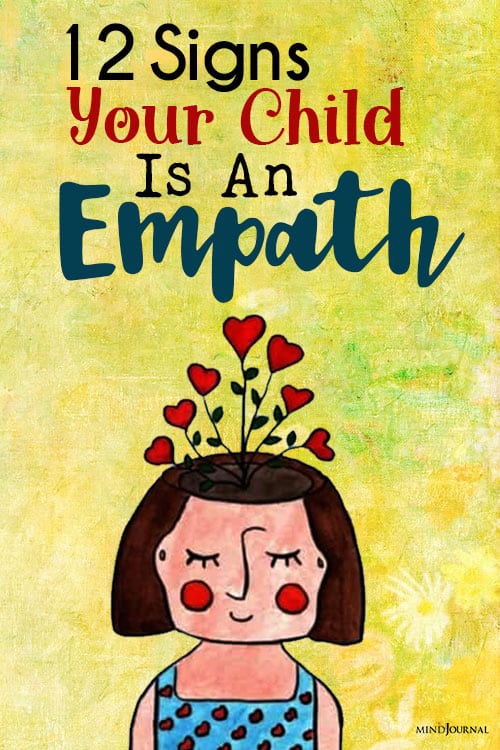
12 Signs Your Child Is An Empath

Author : Dr. Judith Orloff

12 Signs Your Child Is An Empath

Is my child an empath? If you have ever thought about this question, then youโ€™ve come to the right place. Having an empathetic child is a blessing, but at the same time, raising an empath child has to be done in the right way. Read on to know more about how you can raise an empath child in the best way possible.

Is My Child An Empath: Raising Empathic Children

Empathic children have nervous systems that react more quickly and strongly to external stimuli including stress. In The Empathโ€™s Survival Guide I emphasize that empath children feel too much but donโ€™t know how to manage the sensory overload. They see more, hear more, smell more, intuit more, and experience emotions more.

For instance, they may not like strong food smells in the kitchen, perfumes, harsh bright lights (particularly fluorescent bulbs), or loud talking. They prefer soft (not scratchy) clothes, beauty, nature, and having one or a few close friends rather than many acquaintances.

Their sensitivities can get assaulted by our coarse world, and this affects their behavior. Since most empathic children canโ€™t articulate the cause of their upset, enlightened parents can help them identify triggers and offer the solutions Iโ€™ll present below to relieve their distress.

Related: Raising a Self-Directing Child

As parents, you need to know what overstimulates your empathic children and avoid those activities.

Doing so calms them and wards off exhaustion, tantrums, and anxiety. Common triggers include excessive busyness such as over-scheduling their day without breaks, multi-tasking, no alone time, and violent television programs or newscasts, especially at night. Following exposure to any of these factors, children might find it harder to fall asleep and require more downtime before bed to unwind.

(Sensitive children may take longer to calm down at night than other children since their systems are slower to transition from stimulation to quiet).

Also, empathic children can feel and absorb other peopleโ€™s emotional discomfort, especially from parents and close friends. Because they are โ€œsuper-respondersโ€ their hurts cut deep and their joys are extra-joyous.

Empathic children donโ€™t have the same mechanisms as non-empath children to screen out the light, noise, and the chaos of crowds, for example at large sports events. Cheering, clapping, and booing can feel jarring, even painful, to them. Nor do they respond well to loud music, honking, hammering, or power tools.

is my child an empath

These sounds agitate them as opposed to the peaceful effect of birds chirping, water elements, or gentle wind chimes. Empathic children may cry more and cope by retreating into solitude to self-regulate sensory overload.

Typically, society or schools donโ€™t give these exceptional children much understanding. Conventional physicians and teachers often label them as โ€œshy,โ€ โ€œantisocialโ€ or โ€œfussy,โ€ or theyโ€™re diagnosed with social phobia, an anxiety disorder, or depression.

In addition, they may be quieter, thoughtful, deep, and gentle rather than highly verbal or assertiveโ€“which others can perceive as withdrawn. Because of these misconceptions, your role is critical in supporting their sensitivities, intuition, creativity, and wisdom, and in teaching them tools to cope with the world.

Related: How to Raise Emotionally Intelligent Children: 3 Crucial Lessons To Teach

As an empathic child, I received no support from my physician-parents about my sensitivitiesโ€“not because they didnโ€™t love me, but because they didnโ€™t know what an empath was and was never taught how to understand my special needs. They wanted me to be happy, but they didnโ€™t think encouraging my sensitivities would lead me there. They called me โ€œoverly sensitiveโ€ and said that I needed a โ€œthicker skin.โ€

These โ€œhelpfulโ€ comments made me believe there was something wrong with me. Because I felt misunderstood and invisible as an empathic child, I have become especially passionate about educating parents about raising their empathic children.

Knowing that your child is an empath is the first step toward bringing out the best in him or her. Then you can support your sonโ€™s and daughterโ€™s sensitivities as an expression of their excellence, compassion, and depth.

To determine if your child is an empath, take the following assessment.

Is Your Child an Empath?

  1. Does he or she feel things deeply?
  2. Does he or she get over-stimulated by people, crowds, noise, or stress?
  3. Does he or she have strong reactions to sad or frightening scenes in books or movies?
  4. Does he or she want to escape and hide from family gatherings because thereโ€™s too much going on?
  5. Does he or she feel โ€œdifferentโ€ than other kids or complain about not fitting in?
  6. Is he or she a good listener and compassionate with others?
  7. Does he or she surprise you with intuitive comments about others or yourself?
  8. Does he or she have a strong connection to nature, plants, animals, or stuffed animals?
  9. Does he or she require a lot of time alone rather than playing with other kids?
  10. Does he or she take on a friendโ€™s stress or upset?
  11. Does he or she take on your own or other peopleโ€™s emotions or stressโ€”and act out when youโ€™re angry, upset or depressed?
  12. Does he or she have one best friend or a few good friends rather than a large social network?
is my child an empath

Hereโ€™s how to score this assessment.

9-12 yesses indicate this child has extremely strong empathic traits.

6-9 yesses indicate strong empathic traits.

4-8 yesses indicate moderate empathic traits.

1-3 yesses indicate some empathic traits.

Zero yesses indicate that the child is not operating primarily as an empath.

Related: 7 Tips to Help A Highly Sensitive Child Flourish in School

Empath children are precious beings. No matter where your child is on this spectrum, he or she would benefit from being taught to honor his or her specific sensitivities.

Want to know more about raising an empath child? Check out this video below!


Adapted from The Empathโ€™s Survival Guide: Life Strategies for Sensitive People by Judith Orloff MD.
Excerpt from Dr. Judith Orloffโ€™s The Empathโ€™s Survival Guide: Life Strategies for Sensitive People (Sounds True, 2017)
12 Signs Your Child Is An Empath Also Tips for Raising Empathic Children2
12 Signs Your Child Is An Empath?

Published On:

Last updated on:

Dr. Judith Orloff

Judith Orloff, MD is the New York Times best-selling author of The Empathโ€™s Survival Guide: Life Strategies for Sensitive People. Her new book Thriving as an Empath offers daily self-care tools for sensitive people along with its companion The Empathโ€™s Empowerment Journal. Dr. Orloff is a psychiatrist, an empath, and is on the UCLA Psychiatric Clinical Faculty. She synthesizes the pearls of traditional medicine with cutting edge knowledge of intuition, energy, and spirituality. Dr. Orloff also specializes in treating highly sensitive, empathic people in her private practice. Dr. Orloffโ€™s work has been featured on The Today Show, CNN, Oprah Magazine, the New York Times. Dr. Orloff has spoken at Google-LA and has a popular TEDX talk. Her other books are Thriving as an Empath: 365 Days of Self-Care for Sensitive People, The Empowered Empathโ€™s Journal, Emotional Freedom and Guide to Intuitive Healing. Explore more information about her Empath Support Online course and speaking schedule on www.drjudithorloff.com.

Disclaimer: The informational content on The Minds Journal have been created and reviewed by qualified mental health professionals. They are intended solely for educational and self-awareness purposes and should not be used as a substitute for professional medical advice, diagnosis, or treatment. If you are experiencing emotional distress or have concerns about your mental health, please seek help from a licensed mental health professional or healthcare provider.

Leave a Comment

Today's Horoscope

Daily Horoscope 17 March 2026: Prediction for Zodiac Signs

Daily Horoscope 17 March, 2026: Prediction for Each Zodiac Sign

Today carries a calm, thoughtful kind of energy that may not be obvious at first.

Latest Quizzes

Interesting Finger Personality Test: 4 Finger Lines

Finger Personality Test: Join Your Fingers And Reveal A Hidden Personality Secret!

Look closely at your finger lines. Which pattern do you see? This personality test might surprise you!

Latest Quotes

Apology And Change: Why True Remorse Erases The Past

Apology And Change: Why True Remorse Erases The Past

If you offer a sincere apology and change your behavior, I'll never bring up our past issues again. But without it, you can't ask me to forgetโ€”the "past" is just "haven't changed."

Readers Blog

Caption This Image and Selected Wisepicks โ€“ 15 March 2026

Caption This Image and Selected Wisepicks โ€“ 15 March 2026

Ready to unleash your inner wordsmith? โœจ??โ˜บ๏ธ Nowโ€™s your chance to show off your wit, charm, or sheer genius in just one line! Whether itโ€™s laugh-out-loud funny or surprisingly deep, we want to hear it.Submit your funniest, wittiest, or most thought-provoking caption in the comments. Weโ€™ll pick 15+ winners to be featured on our website…

Latest Articles

12 Signs Your Child Is An Empath

Is my child an empath? If you have ever thought about this question, then youโ€™ve come to the right place. Having an empathetic child is a blessing, but at the same time, raising an empath child has to be done in the right way. Read on to know more about how you can raise an empath child in the best way possible.

Is My Child An Empath: Raising Empathic Children

Empathic children have nervous systems that react more quickly and strongly to external stimuli including stress. In The Empathโ€™s Survival Guide I emphasize that empath children feel too much but donโ€™t know how to manage the sensory overload. They see more, hear more, smell more, intuit more, and experience emotions more.

For instance, they may not like strong food smells in the kitchen, perfumes, harsh bright lights (particularly fluorescent bulbs), or loud talking. They prefer soft (not scratchy) clothes, beauty, nature, and having one or a few close friends rather than many acquaintances.

Their sensitivities can get assaulted by our coarse world, and this affects their behavior. Since most empathic children canโ€™t articulate the cause of their upset, enlightened parents can help them identify triggers and offer the solutions Iโ€™ll present below to relieve their distress.

Related: Raising a Self-Directing Child

As parents, you need to know what overstimulates your empathic children and avoid those activities.

Doing so calms them and wards off exhaustion, tantrums, and anxiety. Common triggers include excessive busyness such as over-scheduling their day without breaks, multi-tasking, no alone time, and violent television programs or newscasts, especially at night. Following exposure to any of these factors, children might find it harder to fall asleep and require more downtime before bed to unwind.

(Sensitive children may take longer to calm down at night than other children since their systems are slower to transition from stimulation to quiet).

Also, empathic children can feel and absorb other peopleโ€™s emotional discomfort, especially from parents and close friends. Because they are โ€œsuper-respondersโ€ their hurts cut deep and their joys are extra-joyous.

Empathic children donโ€™t have the same mechanisms as non-empath children to screen out the light, noise, and the chaos of crowds, for example at large sports events. Cheering, clapping, and booing can feel jarring, even painful, to them. Nor do they respond well to loud music, honking, hammering, or power tools.

is my child an empath

These sounds agitate them as opposed to the peaceful effect of birds chirping, water elements, or gentle wind chimes. Empathic children may cry more and cope by retreating into solitude to self-regulate sensory overload.

Typically, society or schools donโ€™t give these exceptional children much understanding. Conventional physicians and teachers often label them as โ€œshy,โ€ โ€œantisocialโ€ or โ€œfussy,โ€ or theyโ€™re diagnosed with social phobia, an anxiety disorder, or depression.

In addition, they may be quieter, thoughtful, deep, and gentle rather than highly verbal or assertiveโ€“which others can perceive as withdrawn. Because of these misconceptions, your role is critical in supporting their sensitivities, intuition, creativity, and wisdom, and in teaching them tools to cope with the world.

Related: How to Raise Emotionally Intelligent Children: 3 Crucial Lessons To Teach

As an empathic child, I received no support from my physician-parents about my sensitivitiesโ€“not because they didnโ€™t love me, but because they didnโ€™t know what an empath was and was never taught how to understand my special needs. They wanted me to be happy, but they didnโ€™t think encouraging my sensitivities would lead me there. They called me โ€œoverly sensitiveโ€ and said that I needed a โ€œthicker skin.โ€

These โ€œhelpfulโ€ comments made me believe there was something wrong with me. Because I felt misunderstood and invisible as an empathic child, I have become especially passionate about educating parents about raising their empathic children.

Knowing that your child is an empath is the first step toward bringing out the best in him or her. Then you can support your sonโ€™s and daughterโ€™s sensitivities as an expression of their excellence, compassion, and depth.

To determine if your child is an empath, take the following assessment.

Is Your Child an Empath?

  1. Does he or she feel things deeply?
  2. Does he or she get over-stimulated by people, crowds, noise, or stress?
  3. Does he or she have strong reactions to sad or frightening scenes in books or movies?
  4. Does he or she want to escape and hide from family gatherings because thereโ€™s too much going on?
  5. Does he or she feel โ€œdifferentโ€ than other kids or complain about not fitting in?
  6. Is he or she a good listener and compassionate with others?
  7. Does he or she surprise you with intuitive comments about others or yourself?
  8. Does he or she have a strong connection to nature, plants, animals, or stuffed animals?
  9. Does he or she require a lot of time alone rather than playing with other kids?
  10. Does he or she take on a friendโ€™s stress or upset?
  11. Does he or she take on your own or other peopleโ€™s emotions or stressโ€”and act out when youโ€™re angry, upset or depressed?
  12. Does he or she have one best friend or a few good friends rather than a large social network?
is my child an empath

Hereโ€™s how to score this assessment.

9-12 yesses indicate this child has extremely strong empathic traits.

6-9 yesses indicate strong empathic traits.

4-8 yesses indicate moderate empathic traits.

1-3 yesses indicate some empathic traits.

Zero yesses indicate that the child is not operating primarily as an empath.

Related: 7 Tips to Help A Highly Sensitive Child Flourish in School

Empath children are precious beings. No matter where your child is on this spectrum, he or she would benefit from being taught to honor his or her specific sensitivities.

Want to know more about raising an empath child? Check out this video below!


Adapted from The Empathโ€™s Survival Guide: Life Strategies for Sensitive People by Judith Orloff MD.
Excerpt from Dr. Judith Orloffโ€™s The Empathโ€™s Survival Guide: Life Strategies for Sensitive People (Sounds True, 2017)
12 Signs Your Child Is An Empath Also Tips for Raising Empathic Children2
12 Signs Your Child Is An Empath?

Published On:

Last updated on:

Dr. Judith Orloff

Judith Orloff, MD is the New York Times best-selling author of The Empathโ€™s Survival Guide: Life Strategies for Sensitive People. Her new book Thriving as an Empath offers daily self-care tools for sensitive people along with its companion The Empathโ€™s Empowerment Journal. Dr. Orloff is a psychiatrist, an empath, and is on the UCLA Psychiatric Clinical Faculty. She synthesizes the pearls of traditional medicine with cutting edge knowledge of intuition, energy, and spirituality. Dr. Orloff also specializes in treating highly sensitive, empathic people in her private practice. Dr. Orloffโ€™s work has been featured on The Today Show, CNN, Oprah Magazine, the New York Times. Dr. Orloff has spoken at Google-LA and has a popular TEDX talk. Her other books are Thriving as an Empath: 365 Days of Self-Care for Sensitive People, The Empowered Empathโ€™s Journal, Emotional Freedom and Guide to Intuitive Healing. Explore more information about her Empath Support Online course and speaking schedule on www.drjudithorloff.com.

Leave a Comment

    Leave a Comment